
The relentless pace of modern armored vehicle manufacturing requires a level of logistical precision that traditional manual warehousing simply cannot sustain in today’s high-stakes security environment. FFG Flensburger Fahrzeugbau Gesellschaft mbH is addressing this reality by integrating a high-performance automated system at its new Plant 3 site. This development represents a shift toward industrial self-sufficiency, ensuring that critical defense components move with the same speed and reliability as the vehicles they eventually become.
A High-Tech Logistics Backbone for Armored Vehicle Production
How does a global leader in defense technology ensure that the production of massive vehicle platforms like the WiSENT and ACSV remains uninterrupted? The answer lies in a ground-breaking partnership between Jungheinrich and FFG. By commissioning a fully automated central warehouse, FFG is not just building a storage facility; it is engineering a high-speed logistical heart designed to power the next generation of manufacturing.
This facility serves as a vital artery for the assembly lines, where the complexity of armored vehicle modernization demands a constant flow of parts. The integration of advanced robotics removes the bottlenecks associated with human error, allowing for a seamless transition from raw material storage to active production.
Meeting the Demands of Modern Defense Infrastructure
As global security needs evolve, the defense technology sector faces immense pressure to scale production without sacrificing precision. For FFG, modernizing material handling is a strategic necessity to manage the complex supply chains required for specialized vehicle maintenance. This project highlights an industrial shift where advanced automation is no longer an elective upgrade but a requirement for maintaining a resilient production environment.
Moreover, the ability to maintain high-volume output depends on the ability to anticipate and mitigate logistical delays. By centralizing operations in an automated hub, the facility reduces the physical footprint of storage while increasing the accessibility of components, which is vital for meeting rapid-response military contracts.
Engineering the Silo: Technical Specifications of the New Facility
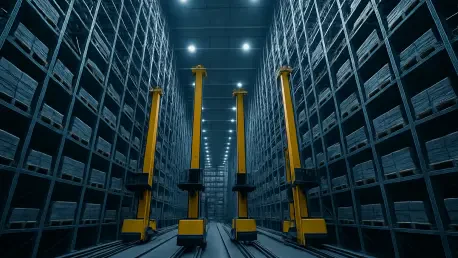
The center of this logistical overhaul is a sophisticated high-bay warehouse designed using silo construction, where the racking system acts as the primary supporting structure for the building itself. Spanning 2,220 square meters and reaching an impressive height of 30 meters, the facility is engineered to maximize vertical space, providing room for 19,152 pallet spaces.
To ensure the rapid flow of components, Jungheinrich is deploying four single-mast stacker cranes from its subsidiary, MIAS. These machines are capable of performing 110 double cycles per hour to support continuous two-shift operations. This mechanical efficiency allows for a high density of goods to be managed with minimal surface area, optimizing the entire site layout.
The Turnkey Advantage: Integrating Hardware and Software
This collaboration represents a comprehensive turnkey solution, placing the entire scope of the project—from physical racking to fire protection—under Jungheinrich’s expertise. Beyond the steel and cranes, the facility is governed by a digital ecosystem, including a Warehouse Control System (WCS) and Programmable Logic Control (PLC) systems.
By consolidating material flow under a unified digital management system, FFG gains a level of operational transparency that is critical for high-volume manufacturing. This digital integration allowed for real-time tracking of every pallet, ensuring that inventory levels remained optimized and that the production floor never faced a shortage of critical assemblies.
Future-Proofing Production Through Strategic Automation
The path to commissioning this facility by the second quarter of 2027 provided a clear framework for how manufacturers stabilized internal logistics while scaling for growth. By investing in a high-tech logistical backbone, FFG secured its position as a reliable provider in the global defense market. This strategy demonstrated that the integration of pallet conveyor technology was the most effective way to ensure that production lines remained agile and ready.
The project anticipated the need for increased throughput and established a foundation for future modular expansions. Stakeholders recognized that long-term success depended on these early investments in automation, which eventually allowed the company to handle larger defense contracts with greater ease. The successful implementation of the silo warehouse solidified the company’s reputation for technical excellence and operational resilience.