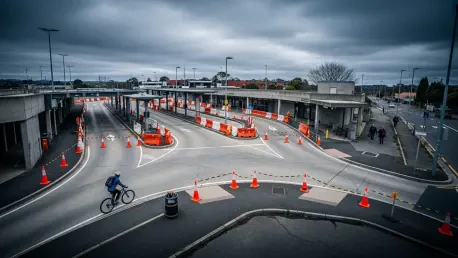

Imagine a community eagerly awaiting the completion of vital infrastructure projects, only to face endless delays, safety hazards, and mounting frustration due to systemic mismanagement. This has been the reality for residents of Kingborough, Tasmania, where two major projects—the Summerleas Road underpass and the Kingston bus interchange—have stumbled through significant setbacks. Independent reviews have recently shed light on the governance failures and ignored expert advice that plagued these endeavors, painting a troubling picture of inadequate planning and coordination. Conducted by a trusted consultant, these evaluations not only highlight the depth of the issues but also offer a roadmap for improvement. As the council grapples with the fallout, the focus shifts to how such missteps can be avoided in the future, ensuring that public projects serve their intended purpose without disrupting daily life.
Unpacking the Project Delays
Systemic Flaws in Planning and Execution
The depth of the challenges faced by Kingborough Council becomes starkly apparent when delving into the root causes of the delays in both the Summerleas Road underpass and the Kingston bus interchange. A recurring theme across the independent reviews is the council’s consistent failure to adhere to established frameworks, a misstep that left projects vulnerable from the start. Poor stakeholder coordination and inadequate planning created a domino effect of preventable issues. For instance, project managers were often overburdened, handling all documentation and engagement single-handedly, which reviewers identified as a critical ‘single point of failure.’ This lack of structured oversight amplified risks and led to setbacks that could have been mitigated with better preparation. Mayor Paula Wriedt has openly acknowledged these shortcomings, emphasizing the significant community impact caused by prolonged disruptions. The findings underscore a pressing need for systemic change, pushing the council to rethink how it approaches complex infrastructure initiatives.
Community Impact and Safety Concerns
Beyond the administrative failures, the real toll of these delays has been felt by the Kingborough community, where safety concerns and accessibility issues have compounded frustration. With the Kingston bus interchange, completed over a year ago but still unusable for several more months, design oversights meant buses couldn’t maneuver safely, creating hazards for passengers and cyclists alike due to poor sightlines. Meanwhile, the Summerleas Road underpass saw road closures balloon far beyond initial estimates, severely disrupting local routines. These delays weren’t just inconveniences—they represented tangible risks and barriers to daily life. The reviews highlight how such outcomes stemmed from a failure to conduct thorough impact assessments upfront, leaving critical flaws unaddressed until after construction. This pattern of reactive rather than proactive management has eroded trust, making it clear that future projects must prioritize community needs and safety from the planning stage to avoid repeating history.
Pathways to Improvement
Implementing Stronger Governance Frameworks
Turning the page on past mistakes, Kingborough Council has begun to act on the 11 recommendations outlined in the independent reviews, signaling a commitment to transformative change. A complete overhaul of project management and governance frameworks is underway, with new processes designed to ensure comprehensive planning before any ground is broken. This includes embedding best practices through collaboration with expert consultants, addressing the complexity of multi-stakeholder projects. The goal is to create a robust system where risks are identified and managed early, preventing the kind of cascading failures seen previously. Moreover, the emphasis on structured oversight aims to distribute responsibilities more effectively, ensuring no single individual bears the burden of an entire project’s success. As these changes take shape, there’s hope that the council can rebuild confidence by delivering infrastructure that meets timelines and expectations, setting a new standard for accountability.
Fostering Better Stakeholder Engagement
Equally critical to the council’s reform efforts is a renewed focus on stakeholder engagement, an area where past projects faltered significantly. The reviews pointed out how inconsistent communication with entities like TasWater and TasNetworks led to logistical nightmares, such as unexpected delays over utility relocations at the Summerleas Road site. Moving forward, tailored solutions are being developed to improve coordination and ensure all parties are aligned from the outset. This involves not just technical fixes but also a cultural shift within the council to prioritize dialogue and transparency. By addressing both the administrative gaps and the specific challenges of each project—whether design flaws or environmental oversights—the council aims to craft a more resilient approach. Reflecting on the diverse issues faced, it’s evident that robust, proactive collaboration will be the cornerstone of preventing future disruptions, ultimately benefiting the community through smoother project execution.