
In an era where corporate sustainability pledges often echo louder than their resulting actions, the heavy industrial sector faces a particularly steep climb toward genuine environmental responsibility. Linde Material Handling, a significant player in the intralogistics space, has released a comprehensive report detailing its strategy, not as a declaration of future intent, but as a transparent account of tangible progress already achieved. This document outlines a methodical journey toward decarbonization, demonstrating how a focus on data, technology, and strategic partnerships is turning ambitious climate goals into operational reality.
Beyond the Buzzword: How Does a Heavy Industry Leader Genuinely Go Green?
For manufacturers of heavy machinery, the path to sustainability is complex, fraught with challenges that extend far beyond simple energy-saving measures. The very nature of the industry—reliant on resource-intensive materials and energy-demanding production processes—makes the concept of “going green” a monumental task. Skepticism often surrounds corporate environmental initiatives, with many viewed as superficial marketing efforts rather than fundamental operational shifts. Genuine transformation requires a deep-seated commitment that permeates every facet of the business, from initial product design and supply chain management to end-of-life recycling.
Linde MH’s approach, as detailed in its recent report, seeks to address this challenge head-on by anchoring its strategy in transparency and measurable outcomes. The company’s framework illustrates that true progress is not born from a single breakthrough but from a persistent, multi-pronged effort. This involves not only reducing the company’s own operational footprint but also empowering its customers with more efficient and sustainable products, thereby creating a ripple effect of positive environmental impact throughout the entire logistics ecosystem.
The New Corporate Imperative: Why Intralogistics Sustainability Matters Now More Than Ever
The drive for sustainability within the intralogistics sector is no longer a peripheral concern but a core business imperative. Modern supply chains are under increasing pressure from regulators, investors, and end-consumers to demonstrate environmental and social responsibility. A failure to adapt not only carries reputational risk but also threatens long-term commercial viability. Companies that integrate sustainability into their operations are better positioned to attract investment, retain talent, and build resilient supply chains capable of withstanding future economic and environmental shocks.
Furthermore, the intersection of efficiency and sustainability has become a powerful driver of innovation. Developing energy-efficient forklifts, optimizing warehouse layouts to reduce travel distances, and implementing circular economy principles for industrial batteries are not just environmental wins; they translate directly into lower operational costs and improved productivity for customers. This synergy transforms sustainability from a cost center into a competitive advantage, making it an essential component of modern business strategy in the logistics and material handling industry.
Translating Ambition into Action: Key Achievements from the 2024 Report
A cornerstone of the report is the documented reduction in Scope 1 and Scope 2 greenhouse gas emissions. This was accomplished not by a single action but through a strategic combination of initiatives, including the large-scale procurement of green electricity, the innovative capture and reuse of waste heat from production processes, and widespread energy-saving upgrades to both infrastructure and manufacturing equipment. This progress is aligned with a clear and science-based trajectory: Linde MH has committed to a 4.7 percent annual reduction in these emissions by 2030, with the ultimate goal of achieving net-zero across its entire value chain by 2050.
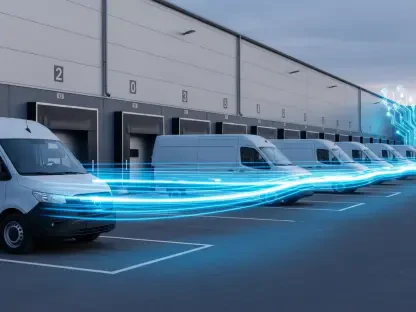
A significant step toward these long-term goals is an ambitious fleet electrification project set to launch in 2026. The initiative will introduce two 42-ton electric tractor units to manage a crucial 35-kilometer shuttle route, transporting forklift components between a foundry and the main assembly plant. These heavy-duty vehicles, boasting a 600 kWh battery capacity, will be complemented by ten new light commercial e-vehicles for regional logistics. Together, these additions are projected to eliminate approximately 180 tons of CO2 emissions annually. The project’s strategic importance is underscored by financial backing from Germany’s Federal Ministry of Digital and Transport and the EU’s German Recovery and Resilience Plan.
A Deeper Commitment: Integrating Sustainability from Product Cradle to Grave
Linde MH’s strategy extends well beyond its own factory gates, embedding environmental responsibility into the entire product lifecycle. This commitment is formalized through broad adherence to international standards, with the company expanding its ISO 14001 environmental management certification to cover 99 percent of its plants and sales sites in 2024. This framework provides a rigorous, externally validated structure for continuous improvement in environmental performance across the global organization.
Integral to this approach is the use of Life Cycle Assessments (LCAs), which analyze a product’s environmental impact from raw material extraction to final disposal. Demonstrating remarkable foresight, the company initiated a partnership with the renowned Fraunhofer Institute over two decades ago to develop a scientific methodology for these assessments. Now a core part of its development process, this practice was exemplified with the launch of a new series of electric forklifts, the first to be released with a complete LCA available from day one. This sets a new benchmark for transparency, allowing customers to make fully informed decisions based on a product’s long-term environmental footprint. The company is also closing the material loop through its partnership with Glencore Battery Recycling, which saw 15.8 tons of lithium-ion battery modules successfully returned to the resource cycle.
The Leadership Philosophy: “Synergize Efficiency and Cost-Effectiveness with Tangible Sustainability”
The company’s progress is guided by a core philosophy that sustainability and business success are not mutually exclusive but deeply interconnected. This principle dictates that every initiative must balance economic viability with measurable environmental and social benefits. It rejects the notion that sustainability is a luxury to be pursued only in favorable economic conditions; instead, it is treated as a fundamental component of long-term resilience and value creation, essential for navigating any market climate.
This mindset has fundamentally refined the company’s product development strategy. Sustainability and occupational safety are no longer afterthoughts but are integrated into the earliest stages of design and engineering. This ensures that each new generation of products is inherently more energy-efficient, safer for operators, and built with materials and processes that minimize environmental impact. By embedding these values at the source, the company creates a virtuous cycle where better products lead to better outcomes for customers, employees, and the planet.
A Blueprint for Progress: Linde MH’s Four Pillars of Sustainable Transformation
The company’s report ultimately laid out a clear blueprint for how an industrial leader could systematically pursue decarbonization. The first pillar was the establishment of tiered and auditable goals, setting clear, data-driven targets for both the short term (2030) and the long term (2050) to ensure unwavering accountability. This foundation prevented the strategy from becoming a set of vague aspirations.
The second pillar that was demonstrated was a commitment to investing in cornerstone technologies. The company prioritized high-impact projects, such as the comprehensive electrification of its transport fleet, that created a foundational shift in its operational emissions profile. Third, the strategy embraced a holistic product lifecycle. This moved the focus beyond purely manufacturing metrics by deeply integrating Life Cycle Assessments (LCAs) into the core of product design, engineering, and end-of-life management. Finally, the fourth pillar involved forging strategic external partnerships. The company understood it could not achieve its goals in isolation and collaborated with specialists in research, like the Fraunhofer Institute, and recycling, such as Glencore, to extend its capabilities and build a truly circular economy.