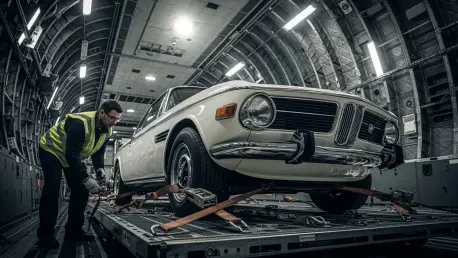

The intricate dance of global logistics ensures that a priceless vintage automobile, a dozen near-extinct reptiles, and a human cornea destined to restore sight all share a common, meticulously controlled journey through the sky. While the world sees the seamless delivery of goods, behind the scenes lies a complex and highly specialized operation dedicated to transporting cargo that defies conventional shipping. This is the domain of demanding freight, a critical sector where the margin for error is non-existent and the stakes can range from priceless cultural heritage to human life itself. The successful transport of these items hinges on a convergence of advanced technology, bespoke infrastructure, and deep logistical expertise, forming a vital, often invisible, artery for global progress.
What Do a Rare Reptile, a Classic Car, and a Human Cornea Have in Common
The answer lies in the specialized handling they command, representing the pinnacle of air freight logistics. Each shipment, whether it is one of only a few hundred remaining classic cars or a time-sensitive medical transplant, requires a solution far beyond standard container shipping. These are not mere packages; they are irreplaceable assets, delicate scientific instruments, or living organisms whose survival depends on absolute precision. The ability to manage such diverse and demanding cargo under one operational umbrella highlights a unique capability within the global supply chain, demonstrating a mastery over variables like temperature, shock, and time.
This proficiency connects otherwise disparate fields, making the air freight carrier a crucial partner in everything from species preservation to advancements in medical science. A conservation effort to return endangered lizards to their native habitat relies on the same logistical framework that ensures a fragile semiconductor machine arrives at a factory undamaged. Similarly, the unbroken cold chain required for a life-saving vaccine is built on principles of monitoring and control that also protect sensitive automotive electronics during transit. It is this intersection of needs that drives the evolution of specialized cargo transport.
Beyond the Box Why Specialized Air Freight Is a Critical Artery for Global Innovation and Conservation
In an interconnected world, specialized air freight serves as a fundamental enabler of progress. For high-tech industries, it is the conduit that allows for the global distribution of massive, yet fragile, manufacturing equipment, such as the machines that produce semiconductors. Without the ability to transport this machinery safely and efficiently across continents, the rapid expansion of the digital age would be significantly hampered. This logistical capability underpins the very infrastructure of modern technology, ensuring that innovation in one part of the world can be scaled and implemented globally.
Moreover, this logistical network plays an indispensable role in conservation and animal welfare. For zoological institutions and conservation programs, air transport is often the only viable method for relocating animals for breeding programs or reintroduction into the wild. Missions like repatriating critically endangered species or deploying anti-poaching canine units are complex operations that demand more than just transportation; they require an environment that guarantees the safety and well-being of the animals throughout their journey. This commitment transforms a cargo hold into a temporary ark, directly contributing to the preservation of global biodiversity.
A Showcase of Extraordinary Cargo Mastering the Spectrum of Specialized Transport
The transport of heavy and high-tech machinery presents some of the most formidable challenges in air freight. In 2025 alone, Lufthansa Cargo successfully managed the global transport of over 1,000 highly sensitive aircraft engines. Each shipment required a meticulous, multi-stage planning process, specialized ground equipment, and flawless coordination. This precision was mirrored in the handling of fragile semiconductor manufacturing machines, where advanced shock, tilt, and temperature monitoring systems provided real-time data to safeguard the valuable equipment. This expertise also extends to the automotive sector, as exemplified by the 9,000-kilometer journey of a rare BMW classic car from Prague to Tokyo, a delicate operation that underscores the logistics supporting the wider industry’s need for transporting everything from finished vehicles to sensitive electronic components.
The commitment to animal welfare and species preservation is another cornerstone of specialized transport. This was powerfully demonstrated in the mission to repatriate twelve critically endangered Vietnamese crocodile-tailed lizards in a collaborative effort with the Cologne Zoo and AnimalLogistics FRA. This project supported the international ‘One Plan Approach,’ integrating zoo breeding with field conservation. In another vital conservation effort, specially trained anti-poaching sniffer dogs were flown to South Africa for the ‘Save the Rhino’ project. Beyond these specific missions, the sheer scale of animal transport is immense, with annual figures including approximately 3,500 horses, 12,000 pets, 200 exotic zoo animals, and an astounding 80 million ornamental fish, all transported with the utmost care.
In the high-stakes world of medical logistics, specialized air freight delivers a second chance at life. The company leverages a certified infrastructure and an unbroken cold chain to ensure the global transport of pharmaceuticals and vaccines. However, the most demanding task is the transport of time-critical human tissue and organs. These shipments require absolute precision and are classified as a Living Human Organ (LHO), receiving the highest priority handling. This capability is crucial for partnerships with organizations that coordinate the delivery of life-saving medical supplies to patients around the world, making the cargo carrier an integral part of the global healthcare system.
From the Field to the Fuselage Firsthand Accounts of Unconventional Logistics
The profound impact of these operations is best understood through individual stories. A patient in Cameroon, for instance, had their sight restored thanks to a donated cornea flown by Lufthansa Cargo. This was made possible through a long-standing partnership with the Lions World Vision Institute (LWVI), which coordinates corneal tissue donations globally. Each of the approximately 10,000 cornea shipments transported to date is classified as an LHO, ensuring priority handling, continuous live tracking, and immediate rebooking capabilities in the event of any disruption. This logistical precision directly translates into life-changing medical outcomes, turning a complex supply chain into a conduit for hope.
Another success story highlights the power of international collaboration in conservation. The repatriation of the Vietnamese crocodile-tailed lizard, a species with fewer than 150 known individuals, marked a significant milestone. This effort, conducted with the Cologne Zoo and AnimalLogistics FRA, was the first time these zoo-bred animals were returned to their native habitat in Vietnam. The operation was a testament to the ‘One Plan Approach,’ a conservation strategy that integrates zoo-based breeding programs with in-situ field conservation. The success of the transport was a critical step in a larger effort to secure the future of this critically endangered species.
The Framework for Flawless Execution Lufthansa Cargo’s Blueprint for Handling Demanding Freight
Flawless execution begins with bespoke planning and precision protocols. Every aircraft engine shipment, for example, undergoes a meticulous, multi-stage planning process that accounts for weight, balance, and specialized handling requirements. Similarly, the transport of high-tech equipment is governed by strictly enforced protocols that dictate every step of the process, from loading to in-flight monitoring, ensuring that sensitive machinery arrives in perfect condition. This strategic foresight is the first pillar in a framework designed to eliminate variables and ensure predictable, safe outcomes for the most complex cargo.
The second pillar is a significant investment in purpose-built infrastructure. Facilities like the Frankfurt Animal Lounge are designed to provide a stress-free environment for animals, with spacious stalls and dedicated teams of veterinarians and handlers ensuring the well-being of equines and other large animals. For medically sensitive goods, a certified infrastructure with strict temperature controls is paramount. This includes specialized climate-controlled storage facilities and handling processes that maintain the integrity of pharmaceuticals and vaccines throughout their journey, forming a critical component of the global medical supply chain.
Finally, the integration of advanced monitoring technology serves as the third pillar. Real-time data from shock sensors, tilt monitors, and continuous temperature tracking provides a constant stream of information on the condition of high-value, fragile cargo. This allows for immediate intervention if any parameter deviates from the norm. For life-or-death shipments like LHOs, the function of live tracking and immediate rebooking capabilities is critical. This technological oversight ensures complete transparency and control, providing the ultimate safeguard for the world’s most demanding freight.
The diverse and complex transport operations of 2025 demonstrated a consistent ability to deliver on promises of speed, quality, and safety. By successfully navigating the challenges of moving everything from heavy industrial components to living organisms, the company not only facilitated global business but also played a direct role in advancing science, preserving biodiversity, and saving lives. These achievements affirmed a deep-seated commitment to investing in the infrastructure and expertise necessary to provide reliable solutions for the world’s increasingly complex value chains.