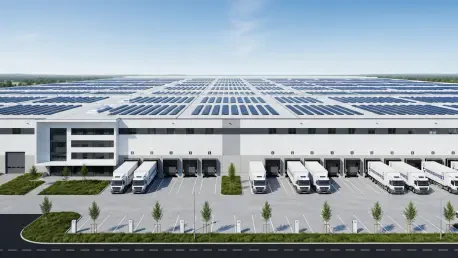

The logistics landscape of North East England has undergone a significant transformation with the opening of a 138,000-square-foot facility that does much more than move inventory. By streamlining the supply chain for over 200 restaurants, this new hub in Darlington eliminates 2.5 million road miles annually—a distance equivalent to circling the Earth 100 times. This development marks a pivotal shift in how major corporations reconcile rapid delivery demands with aggressive environmental targets.
A Milestone in Northern Logistics: Beyond the Golden Arches
The launch of this distribution center, a collaborative effort between McDonald’s UK & Ireland and Martin Brower, addresses the critical need for regional supply chain resilience. As consumer demand fluctuates and the pressure for decarbonization increases, traditional centralized logistics models are becoming obsolete. Darlington’s geographic positioning serves as a strategic gateway, allowing for a more responsive and localized distribution network that supports both economic stability and industrial modernization in the North East.
The Strategic Importance of the Darlington Infrastructure
The Darlington hub is engineered to handle a complex inventory of 400 distinct products sourced from 70 different suppliers, utilizing advanced cold chain technology. By localizing distribution, the facility reduces average delivery drive times by one hour per trip. This optimization ensures that perishable goods move through the supply chain with minimal delay, enhancing food quality and reducing the energy required for long-term climate-controlled storage.
The project has served as a catalyst for regional employment, creating over 200 new jobs within the Darlington area. This investment goes beyond mere physical infrastructure, contributing to the local economic fabric by providing stable roles in a state-of-the-art industrial environment. Constructed to meet BREEAM Excellent standards, the facility integrates onsite solar power generation to offset its energy consumption. The site is also future-proofed for the transition to electric fleets, featuring 13 car charging stations and 17 dedicated points for electric trailers.
Redefining Efficiency through High-Tech Distribution
The inauguration of the site brought together leadership from the private and public sectors, highlighting a unified approach to corporate expansion. Laura Henderson of McDonald’s and Parv Sangera of Martin Brower emphasized that this facility is not just a warehouse, but a testament to long-term operational resilience. Darlington Borough Council officials noted that the hub successfully synthesizes industrial efficiency with rigorous environmental stewardship, setting a new benchmark for how global brands should invest in local communities.
Collaborative Vision: Expert Perspectives on the Launch
The Darlington distribution center provides a blueprint for other organizations aiming to meet ambitious carbon reduction goals, such as the global 2040 net-zero target. To replicate this model, companies should prioritize reducing road miles by strategically placing hubs closer to the end-point of the consumer journey. This geographical shift is the most effective way to see immediate drops in carbon emissions while maintaining high service levels.
Implementing Net-Zero Strategies in Modern Logistics
Following the BREEAM Excellent framework allowed the project to ensure that physical assets were as efficient as the operations themselves. This included prioritizing onsite renewable energy sources and preparing for the electrification of heavy goods vehicles. Utilizing multi-temperature storage solutions within a single facility allowed for consolidated deliveries, which reduced the number of vehicles on the road and ensured that various product types were handled with maximum energy efficiency. These steps established a clear path for future industrial developments to follow.