
Marco Gaietti brings decades of management consulting experience to the table, specifically focusing on how strategic operations and procurement can drive sustainability in public services. In this discussion, we explore the logistical evolution of a major borough council’s fleet, which manages everything from 32-ton hook loaders to small service vans. By moving away from a fragmented brand strategy, the council has integrated high-performance tire technology and data-driven insights to achieve measurable environmental and operational gains. We delve into the shift from multi-brand fleets to premium single-provider models, the technical mechanics of tire retreading to reduce landfill waste, and the critical role of telematics in driver safety and carbon reduction. We also touch upon the synergy between global supply chains and local maintenance partnerships in keeping essential community services running without interruption.
Transitioning from a mixed-brand fleet to a single premium provider requires significant logistical planning. How do procurement frameworks streamline this selection process, and what specific criteria should fleet managers prioritize when evaluating long-term lifecycle value against higher upfront purchase costs?
Utilizing a structured procurement framework like the Crown Commercial Service (CCS) removes the guesswork by guaranteeing that you are engaging with a quality, vetted provider from the very start. For a fleet of 160 vehicles, the administrative burden of managing diverse brands is often a hidden cost that erodes efficiency, so consolidating under one premium name provides immediate clarity in maintenance and performance. While the initial investment in premium tires is undeniably higher, the true value reveals itself over time through improved longevity and the ability to adopt a multi-life policy. By focusing on the total cost of ownership rather than the sticker price, managers can see that the durability of a superior product far outweighs the frequent replacements required by budget alternatives. It really is the best path forward for any organization looking to demonstrate strong lifecycle value while simultaneously boosting its operational efficiency.
Implementing a multi-life tire policy involves regrooving tread at specific depths and retreading casings to divert tons of waste from landfills. Could you walk us through the technical steps of this cycle and explain how these practices impact a local government’s carbon footprint and raw material consumption?
The process begins with careful monitoring, where we regroove the tires once the tread depth reaches approximately 3–4mm, essentially giving the existing rubber a second life on the road. Once that extended tread is spent, the casings are sent to a specialized factory to be professionally retreaded, a cycle that significantly stretches the utility of the original raw materials. The environmental impact of this circular approach is staggering; between 2023 and 2025, this specific policy diverted 10.2 tonnes of waste from landfills. Furthermore, we managed to reduce raw material consumption by 13.2 tonnes and cut CO2 emissions by a total of 27.7 tonnes over three years. Seeing these physical tonnes of waste being diverted provides a tangible sense of achievement for any sustainability-minded fleet manager.
Managing a 160-vehicle fleet that includes both small service vans and 32-ton hook loaders presents diverse operational challenges. How does tire performance influence safety during 24/7 all-weather operations, and what specific impact does equipment quality have on reducing vehicle downtime and the frequency of punctures?
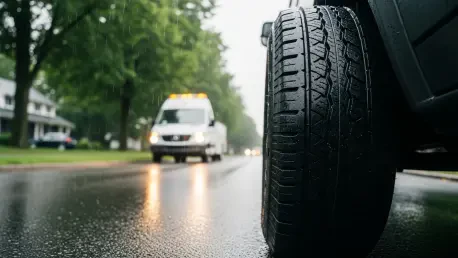
When you have 100 vans performing critical tasks like medical welfare checks and 60 heavy goods vehicles like 32-tonne hook loaders operating 24/7, tire reliability becomes a matter of public safety. High-quality equipment is designed to grip the road in all-weather conditions, providing the driver with the stability needed to navigate narrow streets or heavy industrial sites safely. We have observed a significant reduction in the number of punctures since switching to a premium provider, which is the most common cause of unexpected roadside delays. Fewer punctures mean the vehicles stay on the road, ensuring that refuse collection and park maintenance stay strictly on schedule. This reliability also has an emotional component, as drivers are much happier and less stressed when they aren’t constantly worried about their vehicle being taken off the road for repairs.
Connected fleet services allow for real-time monitoring of fuel usage and harsh braking. How do you translate this telematics data into effective driver coaching programs, and in what ways does improving driver behavior contribute to both safety enhancements and measurable CO2 reductions?
Telematics acts as the nervous system of the fleet, providing a constant stream of data that highlights exactly where fuel is being wasted or where safety risks are highest. By tracking instances of harsh braking and rapid acceleration, we can create personalized coaching programs that help drivers understand the direct link between their habits and the vehicle’s environmental footprint. Smoother driving not only reduces the mechanical wear and tear on the tires and engine but also leads to immediate and measurable reductions in CO2 emissions. There is a certain pride that develops within a team when they can see their safety scores improve on a digital dashboard. Ultimately, these connected services transform raw data into a culture of safety and environmental responsibility that benefits the entire community.
Maintaining a large public service fleet requires a balance between global supply chains and local service providers for daily maintenance. How do these local partnerships ensure timely servicing, and what role does consistent maintenance play in keeping drivers satisfied and specialized vehicles, like refuse trucks, on schedule?
While the tires themselves come from a global leader with advanced manufacturing, the heartbeat of the operation is the local service provider who handles the daily maintenance. Having a partner like Modern Tyres in Ballyclare ensures that technicians are always nearby to address issues immediately, preventing a minor check-up from turning into a day-long delay. This local proximity is essential for specialized vehicles like refuse trucks, which operate on tight, uncompromising schedules where every minute counts. Consistent, high-quality maintenance gives drivers peace of mind, knowing their vehicle has been inspected by a trusted local expert before they head out. It creates a seamless loop where global innovation meets local expertise, keeping the fleet running like a well-oiled machine.
What is your forecast for sustainable fleet management?
I anticipate a rapid shift toward a fully circular economy where the “buy-use-discard” model is completely replaced by sophisticated multi-life strategies integrated with real-time AI analytics. We will see fleets moving beyond simple carbon offsets to achieving deep, structural sustainability by maximizing the lifespan of every single component, from tires to batteries. Data transparency will become the gold standard, allowing public and private organizations to prove their environmental impact with granular accuracy. As local governments face increasing pressure to meet net-zero targets, the adoption of premium, retreadable products and connected telematics will no longer be an optional upgrade, but a fundamental requirement for operational survival. The future belongs to those who can harmonize high-performance logistics with an uncompromising commitment to the planet.