
An idle trailer should be viewed as inventory with wheels, representing multifaceted costs that include labor idling, operational interference, and asset misutilization. While the logistics industry has reached near-perfection in managing long-haul freight through advanced transportation management systems and optimized internal warehouse workflows, the yard frequently remains a chaotic manual environment. This space serves as the critical connective tissue of the supply chain, yet it often functions as a strategic bottleneck where profits are quietly eroded by uncoordinated activity. When trailers sit stagnant, they do more than just occupy physical space; they disrupt the rhythmic flow of the entire distribution network, creating a domino effect of inefficiency that touches every department. Organizations that fail to treat the yard as a dynamic asset rather than a static storage lot find themselves struggling with capacity constraints that could be avoided through better orchestration of these mobile inventory units.
Part 1. The Financial Burden: Analyzing Direct Detention Costs
Industry data from the American Transportation Research Institute reflects a staggering financial burden, with detention fees and lost productivity costing the sector billions annually. While direct invoices for detention are significant, they only scratch the surface of the economic problem, as lost productivity accounts for over 135 million hours of wasted time. The real challenge for logistics leaders lies in distinguishing between necessary processing time and recoverable wait time that results from poor synchronization. When a trailer waits hours to be docked, the facility is not just losing equipment time but is also paying receiving crews for zero output. This leakage is often hidden within broader labor costs, making it difficult to identify without granular data. By viewing time as a primary currency in the yard, companies can begin to reclaim the financial margins that disappear during these periods of forced inactivity and resource idling.
Part 2. The Financial Burden: Recovering Lost Productivity
Beyond direct labor losses, asset misutilization creates a secondary wave of financial damage when yard personnel are forced to hunt for misplaced equipment. Data entry errors and manual tracking methods often lead to lost trailers, which require yard switchers to spend valuable time searching the lot instead of moving productive loads. Every minute spent on a non-productive search mission effectively reduces the total throughput capacity of the distribution center without any change in physical footprint. This inefficiency forces companies to expand their switcher fleets or increase driver hours to maintain the same level of output, driving up operating expenses unnecessarily. The consensus among top-tier logistics experts is that the yard must transition from a black hole of visibility into a transparent environment where every asset location and status is known in real-time. This clarity allows managers to maximize the utility of existing equipment and personnel before considering additional capital investments.
Part 1. Strategic Visibility: Implementing Predictive Monitoring
Implementing predictive monitoring tools has allowed forward-thinking organizations to shift from a reactive to a proactive operational stance. For instance, Kimberly-Clark utilized dynamic yard monitoring to implement exception-based alerts that warn coordinators before trailers hit detention thresholds. By focusing on financial urgency rather than just chronological arrival, the company achieved a reduction in detention fees by over 52 percent within a single month. This approach demonstrates that visibility is not just about seeing an asset on a map; it is about using that data as an execution tool to prioritize tasks that have the highest economic impact. When systems can automatically flag trailers that are approaching costly penalty markers, the yard team can redirect resources to address those specific risks. This strategy transforms the role of the yard manager from a firefighter dealing with crises into a conductor orchestrating a complex, data-driven performance that safeguards the bottom line.
Part 2. Strategic Visibility: Creating Information Symmetry
Information symmetry is another critical pillar in modernizing the yard, as it eliminates the communication gaps that traditionally lead to delays. The Volvo Group addressed this challenge by moving away from error-prone radio communications and manual logs toward a shared digital operating picture. By replacing verbal commands with on-screen visibility accessible to all stakeholders, they effectively halved their detention costs and improved site safety. When gate guards, warehouse managers, and yard drivers all have access to the same real-time information, the need for constant status checks and manual updates is eliminated. This digital synchronization ensures that the entire team is working toward the same goals, reducing the likelihood of trailers being overlooked or incorrectly prioritized. The resulting efficiency gain proves that the primary bottleneck in most yard operations is not a lack of physical space or equipment, but rather a shortage of accurate information shared across departments.
Part 1. Seamless Execution: Integrating Unified Systems
Achieving true logistics excellence requires the full integration of the yard management system with both warehouse and transportation management systems. This integration creates a unified data environment that ensures the status of every trailer is visible across the entire supply chain, allowing for automated gate entries and precise timestamping. For East Coast Warehouse, this level of connectivity resulted in a 19 percent productivity increase and allowed for a significant reduction in the active switcher fleet. By optimizing the sequencing of moves through shared data, the facility was able to do more work with fewer vehicles, demonstrating that better coordination can effectively create capacity. This systemic approach eliminates the silos that typically exist between transportation and warehousing, ensuring that yard activities are perfectly aligned with warehouse labor availability and transportation schedules. The result is a fluid operation where every move is calculated to maximize efficiency.
Part 2. Seamless Execution: Automating the Asset Lifecycle
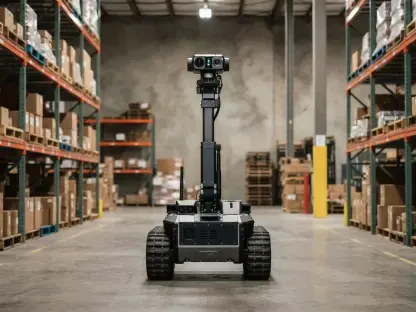
The leading edge of this technological shift involves autonomous execution and high-level gate automation, as seen in recent deployments by Penske and Georgia-Pacific. By automating the identification and movement of trailers, these organizations are removing human error from the most critical touchpoints of the yard. Georgia-Pacific’s use of autonomous movers for over 1,000 production moves highlights a future where routine tasks are handled by intelligent systems, freeing human operators to focus on exception management. This evolution ensures that trailers are moved to the correct doors at the exact moment they are needed, eliminating the post-work dwell periods that often occur when manual coordination fails. Automating gate entries further streamlines the process by ensuring that every arrival is accurately logged and prioritized immediately. These advancements represent a fundamental change in how logistics profits are protected, moving from manual observation to a self-optimizing environment.
Part 1. Operational Scorecards: Measuring Real-Time Performance
To successfully recover hidden profits, organizations must move beyond basic trailer counts and implement rigorous, data-driven operational scorecards. A comprehensive scorecard should track nuanced metrics like arrival-to-gate duration, door occupancy efficiency, and the time a trailer remains idle after unloading is completed. By analyzing these specific timestamps, managers can identify the exact root causes of delays, whether they stem from carrier lateness, internal equipment failures, or warehouse labor shortages. This level of granularity allows for targeted interventions that address the specific behaviors driving up costs, rather than applying broad, ineffective solutions. Furthermore, these scorecards enable companies to hold carriers and internal departments accountable for their performance based on objective data rather than anecdotal evidence. The ability to distinguish between time spent performing work and time lost to friction is the key to unlocking significant financial gains.
Part 2. Operational Scorecards: Turning Exceptions into Action
The final steps in this transformation involve reconciling technology-driven savings with actual financial records to ensure that operational gains translated into realized profits. Leaders who successfully optimized their yard logistics focused on eliminating the silos between transportation and warehousing, creating a single source of truth for all trailer movements. They prioritized the management of exceptions, turning real-time data into actionable decisions that prevented detention fees and improved labor productivity. By adopting autonomous tools and integrated digital platforms, these organizations turned the chaos of the yard into a structured, predictable environment. The shift toward proactive execution allowed facilities to maximize their existing assets, effectively recovering millions in previously hidden supply chain costs. Ultimately, the transition from reactive firefighting to data-driven orchestration proved that the yard was not just a storage space, but a vital engine for long-term operational resilience.