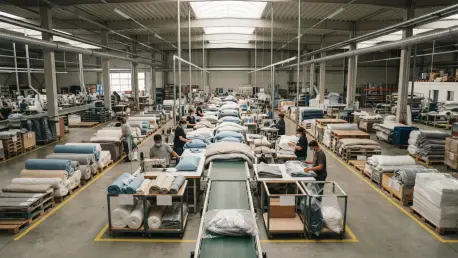

Respa’s strategy demonstrates that heritage should never be an excuse for stagnation, particularly when competing in a high-speed global retail environment. In the heart of Oldcastle, County Meath, this third-generation family business has realized that the techniques which secured success in 1947 require a fundamental update to thrive in 2026. Under the guidance of CEO Pamela Stone, the organization recently embarked on a rigorous journey to overhaul its production lines and administrative workflows. This was not merely an exercise in modernization but a strategic recalibration aimed at harmonizing the soul of traditional Irish craftsmanship with the precision of lean manufacturing principles. By stepping away from the daily grind to scrutinize the very marrow of its operations, the leadership team set a precedent for how legacy brands can navigate the pressures of modern commerce. The focus remained squarely on adding value where it matters most: the quality of the product and the reliability of the service provided to its extensive retail network.
Simplifying Complexity: The Lean Philosophy
Lean manufacturing is frequently misinterpreted as a clinical method for slashing headcount or reducing material costs, but at the factory in Oldcastle, it has been redefined as a philosophy of intentional simplification. The objective was to strip away the unnecessary complexity that naturally accumulates within a business over decades of operation. When processes are allowed to grow organically without regular pruning, they often become convoluted, creating friction that slows down even the most skilled workers. Respa identified that by refining the movement of both information and materials, the company could liberate its artisans from the burden of logistical distractions. This shift in perspective ensures that the expertise of the staff is utilized for high-value creation rather than being wasted on navigating poorly organized workspaces. Ultimately, the goal was to create a production environment where the path from raw material to a finished premium bed is as direct and logical as possible for the manufacturing team.
The cornerstone of this transformation was a structured eight-week recalibration program that forced the leadership team to temporarily step back from day-to-day management to challenge long-standing routines. This period served as a critical catalyst for breaking habits that had become institutionalized over several generations of family ownership. By examining the production line through an objective lens, the company was able to identify specific points of failure where physical materials or energy were being squandered. This methodology did not seek to rewrite the company’s history but rather to build a stronger foundation that could support the weight of modern consumer expectations and global logistics. Transitioning from a tradition-led mindset to a data-driven lean approach required a bridge between the company’s 1947 origins and the high-speed demands of the current market. This structured review process led to the discovery of bottlenecks that had previously been accepted as unavoidable quirks of the legacy manufacturing process.
Employee Empowerment: Encouraging Bottom-Up Innovation
A fundamental discovery during the recalibration journey was that the most profound insights into operational efficiency rarely come from the boardroom, but from the factory floor. Pamela Stone emphasized the necessity of a bottom-up approach to innovation, actively soliciting feedback from the craftspeople who spend their lives building these products. By moving away from a traditional top-down management style, the company tapped into a reservoir of practical knowledge that spreadsheet analysis often misses. These employees possess an intimate understanding of the nuances of bed manufacturing and are the first to notice when a process is counterproductive or frustrating. Inviting them to participate in the redesign of their own workspaces transformed the concept of lean manufacturing from a corporate directive into a collaborative mission. This inclusivity ensured that the changes made were not only technically sound but also highly practical for those responsible for executing them during their daily shifts in the factory.
Fostering a sense of ownership among the staff has been instrumental in making the lean transition a permanent part of the corporate culture rather than a temporary initiative. When an employee sees their specific suggestion implemented to reduce physical strain or simplify a complex task, their commitment to the broader goals of the company naturally increases. This cultural shift is vital for the long-term sustainability of any organizational change, as it moves the focus from compliance to active engagement. The recalibration program successfully demonstrated that respecting workers’ expertise is just as important as investing in new technology. By creating an environment where every member of the team feels empowered to identify and solve problems, the business has built a more resilient workforce capable of adapting to future challenges. This empowerment has led to a noticeable boost in morale, as workers no longer feel like they are working around flawed systems but are instead supported by a structure they helped build.
The Core Challenge: Balancing Tradition and Efficiency
One of the most significant challenges in modernizing a heritage brand is maintaining the delicate balance between handcrafted quality and industrial efficiency. There is a common misconception that lean principles inevitably lead to a homogenized, machine-made product that lacks character. However, the leadership in Oldcastle argues that operational efficiency is actually the greatest protector of traditional craftsmanship. By removing the administrative and logistical waste that often clutters a workday, the company allows its skilled makers to focus their attention entirely on the intricate details that define a premium bed. If a master upholsterer is not forced to hunt for materials or clarify vague instructions, they can dedicate more time to the hand-tufting and stitching that machines cannot replicate. This synergy ensures that the final product retains its artisanal soul while benefiting from the reliability and speed of a modern, optimized manufacturing environment that supports high-volume output.
This hybrid model allows the organization to retain its “Guaranteed Irish” status while remaining competitive against larger international brands that may benefit from lower production costs. In a market where consumers increasingly value both provenance and performance, being able to deliver a handcrafted product at scale is a distinct competitive advantage. The efficiency gained through lean practices acts as the engine that powers the business, providing the financial and operational stability required to sustain a local workforce. Rather than viewing tradition and technology as opposing forces, the company treats them as complementary pillars of a successful modern enterprise. This approach has allowed the business to scale its operations without diluting the core values that have sustained it for nearly eighty years. By proving that efficiency can coexist with high-end craftsmanship, the brand has established a new standard for how traditional manufacturing can survive and flourish in a fast-paced economy.
Strategic Growth: Strengthening the Retail Ecosystem
While the primary changes occurred within the factory, the ultimate objective of the recalibration was to provide superior service to the company’s network of retail partners. As a trade-focused business, the manufacturer’s growth is fundamentally linked to the success of the stores that sell its products to the end consumer. By streamlining internal operations, the company has been able to offer a level of consistency and reliability that was previously difficult to maintain. A more disciplined manufacturing process ensures that every unit leaving the facility meets the same exacting standards, reducing the likelihood of returns or customer dissatisfaction. This consistency is crucial for retailers who need to maintain their own reputations for quality. When a manufacturer can guarantee that its products are built to a repeatable high standard, it builds a foundation of trust that is essential for long-term commercial partnerships in an increasingly competitive global retail landscape.
The fundamental goal of removing waste in a lean manufacturing context also naturally aligns with the company’s broader commitment to environmental stewardship. In this framework, waste is categorized as anything that does not add value, ranging from discarded fabric scraps to the wasted energy of an inefficient machine. Prior to the recent recalibration, the company had already established a strong foundation in sustainability through the use of solar-powered production and FSC-certified timber. The integration of lean principles has amplified these efforts by creating a culture where every employee is encouraged to identify and eliminate waste in all its forms. This includes reducing the amount of energy required for each production cycle and finding innovative ways to reuse or recycle materials. By aligning operational goals with environmental values, the business has created a robust roadmap for the future that addresses the growing consumer demand for ethical and eco-friendly products.
Looking Ahead: Cultivating Continuous Improvement
The eight-week recalibration was never intended to be a finite project with a fixed conclusion, but rather the starting point for a permanent cultural evolution. The ultimate goal of the leadership team is to instill the principle of Kaizen, or continuous improvement, throughout every level of the organization. This mindset encourages all staff members to constantly question and refine their work processes, ensuring that the business remains agile and responsive to a shifting market. By moving away from the idea that a process is finished once it is improved, the organization has prepared itself for a future where change is the only constant. This philosophy focuses on the cumulative power of small, incremental adjustments rather than relying solely on large-scale capital investments to drive growth. Over time, hundreds of minor improvements in efficiency lead to a massive transformative impact on the company’s overall health, keeping the brand vibrant and capable of overcoming upcoming challenges.
In the end, the recalibration program at the Oldcastle facility successfully demonstrated that a third-generation business could fundamentally reinvent itself. The leadership team moved beyond the constraints of tradition to embrace a more streamlined and responsive way of working. They established a culture where every employee felt responsible for the quality and efficiency of the brand, creating a shared sense of purpose. This shift in mindset paved the way for more sustainable production methods and stronger relationships with retail partners. By viewing lean manufacturing as a tool for simplification rather than reduction, the company protected its artisanal roots while gaining a significant competitive edge. Moving forward, manufacturers should look to this model as a blueprint for balancing legacy with progress. They must continue to prioritize the human element of production while ruthlessly eliminating systemic waste. Success required a commitment to constant adaptation and the courage to challenge history.