
The persistent challenge of optimizing warehouse space while accelerating order fulfillment has driven a technological revolution in packaging, placing once-futuristic automation squarely at the center of modern intralogistics. As e-commerce and omnichannel operations grapple with escalating demands for speed, efficiency, and environmental responsibility, the machinery they rely on must evolve beyond simple conveyance to become a strategic asset. In this context, the CMC Super Vertical Box emerges as a compelling solution, promising to redefine the packaging process through right-sized, on-demand automation. This review examines its core technology, performance, and overall value to determine its place in today’s demanding fulfillment ecosystem.
Is the SV-Box a Worthwhile Investment for Modern Fulfillment
The value proposition of the CMC Super Vertical Box is intrinsically tied to the primary pain points of contemporary logistics: limited space, rising labor costs, and an urgent need for sustainable practices. For e-commerce businesses and omnichannel retailers, the calculus of investment extends beyond initial capital outlay to include long-term operational savings. The SV-Box positions itself as a solution that directly addresses these multifaceted challenges by automating a critical, yet often inefficient, part of the supply chain. Its automated, right-sizing technology promises not just to reduce material consumption but also to optimize truckloads and lower shipping costs, creating a cascade of financial and environmental benefits.
Consequently, evaluating the SV-Box as a worthwhile investment requires a holistic view. The system’s ability to create a custom-fit box for every order eliminates the need for bulky void-fill materials and a vast inventory of pre-sized cartons, freeing up valuable warehouse floor space. By automating the box creation and sealing process, it also reduces dependency on manual labor in a sector where talent is increasingly scarce. For operations struggling to scale efficiently without a proportional increase in their physical footprint or headcount, the justification for this technology becomes less about cost and more about strategic necessity.
Core Technology a Closer Look at the “Box-Last” Innovation
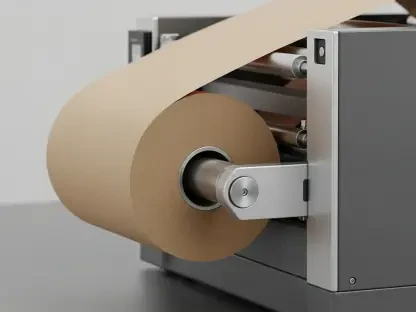
At the heart of the SV-Box is its unique “box-last” process, a fundamental departure from conventional packaging methods. Unlike traditional systems that begin with a pre-made carton and attempt to fit an order inside it, the SV-Box reverses the sequence entirely. High-resolution cameras first measure the precise dimensions of the items in an order, capturing the real-world height, width, and length. Based on this data, the machine then constructs a perfectly sized box from a single, continuous reel of corrugated material, effectively building the package around the product.
This innovative approach renders the “box-first” model obsolete. The older method inherently creates inefficiencies, forcing packers to choose the “best fit” from a limited range of carton sizes, which almost always results in wasted space. This excess volume not only requires the use of plastic-based void fillers but also contributes to higher dimensional weight shipping fees and underutilized transport capacity. In contrast, the SV-Box’s on-demand construction eliminates these compromises, ensuring every package is as compact as possible, which streamlines the entire outbound logistics flow.
Performance Under Scrutiny Throughput, Footprint, and Sustainability
A detailed assessment of the SV-Box reveals impressive performance metrics that align with its technological promise. The system is engineered to produce up to 500 custom-sized boxes per hour, a throughput rate that meets the needs of many small to medium-sized fulfillment centers. More strikingly, it achieves this output within an ultra-compact footprint of just 10 m² (110 sq. ft.). This represents a significant space saving—up to a tenfold reduction compared to conventional automated packaging lines—making it a viable solution even for facilities with severe spatial constraints.
Beyond its operational efficiency, the SV-Box delivers substantial sustainability gains. Its cut-to-size process can reduce corrugated material consumption and packaging waste by up to 60%, a figure that has profound implications for both cost and environmental impact. This material efficiency also aligns with emerging global standards, such as the EU Packaging and Packaging Waste Regulation (PPWR), positioning users for future compliance. Moreover, the system is designed for seamless integration into larger end-to-end automated workflows, such as a Pick2Pack process, where orders move directly from storage to packaging with minimal human intervention.
Strengths and Considerations a Balanced Assessment
The primary strengths of the SV-Box are clear and compelling. Its significant savings in space and materials offer a dual benefit that directly impacts the bottom line. For small to medium-sized enterprises (SMEs), these advantages translate into a rapid return on investment, often projected at under two years, making advanced automation accessible to a broader market. Furthermore, the system’s design emphasizes scalability, allowing it to function as a standalone unit or as a component within a more complex, fully integrated logistics system like the CMC Genesys with Vary-Tote, which connects directly to any Automated Storage and Retrieval System (AS/RS).
However, potential adopters should also weigh certain considerations. While a throughput of 500 boxes per hour is robust for many operations, massive-scale distribution centers with exceptionally high order volumes might find this capacity limiting for their main outbound lines. Additionally, effective integration requires careful planning to ensure compatibility with existing Warehouse Management Systems (WMS) and conveyance infrastructure. The transition to a “box-last” model may necessitate adjustments to upstream processes to ensure orders are presented to the machine correctly, a factor that should be included in implementation planning.
Final Verdict an Innovative Leap in Packaging Automation
The CMC Super Vertical Box represents a significant and practical advancement in automated packaging technology. Its clever “box-last” engineering effectively dismantles the long-standing inefficiencies of traditional packing methods, offering a solution that is both resource-efficient and space-conscious. By addressing the interconnected challenges of material waste, labor dependency, and dimensional shipping costs, it provides a powerful tool for modernizing intralogistics. The SV-Box is more than just a machine; it is an integrated system that transforms packaging from a manual bottleneck into a streamlined, strategic component of the fulfillment process.
Our Recommendation Who Benefits Most from the SV-Box
Based on this review, the ideal user for the CMC Super Vertical Box is a small to medium-sized enterprise in e-commerce or third-party logistics (3PL) that is contending with space constraints and seeking to introduce or expand automation. Its compact footprint, rapid ROI, and significant material savings provide a clear and attainable path to enhanced efficiency and sustainability. For these businesses, the SV-Box can be a game-changing investment that enables scalable growth.
Larger operations should not dismiss the SV-Box but rather consider it for a different strategic application. Instead of replacing a high-speed central sorter, it can be deployed to create flexible, scalable, and decentralized packaging stations within a larger automated workflow. This approach allows for greater operational agility, enabling a facility to handle diverse order profiles or manage peak-season overflow more effectively. In either scenario, the SV-Box stands out as an intelligent and forward-thinking solution for the evolving demands of the fulfillment industry.