
The global logistics industry is currently navigating a period of unprecedented transformation, where the pressure to maximize warehouse density and operational speed has reached a critical peak. As industrial real estate costs continue to rise in major economic hubs, the traditional model of sprawling, manual warehouses is rapidly giving way to vertically integrated, technology-driven facilities. The stow Group is addressing these challenges by presenting a comprehensive ecosystem that bridges the gap between classic industrial storage and high-tech robotics. By positioning itself as a strategic partner capable of supporting logistics operations at every stage of their technological maturity, the company provides a clear roadmap for enterprises looking to scale efficiently. Through a collaborative showcase with Movu Robotics, the presentation highlights a unique ability to offer a unified solution that simplifies the often fragmented process of warehouse modernization. This approach ensures that businesses can optimize their existing footprints while preparing for the demands of an increasingly automated global supply chain.
Advancing the Architecture of High-Density Storage
Scaling Foundations: Advanced Racking Systems
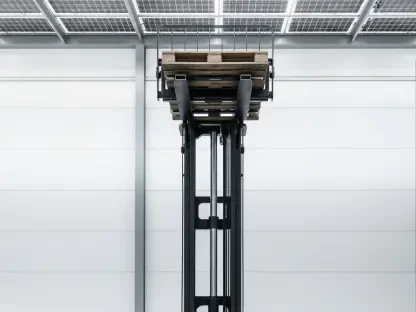
Robust physical infrastructure remains the essential backbone of any logistics operation, regardless of how much software or robotics is layered on top of it. With over four and a half decades of engineering experience, stow Group continues to refine its static storage portfolio to support the increasing weights and heights required by modern high-bay warehouses. These systems, ranging from drive-in racks to pallet live storage, are engineered to optimize every available cubic inch, providing the stability needed for both ambient and temperature-controlled environments. The versatility of these designs allows companies to store diverse inventories, from fragile high-value electronics to bulk perishable goods, with equal reliability. This structural integrity is vital because it serves as the literal foundation for future automation upgrades, ensuring that the physical frame can withstand the continuous movement and precision required by autonomous systems without compromising safety or durability.
Beyond mere durability, the modular nature of contemporary racking systems allows for a level of customization that was previously unattainable in large-scale industrial settings. Modern warehouse managers are looking for solutions that can adapt to seasonal fluctuations and changing product dimensions without requiring a complete overhaul of the existing facility. The current design philosophy emphasizes scalability, where basic pallet racking can be expanded or reconfigured as a business grows or shifts its focus. By prioritizing high-grade materials and precision manufacturing, the Group ensures that its racking solutions maintain their structural integrity over long lifecycles, reducing the total cost of ownership. This long-term perspective is crucial for logistics operators who must balance immediate capital expenditures with the need for a resilient infrastructure that can support decades of operational shifts. Consequently, the transition to more advanced tech starts with these reliable physical blocks.
Transitioning Through Smarter: Semi-Automation
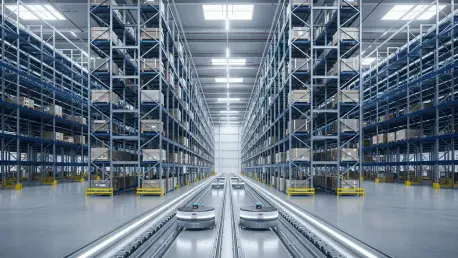
For many organizations, the leap from manual operations to fully autonomous environments can feel like a prohibitive hurdle due to the significant capital investment and technical complexity involved. To address this gap, semi-automated solutions have emerged as a strategic middle ground, offering substantial efficiency gains without the full-scale overhaul required by total automation. The stow Atlas 4.0 pallet shuttle system represents a pinnacle of this evolutionary step, utilizing autonomous shuttles to transport goods within deep-lane racking structures. By operating on a Last-In, First-Out basis, the system significantly reduces the reliance on heavy forklift traffic in narrow aisles, which in turn enhances warehouse safety and lowers energy consumption. This technology is particularly effective in demanding environments, such as cold storage or frozen facilities, where human labor is often difficult to retain and maintain. The Atlas 4.0 specifically focuses on maximizing throughput while maintaining a compact footprint for the facility.
The focus on future-ready connectivity in the latest shuttle iterations ensures that these semi-automated tools are not isolated silos but integrated components of a broader digital ecosystem. Enhanced serviceability and diagnostic features have become standard, allowing maintenance teams to identify potential issues before they lead to operational downtime. This proactive approach to maintenance is essential for high-volume centers where even an hour of inactivity can ripple through the entire supply chain, causing delays and increased costs. Moreover, the integration of these shuttles into existing warehouse management systems allows for real-time tracking of inventory, providing managers with the granular data needed to make informed decisions about stock rotation and space allocation. By implementing these smarter tools, businesses can achieve a level of operational agility that allows them to respond quickly to market changes. This gradual shift toward automation provides a manageable path for companies seeking to modernize their logistics footprint.
Strategic Global Reach and Technological Integration
Expanding Production: The North American Market
Recognizing the shifting dynamics of global trade and the increasing demand for localized manufacturing, stow Group has made a decisive move to solidify its footprint in the North American region. The establishment of a massive 240,000-square-foot manufacturing facility in Adairsville, Georgia, marks a significant milestone in this international expansion strategy. This facility, which became fully operational by April 2026, is designed to serve as a hub for the production of high-quality racking components and automated systems tailored for the American market. By bringing production closer to the end-user, the company can drastically reduce lead times and shipping costs, providing a more responsive service model for its North American clientele. This move also reflects a broader trend of near-shoring in the logistics industry, where companies seek to mitigate the risks of global supply chain disruptions by building resilient, local supply networks. The Georgia plant represents a long-term commitment to regional growth.
This localized production capability is not just about logistics efficiency; it also allows for better alignment with specific American industrial standards and customer requirements. Having a domestic manufacturing presence enables the Group to provide seamless support to European partners who have expanded their operations into the United States, offering a consistent level of quality across different continents. The Adairsville site utilizes advanced manufacturing technologies to maintain the high standards associated with the brand while scaling up to meet the needs of large-scale distribution centers. This expansion creates a more robust global network, where innovation and resources can be shared across regions to drive continuous improvement in product design and service delivery. For customers, this means access to a reliable partner capable of supporting global expansion projects with local expertise and resources. The presence of this facility ensures that the latest storage innovations are readily available to a market that is hungry for high-efficiency solutions.
Maximizing Efficiency: Movu Robotics Partnership
The synergy between traditional storage hardware and robotic intelligence is the defining characteristic of the modern logistics landscape, as evidenced by the partnership with Movu Robotics. By integrating robotic shuttle systems and autonomous mobile robots directly into the racking architecture, the Group provides a unified solution that simplifies the complex process of warehouse automation. This one-stop shop model is particularly beneficial for companies that may be overwhelmed by the prospect of managing multiple vendors for racking, software, and robotics. The collaboration ensures that every component is designed to work in harmony, from the physical rails the shuttles run on to the software that orchestrates their movements. This level of integration reduces the risk of compatibility issues and streamlines the implementation process, allowing for a faster return on investment. The focus remains on making automation accessible and scalable for warehouses of all sizes.
Beyond simple storage and retrieval, the inclusion of Movu Robotics allows for a more holistic approach to warehouse flow and labor optimization. These robotic systems are designed to handle repetitive, physically demanding tasks, allowing human workers to focus on more complex, value-added activities within the facility. This shift not only improves overall productivity but also helps to mitigate the impact of labor shortages that continue to plague the logistics sector. The ability to deploy these robots in a plug-and-play fashion means that facilities can gradually increase their level of automation as their needs evolve, rather than committing to a rigid, static system from the start. By lowering the barriers to entry for advanced robotics, the Group is empowering more companies to achieve the high throughput and accuracy required to compete in the modern marketplace. This integration represents the next logical step in the journey toward a fully optimized, responsive, and resilient supply chain.
In light of the rapid advancements in warehouse technology, the most effective path forward for logistics professionals involved the adoption of a phased, scalable approach to automation. Decision-makers were encouraged to prioritize infrastructure that allowed for the seamless integration of robotics while maintaining the flexibility to adapt to changing market conditions. By moving toward a unified model where racking and robotics functioned as a single cohesive unit, organizations successfully reduced operational overhead and maximized their available storage space. Future considerations highlighted the importance of localized manufacturing and robust digital connectivity as key pillars for maintaining supply chain resilience in an increasingly volatile global environment. Ultimately, the industry moved toward a standard where the physical and digital aspects of the warehouse were no longer treated as separate entities, but as a integrated foundation for long-term growth. This strategy proved essential for those seeking to remain competitive and responsive in a high-demand economy.