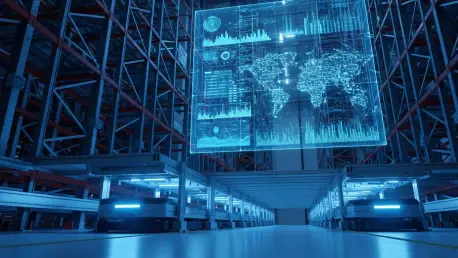

The chaotic symphony of honking trucks and manually sorted parcels that once defined India’s back-end economy has been replaced by the quiet hum of synchronized robotics and algorithmic decision-making. This radical transformation represents more than just a modernization effort; it is a fundamental shift in how the world’s most populous nation moves its goods. As consumer expectations sharpen, the once-fragmented landscape of regional transporters and manual warehouses has evolved into a unified, high-precision network.
The transition stems from a critical realization: the old ways of doing business cannot support the weight of a multi-trillion-dollar economy. With the rise of quick commerce and hyper-local delivery models, the luxury of waiting days for a package has vanished. This change has pushed automation from an experimental luxury for the few into an absolute necessity for survival in a market where speed is the primary currency.
From Manual Labor to Digital Precision: A Sector in Flux
For decades, the Indian logistics landscape functioned through a complex web of informal labor and decentralized management. This reliance on human intervention often led to bottlenecks and inconsistencies that hindered growth. However, the current era sees a dramatic pivot where technology dictates the pace of movement. Real-time data streams and cloud-based management systems have effectively replaced paper ledgers, ensuring that every parcel is tracked from the moment it leaves the factory floor.
The demand for ten-minute deliveries has served as a primary catalyst for this structural overhaul. To meet such aggressive timelines, the traditional supply chain had to be re-engineered from the ground up. Automation is no longer just about efficiency; it is about the physical capability to handle millions of micro-transactions simultaneously. This shift forced legacy players to either adopt digital-first strategies or risk becoming obsolete in an increasingly impatient marketplace.
The Economic Mandate for a High-Tech Supply Chain
India’s ambition to become a global manufacturing powerhouse hinges on its ability to move raw materials and finished products with minimal friction. Historically, logistics costs in India remained significantly higher than those in developed economies, often hovering around fourteen percent of the national GDP. Reducing this figure to single digits is not just an operational goal but an economic mandate that requires massive technological intervention to bridge the gap between production and consumption.
Speed and accuracy are the twin engines driving this mandate. By streamlining the movement of goods, the nation enhances its competitiveness on the global stage, making it an attractive destination for international investors. This technological leap supports the broader vision of a self-reliant economy where the internal supply chain is as robust and scalable as the international networks it connects to. Every automated sortation center and digital portal contributes to this overarching objective of national economic resilience.
Warehousing 2.0: Robotics and AI-Driven Inventory Control
In the urban centers where real estate prices are skyrocketing, the traditional sprawling warehouse is being replaced by high-density, vertical storage solutions. Automated Storage and Retrieval Systems (AS/RS) allow facilities to maximize every square inch of space, utilizing robotic cranes and shuttles that navigate narrow aisles with millimeter precision. This densification is critical for keeping inventory close to the end consumer without incurring unsustainable land costs.
Furthermore, the integration of AI-led demand forecasting has revolutionized how inventory is managed during peak seasons. By analyzing historical data and current market trends, these systems can predict demand surges before they happen, allowing warehouses to pre-position stock. This proactive approach reduces the reliance on temporary manual hiring and minimizes the risk of human error during high-stress periods, ensuring that the backend remains stable even when order volumes triple overnight.
Smart Infrastructure and the Rise of Integrated Logistics Parks
The development of Smart Logistics Parks marks a significant milestone in India’s infrastructure journey. These hubs are designed as interconnected ecosystems where road, rail, and air transport converge seamlessly. By utilizing Internet of Things (IoT) sensors and GPS tracking, these parks provide end-to-end visibility that was previously impossible. This transparency allows stakeholders to monitor cargo health, location, and estimated arrival times with pinpoint accuracy, drastically reducing transit delays.
Strategic facilities, such as the prominent hub in Nagpur, serve as a blueprint for this new model. These centers utilize automated gate management systems to streamline the entry and exit of thousands of vehicles daily. By removing the manual check-in process, these hubs increase throughput and reduce the carbon footprint of idling trucks. These parks are not just storage spaces; they are high-speed transit engines that synchronize the flow of goods across the entire subcontinent.
Strategic Framework for Implementing Automation in Indian Logistics
To maintain global competitiveness, Indian logistics providers must adopt a strategic framework that prioritizes “fast, fluid, and flawlessly automated” operations. The first step involves integrating quick commerce capabilities into the existing infrastructure, allowing for rapid response to local demand. This requires a transition from reactive logistics to a predictive model where automation handles the heavy lifting of sorting and dispatching, leaving human oversight for high-level strategic decisions.
The ultimate goal of this framework was to create a scalable backend that can handle the complexities of a diversifying economy. Companies successfully moved away from the volatile cycle of seasonal hiring toward a stable, technology-led operational model. This evolution ensured that the logistics sector remained a pillar of strength, capable of supporting the massive volume of goods required by a burgeoning middle class. The focus remained on building a resilient network that looked toward long-term growth rather than short-term gains.