
The rhythmic hum of a synchronized production line in Großzöberitz serves as a testament to the fact that heavy industrial manufacturing can finally shed its reputation for being loud, smoky, and ecologically taxing. Within the walls of one of Europe’s most advanced facilities, the process of transforming raw steel into sophisticated safety doors occurs with a surgical precision that leaves no room for mechanical downtime or environmental compromise. As the demand for fire and burglary protection grows across the continent, this plant has become a lighthouse for how a massive enterprise can maintain a high-speed output while whispering through its daily operations.
Precision in Motion: Moving 2,000 Doors a Week Without a Single Tailpipe Emission
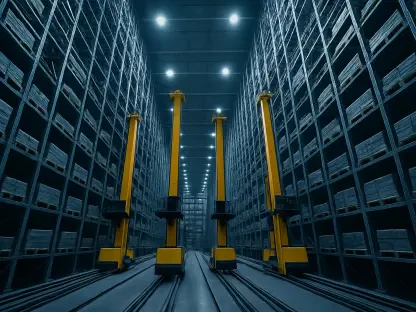
At the heart of this operation in Saxony-Anhalt, Teckentrup GmbH & Co. KG manages a flow of materials that would overwhelm a less organized facility. Producing 100,000 steel doors annually requires a logistical heartbeat that never skips a beat, yet the air inside remains clean and the noise levels stay remarkably low. This environment is made possible by a transition to a completely emission-free internal supply chain, proving that the scale of industrial production does not have to be at odds with modern environmental standards. By coordinating thirty electric Clark forklifts, the plant ensures that every component moves exactly when and where it is needed without the exhaust fumes of traditional internal combustion engines.
The efficiency here is not just about the lack of emissions; it is about the seamless integration of technology into the workflow. Each movement is part of a larger, digitalized dance where raw materials enter one end of a kilometer-long production line and emerge as finished, high-specification products. This shift toward a green fleet has reinforced the company’s reputation for innovation, showing that sustainability can be a primary driver of operational excellence rather than just a secondary corporate goal. It is a bold statement in an industry where heavy lifting was once synonymous with diesel power and heavy carbon footprints.
The High Stakes of High Vertical Integration in Modern Manufacturing
Maintaining a vertical integration rate of 90 percent is an ambitious undertaking that places immense pressure on internal logistics. For Teckentrup, this means that nearly every part of a door, from the frame to the specialized internal insulation, is created in-house to ensure it meets rigorous European safety standards. Such a high level of self-reliance requires an airtight logistical framework; any delay in moving a steel coil or a pallet of components could stall an entire wing of the factory. As regulations for sound and fire protection become more complex, the ability to control every step of the manufacturing process becomes a significant competitive advantage.
In the current industrial landscape, the challenge is to power this heavy-duty material handling without compromising the speed or safety required to meet individual customer specifications. Every door is often a custom order, meaning the logistics team must be agile enough to handle varying sizes and weights on the fly. The stakes are particularly high when dealing with products designed to save lives during a fire or prevent a security breach. Consequently, the machinery used to transport these goods must be as reliable and precise as the engineering behind the doors themselves, creating a need for a fleet that is both powerful and incredibly flexible.
Engineering a Logistical Masterpiece: The Clark Fleet Integration
The backbone of the plant’s daily movement is the GEX 20-30 series, a group of twenty-seven electric workhorses designed to thrive in high-intensity environments. These vehicles handle the constant transit of steel frames and heavy door components across the sprawling facility with load capacities of up to three tons. Their presence ensures that the production line remains fed with materials, preventing the bottlenecks that often plague large-scale manufacturing sites. Because they are electric, they provide the consistent torque needed for heavy lifting without the maintenance headaches and fuel costs associated with older technologies.
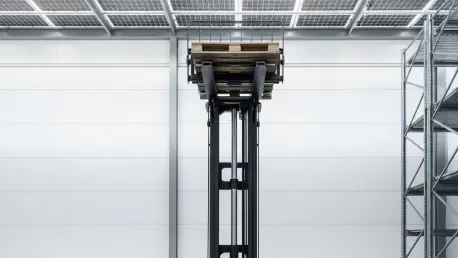
Beyond standard transport, the facility utilizes specialized equipment like the GEX 50, a heavy-duty five-ton electric forklift. This machine is equipped with a triplex mast capable of reaching 8.50 meters, a height necessary for both high-rack storage and the maintenance of the plant’s extensive rooftop solar infrastructure. This versatility allows a single vehicle to serve dual roles, supporting both production and facility management. To navigate the dense production floor, these models utilize a zero steer turn technology with a 101-degree steering angle, allowing 48-volt and 80-volt models to turn on the spot and maximize every square inch of the factory floor.
Strategic battery management further distinguishes this logistical setup from more conventional operations. While many industries are rushing toward lithium-ion solutions, Teckentrup made a calculated choice to utilize lead-acid batteries paired with high-frequency charging. This decision was based on a specific single-shift operational rhythm that allows for ample charging time between uses. By leveraging this traditional yet optimized energy storage method, the company achieved a cost-effective, ten-year service life for its batteries, proving that the latest trend is not always the most efficient choice for every specific operational profile.
Expert Perspectives on Safety and Productivity
According to Peter Handrich, the Head of Supply Chain Management, the decision to integrate Clark equipment was born from a need for technical performance that did not ignore the human element. Industry experts have long noted that driver comfort is a primary catalyst for throughput; a fatigued operator is a less efficient and less safe operator. To address this, the fleet was designed with ergonomic seating and intuitive controls that reduce the physical strain of a long shift. When operators feel comfortable and in control of their machinery, the speed of the entire operation naturally increases without a corresponding rise in risk.
Safety is further bolstered by the “Pilot Protector” restraint system, a specialized framework that replaces standard safety belts with gas-pressure-sprung swing doors. This system is designed to protect operators during lateral movements or potential tip-overs, providing a physical barrier that is easier to use than a traditional harness. This upgrade has enhanced both driver confidence and operational speed during high-pressure shifts, as it allows for quicker entry and exit while maintaining superior protection. The result is a workforce that feels supported by their equipment, leading to a more stable and predictable production environment.
A Framework for Implementing Seamless Industrial Material Handling
Optimizing a facility of this magnitude requires more than just high-quality hardware; it demands a comprehensive strategy that bridges the gap between digital data and physical labor. By equipping material handling vehicles with tablets linked directly to the enterprise resource planning system, the plant eliminated paper-based errors and provided drivers with real-time inventory updates. This digitalization ensures that the right materials are always in the right place, reducing wasted movement and allowing the fleet to operate at peak efficiency throughout the workday.
Another critical component of this framework is the synchronization of energy and equipment. By aligning vehicle charging schedules with the output of the on-site 1000 kWp photovoltaic system, the facility can essentially fuel its fleet with the sun. This synergy reduces operational costs and the carbon footprint simultaneously, creating a closed-loop energy system that benefits the bottom line. Furthermore, the use of hydraulic fork adjustments allows a single vehicle to switch between handling raw steel coils and finished, oversized door units without needing to change attachments manually. This versatility, combined with local maintenance support for the specialized masts, ensured that the material handling system remained a flexible asset capable of evolving alongside the plant’s production needs.
The transformation at the Großzöberitz plant demonstrated that modernizing a legacy manufacturing site required a holistic approach to technology and energy. The leadership team successfully transitioned from traditional logistical methods to a data-driven, electric-powered ecosystem that prioritized operator safety and environmental health. By choosing equipment that offered extreme maneuverability and integrating it with renewable energy sources, the facility set a new benchmark for high-volume industrial efficiency. The project concluded by proving that sustainable practices could significantly enhance the reliability and speed of a global supply chain.