
With decades of experience in management consulting, Marco Gaietti is a seasoned expert in Business Management. His expertise spans a broad range of areas, including strategic management, operations, and customer relations. In this discussion, we explore how modern organizations can move beyond the “pizza party” mentality to build teams that are resilient, digitally integrated, and prepared for the AI-augmented future. We delve into the nuances of virtual inclusion, the metrics that actually matter for team health, and the transition from casual social bonding to structured, high-impact collaboration.
Social gatherings like office parties often provide a brief morale boost, yet they rarely improve long-term resilience. How should leaders differentiate between casual social bonding and structured skill-building, and what specific steps ensure an activity creates a lasting impact on how a team handles pressure?
The fundamental difference lies in the intent: casual bonding creates memories, while structured activities drive business results. A pizza party might make everyone happy for 24 hours, but a well-crafted problem-solving exercise strengthens the team’s ability to handle a 10% spike in workload or a sudden shift in strategy. To ensure lasting impact, leaders must choose activities that act as a “safe environment” to experiment with communication styles and resolve conflicts without real-world stakes. For instance, a 15-minute “Problem Swap” session where peers offer fresh perspectives on current blockers can immediately leverage collective intelligence. By practicing these responses in a low-stakes setting, the team builds the “muscle memory” needed to remain coordinated and confident when actual pressure mounting.
Remote and hybrid teams often struggle with a lack of spontaneous interaction, which can lead to communication silos. What design principles make virtual activities feel natural rather than forced, and how can teams ensure that remote employees have the same level of influence as those on-site?
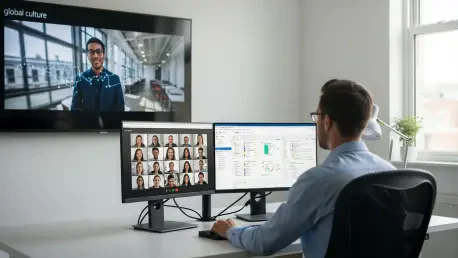
To make virtual interaction feel organic, we must intentionally design “serendipity” into the digital workspace. This can be achieved through “Virtual Water Cooler” sessions—open video channels for drop-in conversations—or “Global Culture Exchanges” where members present local traditions to build inclusivity. The key principle for equal influence is to adopt “digital-first” activities where even on-site employees log in individually to the same platform. This leveling of the playing field ensures that a remote worker in a different time zone has the same visual real estate and “voice” as someone sitting in the main office. Using asynchronous challenges, like fitness or reading goals tracked over months, also allows participation to happen on everyone’s own schedule, preventing the “out of sight, out of mind” dynamic.
High-performing teams frequently rely on psychological safety to share ideas early and admit mistakes without fear. How do specific communication exercises help reveal the different ways people process information, and what is the relationship between this shared understanding and faster decision-making?
Communication breakdowns rarely stem from bad software; they happen because we don’t realize one colleague processes information verbally while another needs an analytical, written breakdown. Exercises like “Communication Style Assessments” or “Active Listening Workshops” (typically 30 to 45 minutes) help teams map out these individual preferences. When a team establishes a common language and agreed-upon protocols, it drastically reduces the “cycle time” from idea to action because people spend less time second-guessing intent. This psychological safety allows members to admit a mistake in 30 seconds rather than hiding it for three days, which directly accelerates decision velocity. We find that teams with this shared understanding can navigate complex projects with far less friction and faster conflict resolution.
Structured problem-solving exercises, such as “root cause” games or scenario planning, can mirror actual workplace challenges. In what ways do these simulations prepare a group for sudden changes in project scope, and how can a team transition these practiced habits into their daily workflows?
Simulations like “Scenario Planning” (60 minutes) or “Root Cause Analysis Games” (45 min) train the brain to look for the “Five Whys” rather than just reacting to symptoms. These exercises prepare a group for sudden shifts—like a 20% budget cut or a competitor’s surprise move—by building strategic foresight and resilience. To transition these habits into daily work, the practice must be embedded into the actual workflow management tools the team uses every day. For example, a team can standardize “Retrospectives” as a recurring workflow rather than a one-off event. When these structured problem-solving steps are visible in a shared workspace, they become the default way of working, ensuring that the innovation fostered in a workshop doesn’t evaporate once the meeting ends.
Integrating artificial intelligence into the workplace requires teams to treat technology as a collaborator rather than just a tool. How can workshops on AI literacy or prompt engineering help align a group’s operational values, and what metrics should be used to track the efficiency of human-AI collaboration?
Workshops on prompt engineering are actually deep exercises in clarity; to get a good output from AI, a team must first be clear about its own goals and operational values. Competitive exercises to generate the best AI output for a specific task help democratize technical skills across the group, ensuring no one is left behind in the “future of work” simulations. When it comes to tracking efficiency, we should look at the “Innovation Rate”—the number of new ideas generated and implemented—and the reduction in manual coordination time. If human-AI collaboration is healthy, we should see a measurable decrease in “Project Cycle Time” as the AI handles rote tasks, leaving the team more space for high-level strategic agility. It’s about measuring how much “human judgment” is being freed up for the complex challenges that AI cannot solve alone.
Measuring the success of team-building initiatives requires looking at concrete data like project cycle times and conflict resolution speed. Which performance indicators best reflect a team’s internal health, and how can leaders use pulse surveys to make real-time adjustments to their collaboration strategies?
The best indicators of a team’s internal health are “Conflict Resolution Speed” and the “Employee Net Promoter Score” (eNPS). If a team can move from a disagreement to alignment in hours rather than weeks, that is a direct reflection of their communication training. Leaders should use “Continuous Pulse Surveys”—short, three-question weekly check-ins—to track trends in team energy and alignment that an annual survey would completely miss. If the data shows a dip in “Connectedness” scores for two weeks straight, a manager can proactively redistribute work or host a 10-minute “Energy Pulse Check” to address the burnout before it leads to turnover. This real-time visibility allows for small, surgical adjustments rather than waiting for a major project failure to realize the team is struggling.
Cross-functional collaboration often slows down when departments don’t understand each other’s constraints. What are the benefits of integrated project simulations or department shadowing, and how do these activities help reduce the time it takes to hand off work between different teams?
Department shadowing and “Integrated Project Simulations” (typically 90 minutes) are designed to build empathy by forcing a sales lead to walk in the shoes of a developer, or vice-versa. These activities reveal the hidden “bottlenecks” and constraints that cause handoffs to fail, such as a lack of shared glossaries or conflicting KPIs. By mapping the “Stakeholder Journey” together, teams can see exactly where information gets stuck at departmental borders. The primary benefit is a significant reduction in “Cross-functional Handoff Time,” as teams start to provide exactly what the next department needs without requiring three follow-up emails. This alignment ensures that the organization moves as a single, coordinated unit rather than a collection of isolated silos working at cross-purposes.
What is your forecast for the future of team building?
I forecast that team building will shift from being an “event” to being a “feature” of the workflow itself. By 2026, we will see the total disappearance of the “off-site only” model in favor of micro-engagements—daily 2-minute appreciation rounds or 5-minute lightning trivia—that are automated through work management platforms. AI will play a massive role by analyzing collaboration signals in real-time to suggest the perfect activity; for example, if the software detects a lag in decision-making, it might prompt the team to run a 10-minute “Flash Brainstorm Challenge.” Ultimately, the teams that win will be those that treat collaboration as a practiced skill that is measured and refined with the same rigor as their quarterly financial targets.