
Achieving high on-time delivery scores is now a primary metric for Mexican suppliers aiming to secure long-term contracts with global OEMs. This fundamental shift reflects a broader maturation of the domestic aerospace landscape, as the industry transitions from simple assembly toward a sophisticated ecosystem defined by high-tech innovation and digital integration. For decades, the region served as a hub for cost-effective manufacturing, but the current paradigm emphasizes the adoption of predictive maintenance technologies and the modernization of federal regulatory frameworks. By aligning these elements, Mexico is successfully transitioning from a regional participant to a central cornerstone of the North American aerospace corridor, ensuring long-term relevance in a competitive market. The synergy between private enterprise and governmental oversight is creating an environment where technological excellence is the standard, allowing the country to secure its future as a premier destination for aerospace manufacturing. This evolution is not just about increasing volume, but about embedding intelligence into every facet of the production cycle.
Industrial Strategy: Digital Transformation and Predictive Intelligence
Fleet Management: Advancing Reliability Through Telemetry
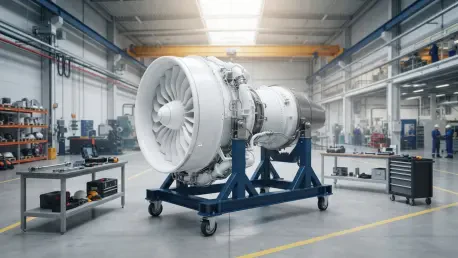
The integration of automated maintenance technologies is rapidly replacing the legacy models of manual data logging that once dominated the Mexican aviation sector. A prominent example of this shift is the deployment of connected-engine telemetry systems, which allow operators to monitor turbine health in real time during flight. Traditionally, fleet management relied on retrospective analysis of logbooks, a method that often missed subtle mechanical anomalies until they resulted in costly downtime or safety concerns. Today, by utilizing sophisticated cloud-based platforms, maintenance directors can receive immediate alerts regarding performance trends that deviate from established baselines. This transition to predictive intelligence enables proactive intervention, ensuring that components are serviced based on actual wear and tear rather than arbitrary schedules. Such a leap in operational efficiency is vital for maintaining the high availability rates expected by business and commercial clients throughout North America, where mechanical reliability remains the primary competitive differentiator.
Operational Standards: Establishing Data-Driven Norms
Beyond the immediate benefits of reduced groundings, these digital advancements are fostering a culture of data-driven decision-making throughout regional aerospace clusters. By adopting systems like Honeywell’s Ensemble technology, domestic operators are effectively harmonizing their maintenance protocols with global standards, making the Mexican fleet more attractive for international partnerships. The ability to provide transparent, real-time health monitoring reports significantly lowers the risk profile for insurers and financiers, further stabilizing the economic foundation of the sector. As these telemetry tools become standard, the focus is shifting toward the creation of localized digital twins, which simulate various flight conditions to optimize fuel consumption and extend the lifecycle of expensive propulsion units. This technological maturity proves that Mexican providers are no longer just building parts; they are managing complex systems that ensure the safety and longevity of modern aircraft while meeting rigorous international environmental requirements.
Systemic Growth: Scaling Capacity and Regulatory Excellence
Manufacturing Evolution: Moving Beyond Assembly to Aerostructures
Mexico’s manufacturing base is currently undergoing a structural transformation as enterprises seek to move up the value chain from simple sub-tier assembly to the production of complex aerostructures. This progression requires a substantial increase in engineering depth, moving away from “build-to-print” models toward integrated design and development capabilities. Strategic alliances between domestic organizations and global powerhouses, such as Korea Aerospace Industries and Posco International, are acting as catalysts for this growth by facilitating the transfer of specialized knowledge. To handle the production of high-value components like wings, empennages, and fuselages, local firms must invest heavily in non-recurring costs associated with advanced composite tooling. Furthermore, securing and maintaining NADCAP accreditation for special processes—such as heat treating and chemical processing—is now a non-negotiable requirement for any firm seeking to compete as a Tier-1 supplier for major aerospace manufacturers.
Institutional Frameworks: Ensuring Compliance and Future Integration
The success of these digital and industrial advancements remains inextricably linked to the strength of the nation’s regulatory environment throughout this period of transition. The Federal Civil Aviation Agency is effectively utilizing its increased budget, which rose from MX$803.1 million in 2026 to a projected MX$1.4 billion by 2028, to modernize surveillance infrastructure and security protocols. This institutional excellence provides the legal certainty required for international investors to commit to high-value projects within the regional clusters. To sustain this trajectory, domestic enterprises recognize that the next logical step involves transitioning from passive manufacturing to proactive risk-sharing partnerships. By participating in the design phases of new aerospace programs, local firms successfully secure their future as indispensable leaders in the global supply chain. This comprehensive approach allows Mexico to decouple its growth from resource constraints and establish a permanent reputation for technological innovation.