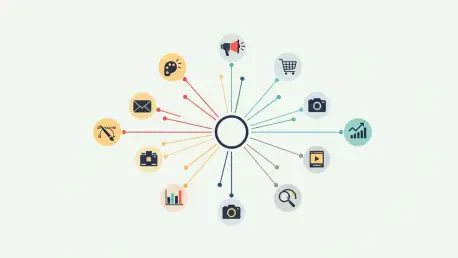

The sprawling digital war room of a modern retail marketing department, often housing hundreds of professionals orchestrating dozens of simultaneous campaigns, operates on a foundation that is increasingly showing its cracks. This complex ecosystem, responsible for driving billions in revenue, frequently relies on a patchwork of disconnected spreadsheets, siloed communication channels, and manual reporting processes that consume thousands of valuable hours. For marketing leaders steering these massive ships, the lack of a single, authoritative source of truth is not just an inconvenience; it represents a significant operational risk, breeding inefficiency, duplicating efforts, and obscuring the direct line between marketing activities and business outcomes. The imperative is no longer about finding a better project management tool, but about adopting a unified operational backbone capable of transforming organizational chaos into strategic, coordinated execution at an enterprise scale.
With Dozens of Campaigns and Hundreds of Marketers Where is Your Single Source of Truth
For any enterprise retail organization, the operational reality of managing a marketing team of over one hundred individuals is a study in controlled complexity. The core of this challenge lies in the sheer volume and velocity of information. Campaigns for product launches, seasonal promotions, and regional events unfold across digital and physical channels simultaneously, each with its own set of timelines, creative assets, and performance metrics. In the absence of a central command center, this critical information becomes scattered across a constellation of disconnected platforms: strategic plans live in slide decks, budgets are tracked in endless spreadsheets, creative feedback is buried in email chains, and performance data is manually compiled from multiple analytics dashboards. This fragmentation forces team members to spend a disproportionate amount of their time hunting for information rather than executing on strategy.
The administrative overhead generated by this disjointed system becomes particularly acute during peak retail seasons, which are the lifeblood of the industry. Consider the lead-up to a major event like Black Friday or the end-of-year holidays. How much time is genuinely lost to manual status updates, redundant check-in meetings, and the constant back-and-forth required to align teams on last-minute changes? The answer, for many, is staggering. This time drain is not merely a hit to productivity; it introduces significant risk. When a creative team is unaware of a last-minute inventory change or a digital marketing team is not aligned with in-store signage, campaigns can misfire, opportunities are lost, and the customer experience suffers. The critical question for leadership is not whether these inefficiencies exist, but how to quantify their cost and what strategic shift is required to eliminate them.
The Breaking Point for Modern Retail Marketing Why Disconnected Operations are Unsustainable
The pressures on contemporary retail marketing teams have reached an inflection point where traditional, siloed operational models are no longer viable. These teams are caught in a crosscurrent of escalating demands. They must execute intricate multi-channel campaigns that seamlessly blend online and offline experiences, from targeted social media ads to in-store promotional events. Concurrently, they must manage deep cross-functional dependencies, coordinating with merchandising on product availability, with the supply chain on logistics, and with store operations on execution. Layered on top of this complexity is the relentless executive demand for measurable return on investment, requiring every initiative to be justified with hard data on its contribution to revenue and growth. This confluence of pressures exposes the fundamental weakness of disconnected systems, which cannot provide the agility or transparency needed to navigate such a dynamic environment.
At the heart of this unsustainability lies the core challenge of fragmented execution. When planning, creative production, performance tracking, and regional marketing efforts operate in separate digital spaces, operational blind spots are an inevitable consequence. The right hand often does not know what the left is doing; a team in one region might be creating a campaign that duplicates work already completed by another, or a digital campaign might launch without the corresponding in-store support being ready. These silos create a fog of war where it becomes nearly impossible for leaders to get a clear, real-time picture of team capacity, project status, or potential risks. This environment not only wastes resources but also stifles innovation, as teams are too bogged down in administrative coordination to focus on strategic thinking and creative excellence.
In response to this breaking point, the industry is witnessing a significant evolution in its approach to marketing technology. The journey has progressed from basic project management tools, which were essentially digitized task lists, toward a far more sophisticated concept: a unified operational backbone. This new class of software is not merely a tool for tracking tasks but a comprehensive platform designed for enterprise-scale coordination. It acts as the central nervous system for the entire marketing organization, integrating strategic planning with day-to-day execution, automating workflows, and providing a single source of truth for all stakeholders. This shift represents a fundamental recognition that in modern retail, operational excellence is not just a competitive advantage—it is a prerequisite for survival and growth.
Anatomy of a Unified Command Hub Key Features for Enterprise Retail Teams
The most effective software solutions function as a centralized command hub, integrating disparate functions into a single, cohesive ecosystem. One of the cornerstone features is centralized campaign management. This is achieved through master content calendars that provide a panoramic, unified view of all key dates, milestones, and campaign dependencies across every channel and store location. Instead of toggling between spreadsheets and project plans, marketing leaders can see the entire strategic landscape at a glance, identifying potential conflicts or synergies between different initiatives. This high-level visibility is complemented by real-time performance tracking capabilities, which enable teams to monitor critical campaign metrics directly within the platform, eliminating the tedious and error-prone process of manual data compilation from various sources.
Beyond campaign oversight, these platforms offer intelligent resource management, a critical function for preventing team burnout and optimizing output. Advanced workload views provide instantaneous visibility into team capacity, showing leaders precisely who is overextended and who has bandwidth to take on new tasks. This capability is invaluable during the intense seasonal peaks characteristic of retail, such as the holiday shopping season, allowing for proactive adjustments to prevent employee exhaustion. Furthermore, the system moves beyond simple availability by implementing skills-based allocation. This ensures that team members are matched to projects based on their specific expertise—be it graphic design, data analysis, or copywriting—thereby improving the quality of work and maximizing the value of the team’s collective talent.
A key differentiator of an enterprise-grade command hub is its ability to deliver automated dashboards and reporting. These features transform vast quantities of raw marketing data into clear, visual, and C-suite-ready insights on campaign performance, budget adherence, and team productivity. Rather than spending hours each week manually pulling numbers and building presentations, leaders can rely on dashboards that update automatically and can be customized to display the metrics that matter most to executive stakeholders. This automation of report generation not only reclaims significant amounts of time but also empowers faster, more data-driven decision-making, allowing teams to pivot strategy based on real-time performance rather than historical reports.
To ensure that daily work aligns with overarching business ambitions, these platforms integrate strategic goal and OKR alignment. This functionality creates a direct, visible link between day-to-day marketing activities—like launching a social media ad or designing a new email template—and the high-level company objectives they are designed to support. For marketing leaders, this is a powerful tool for demonstrating the department’s tangible contribution to revenue and business growth. Through data-backed reporting, they can clearly articulate how specific campaigns and initiatives are moving the needle on key results, transforming the perception of marketing from a cost center into a strategic growth engine.
Finally, a truly unified hub fosters seamless cross-functional collaboration, effectively breaking down the organizational silos that plague large retailers. By providing a shared digital workspace, the platform connects not only different marketing functions but also adjacent departments like merchandising, supply chain, and store operations. This integration is critical for coherent campaign execution. For example, marketing workflows can be directly connected with real-time inventory availability and merchandising plans, ensuring that a promotion for a specific product is perfectly timed with its stock levels and in-store placement. This level of integration ensures that the entire organization moves in concert, delivering a consistent and effective customer experience from start to finish.
The Proof is in the Performance Real-World ROI and Time Savings
The theoretical benefits of a unified operational platform become tangible when examining its real-world application. A compelling case study is that of FARFETCH, a leading global platform for the luxury fashion industry. The company faced a significant operational challenge: coordinating the efforts of 400 people across 40 distinct marketing teams. Their work was fragmented across a countless number of scattered documents and spreadsheets, a chaotic system that inevitably led to duplicated work, miscommunication, and missed collaborative opportunities. The lack of a central source of truth made it nearly impossible to gain a clear, real-time overview of all marketing initiatives, hindering strategic alignment and agility.
To solve this, FARFETCH implemented a unified platform to serve as the single source of truth for their entire marketing operation. They began by housing their master content calendar within the system, immediately providing shared visibility across all teams. From there, they streamlined cross-channel campaign management, creative production workflows, and internal communication. The results were dramatic and measurable. The company achieved a remarkable 6x return on its investment in the software. Operationally, it saved an estimated 3,500 hours of work every month by eliminating manual coordination and redundant status meetings. Most importantly, it provided the leadership team with real-time, comprehensive visibility across all marketing activities, transforming their ability to make informed, strategic decisions.
The quantifiable impact seen at FARFETCH is echoed across the broader retail sector, demonstrating a consistent pattern of improvement. In terms of time savings, organizations routinely reclaim thousands of hours per month. For example, the global agency VML reported reducing time spent on administrative tasks by 7,000 hours monthly per account by streamlining its creative production process, while Officeworks successfully eliminated over 635 working spreadsheets and more than 10,000 emails. These reclaimed hours are then reinvested into higher-value strategic work. From a cost efficiency perspective, the return on investment is significant, driven by reduced administrative overhead, optimized allocation of human resources, and the consolidation of redundant software licenses. Finally, productivity improvements are stark, with teams reporting the ability to deliver campaigns twice as fast and increase creative output by as much as three times, all thanks to streamlined, automated workflows that remove friction from the execution process.
Your 6-Step Roadmap to a Fully Coordinated Retail Marketing Operation
Embarking on the journey to a unified marketing operation requires a structured, phased approach. The foundational first step is to centralize your marketing calendar. This involves migrating all campaign plans, promotional schedules, and key marketing events from disparate spreadsheets and documents into a single, master calendar within the new platform. This act alone creates an immediate single source of truth, providing all teams—from digital to in-store—with shared visibility into upcoming initiatives. It is the crucial first move that begins to dismantle information silos and prevents the scheduling conflicts and duplicate efforts that plague disconnected teams.
Once a central calendar is established, the next logical progression is to map cross-functional workflows. This step involves defining and standardizing the processes for recurring, high-stakes activities such as seasonal promotions, new product launches, or campaigns driven by inventory levels. By building out templates for these workflows, you can ensure consistency and efficiency every time they are executed. This process should explicitly connect marketing teams with other key departments like merchandising and operations, establishing clear lines of ownership, approval pathways, and communication protocols to eliminate ambiguity and prevent delays.
With processes mapped, the focus shifts to the people executing them. Step three is to configure resource allocation views. This involves setting up workload dashboards that visualize the capacity of every team and individual across the entire marketing department. By defining team members’ skills and real-time availability, leaders gain the ability to manage resources proactively rather than reactively. This visibility is essential for balancing workloads, preventing burnout during high-pressure periods, and ensuring that the right talent is assigned to the right projects at the right time for maximum impact.
The fourth step is to translate operational data into executive insight by building executive dashboards. These are custom, automated dashboards designed to track the key performance indicators that matter most to leadership, such as campaign ROI, customer acquisition costs, budget adherence, and overall team productivity. By configuring these dashboards to update in real time and deliver automated reports, marketing leaders can provide the C-suite with a constant, clear view of the department’s performance and value contribution, all without the laborious process of manual data compilation and presentation building.
To accelerate execution and reduce manual toil, the fifth step is to automate campaign workflows. This involves implementing automation recipes within the platform to handle routine, repetitive tasks. For example, automations can be set to trigger notifications for upcoming deadlines, assign tasks to the next person in a workflow upon completion of a prior step, or update project statuses automatically. Implementing structured approval workflows for creative assets and promotional materials further reduces manual intervention, maintains brand consistency, and keeps campaigns moving forward with greater velocity.
The final and most integrative step is to connect your marketing tech stack. A unified platform achieves its full potential when it serves as the hub for a larger marketing ecosystem. This involves using pre-built integrations or an open API to connect the platform with other essential retail systems, including Point of Sale (POS) terminals, inventory management software, and Customer Relationship Management (CRM) platforms. This connectivity eliminates data silos completely, enabling sophisticated automated workflows based on real-time business data, such as triggering a marketing campaign when inventory for a specific product reaches a certain threshold.
The shift away from fragmented operational tools was not merely a technological upgrade; it represented a strategic transformation. For large-scale retail marketers, the era of managing complex, global campaigns through a patchwork of disconnected systems proved to be unsustainable, consuming vast resources in administrative friction rather than creative execution. The evidence from organizations that made the transition was clear and compelling. They achieved significant returns on investment, reclaimed thousands of hours of productive time, and gained an unprecedented level of visibility that enabled faster, more intelligent decision-making. The adoption of a unified command hub became the definitive solution for turning operational chaos into a streamlined, strategic, and data-driven marketing engine, ultimately proving that how a team works is just as important as the work it produces.