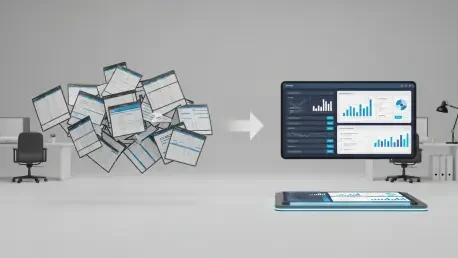

For countless organizations, the familiar grid of a spreadsheet represents both the cornerstone of their daily operations and the critical fault line threatening their long-term stability and growth. This paradox lies at the heart of a significant technological and cultural shift in the business world. Microsoft Excel, and its spreadsheet counterparts, have long been the universally adopted tools for everything from simple task lists to complex financial modeling. Their accessibility and flexibility are undeniable. However, as businesses grow, as teams become more distributed, and as the demand for real-time data intensifies, the very attributes that made spreadsheets so useful begin to expose their profound limitations, often creating critical bottlenecks that stifle progress.
The migration from these isolated, manually intensive spreadsheets to integrated, collaborative work management platforms is no longer a forward-thinking option reserved for the tech-savvy elite; it has become an essential evolution for organizational survival and competitive advantage. In a business landscape defined by the need for remote collaboration, cross-functional visibility, and data-driven strategic decisions, the inherent chaos of version control errors, information silos, and repetitive manual updates is an unaffordable liability. The trend is clear: businesses are moving toward centralized systems that connect people, data, and processes into a cohesive, intelligent ecosystem.
This analysis will dissect the fundamental weaknesses of traditional spreadsheet-based workflows that have catalyzed this widespread market transformation. It explores the diverse spectrum of modern alternatives that have emerged to address these shortcomings, from simple collaborative enhancements to comprehensive work operating systems. Furthermore, this report will project the future trajectory of work management, examining how deeper integrations with artificial intelligence and the rise of no-code capabilities are poised to further redefine productivity, alignment, and strategic execution in a connected, automated world.
The Market Shift From Spreadsheet Chaos to Centralized Systems
The transition away from spreadsheet dependency is not merely anecdotal; it is a powerful market trend substantiated by significant economic data and observable changes in software adoption patterns. The narrative of “spreadsheet chaos”—a state characterized by conflicting file versions, broken formulas, and siloed information—has become a familiar story in boardrooms and team meetings alike. This widespread experience has fueled a massive demand for more robust, scalable, and collaborative solutions, fundamentally reshaping the enterprise software industry. The evidence points overwhelmingly toward a strategic pivot to platforms that promise order, visibility, and efficiency where disconnected files once offered only complexity and risk.
Data-Driven Evidence of a Changing Landscape
The economic momentum behind this shift is compelling. The global market for work management and collaborative software is experiencing explosive growth, a clear indicator of a widespread reevaluation of internal processes. Market analysis from 2026 indicates a sustained double-digit compound annual growth rate (CAGR), with projections suggesting the market value will continue to soar in the coming years. This expansion is not speculative; it is driven by tangible organizational needs to enhance productivity and agility in an increasingly complex and distributed work environment. This growth directly correlates with the measurable costs associated with outdated methods. Research consistently quantifies the significant productivity loss stemming from spreadsheet-centric workflows. Studies from leading industry analysts reveal that knowledge workers can spend upwards of a quarter of their workweek on low-value administrative tasks, such as manually inputting data, reconciling information across different files, and chasing down updates from colleagues. The financial impact of version control errors alone—decisions made on outdated or incorrect data—can be substantial, leading to missed deadlines, budget overruns, and flawed strategic planning. These quantifiable losses provide a powerful business case for investing in more sophisticated systems.
Furthermore, the nature of software adoption itself tells a clear story of this changing landscape. The market is witnessing a decisive and accelerating move toward cloud-based, Software-as-a-Service (SaaS) platforms. The adoption rates for these accessible, subscription-based tools far outpace the stagnant or declining market for on-premise, single-user software. This preference is rooted in the inherent advantages of the cloud model: universal accessibility from any device, automatic updates, reduced IT infrastructure overhead, and, most importantly, the capacity for real-time, simultaneous collaboration. As organizations increasingly operate with remote or hybrid teams spread across different geographies, the need for a single, accessible source of truth becomes paramount. The decline of desktop-bound software in favor of cloud-native ecosystems is a direct reflection of modern work realities, where connectivity and real-time data sharing are no longer luxuries but foundational requirements for effective operation.
Real-World Applications and Platform Evolution
The market’s response to the limitations of spreadsheets has not been monolithic. Instead, a diverse spectrum of solutions has evolved, catering to different levels of organizational maturity and complexity. This evolution can be understood across several distinct categories, each representing a step away from the traditional, isolated spreadsheet model toward a more integrated and powerful approach to managing work. The journey often begins with solutions that offer a familiar interface while solving the most immediate collaboration challenges. Platforms like Google Sheets and Zoho Sheet fall into this category of enhanced cloud spreadsheets. They retain the classic grid format that users know well, which significantly lowers the barrier to adoption. Their primary innovation is the introduction of seamless, real-tіme collaboration, effectively eliminating the pervasive problem of version control. Multiple users can work within the same document simultaneously, with changes reflected instantly, turning the spreadsheet from a static file into a living, collaborative workspace. These platforms are deeply integrated into their respective ecosystems (Google Workspace and Zoho Suite), allowing for easy connectivity with other essential tools like email, calendars, and cloud storage, thereby addressing the issue of information silos at a basic level.
As organizations’ needs become more complex, they often graduate to the next tier of solutions: hybrid database-spreadsheet tools. Platforms such as Smartsheet and Airtable exemplify this category, masterfully bridging the gap between the user-friendly simplicity of a spreadsheet and the structured power of a relational database. These tools maintain a familiar grid-like interface but infuse it with database capabilities, allowing users to create relationships between different data sets, establish structured data types, and build sophisticated workflows. For example, a project plan in Smartsheet can be linked to a resource management sheet and a budget tracker, ensuring that an update in one place automatically reflects across all related components. This relational power allows teams to manage complex, interconnected processes—like a product launch or a multi-stage marketing campaign—with a level of control and clarity that is simply impossible to achieve in a flat spreadsheet. They offer multiple views of the same data, such as Kanban boards, calendars, and Gantt charts, empowering different teams to interact with the information in the way that best suits their function.
At the most advanced end of the spectrum are the comprehensive Work Operating Systems (Work OS). Platforms like monday work management are designed not just to manage individual projects or tasks but to serve as a central, unified hub for an entire organization’s work. A Work OS provides a flexible and scalable framework where teams can build and customize their own applications and workflows to manage projects, processes, portfolios, and even strategic goals like OKRs. The core philosophy is unification: bringing together disparate workstreams that would otherwise live in separate applications and spreadsheets into a single, interconnected environment. This provides leadership with an unprecedented, real-time, cross-departmental view of the entire business operation. These platforms are built around powerful automation engines that can handle complex, multi-step processes, and they offer deep integrations with hundreds of other business tools, solidifying their role as the central nervous system of the organization.
In parallel to this evolution toward platform replacement, another fascinating trend has emerged: AI-powered spreadsheet augmentation. A new class of tools, including GPT Excel and Numerous.ai, does not seek to replace spreadsheets but to supercharge them with the power of artificial intelligence. These tools act as intelligent assistants directly within existing Excel or Google Sheets environments. They allow users to automate incredibly complex tasks by simply describing their needs in natural language. For instance, a user could ask the tool to “write a formula to pull all sales data from Q4 for the North American region and calculate the average deal size,” and the AI would generate the correct formula instantly. These assistants can also automate data cleaning, generate insightful charts, and even write VBA or Apps Script code to create custom functions. This trend caters to organizations and power users who are heavily invested in their existing spreadsheet infrastructure but wish to eliminate the most tedious and complex manual aspects of their work, effectively boosting productivity without requiring a complete platform migration.
Industry Insights Why Leaders Are Moving Beyond Excel
The decision to migrate away from deeply entrenched tools like Excel is rarely made lightly. It is typically driven by a convergence of operational pain points that become too significant to ignore. Industry leaders and process improvement consultants consistently point to a series of common triggers and strategic imperatives that compel organizations to seek out more advanced work management solutions. These insights reveal that the shift is not merely about adopting newer technology; it is a strategic response to fundamental challenges related to scalability, visibility, and organizational agility. The move is framed as a necessary evolution to build a more resilient and future-ready operational backbone.
The Inevitability of the Breaking Point
According to process improvement experts, nearly every growing organization that relies heavily on spreadsheets eventually reaches an inevitable “breaking point.” This is the moment when the cumulative friction and inefficiency caused by the tool’s limitations begin to actively hinder business performance. This breaking point is not a single event but rather the culmination of recurring frustrations. It often manifests in a high-stakes failure, such as a critical project delay caused by someone working off an old version of a project plan, or a major financial miscalculation stemming from a broken formula in a convoluted budget file. The key triggers identified by consultants are remarkably consistent across industries: chronic version control failures that erode trust in data, the immense and unsustainable burden of repetitive manual work that burns out employees, and the creation of impenetrable data silos that prevent cohesive, cross-functional collaboration.
This critical juncture forces a strategic reevaluation. Experts frame this moment not as a failure of the spreadsheet itself—which remains an excellent tool for individual analysis and calculation—but as a failure of process design. The organization has attempted to stretch a tool beyond its intended purpose, using it as a de facto project management system, database, and collaborative platform, roles for which it was never designed. The pain experienced at the breaking point is the organization’s realization that its foundational processes are built on a fragile and inadequate framework. This understanding becomes the primary catalyst for change, prompting leadership to seek a system that is purpose-built for the complexity of modern, collaborative work, where data integrity, process automation, and shared visibility are non-negotiable requirements for success. The cost of inaction—measured in lost productivity, missed opportunities, and employee frustration—becomes far greater than the perceived cost and effort of adopting a new system.
The Strategic Value of a Single Source of Truth
A driving force behind the executive-level push for modern work management platforms is the pursuit of a “single source of truth.” Business leaders are increasingly frustrated by their inability to get a clear, real-time, and holistic view of operations when critical information is fragmented across dozens or even hundreds of disconnected spreadsheets. Assembling a comprehensive picture of business health—from project statuses and resource allocation to sales pipelines and marketing campaign performance—becomes an arduous and time-consuming manual exercise. The resulting reports are often outdated by the time they are compiled, making agile, informed strategic decision-making nearly impossible. A centralized work management platform fundamentally solves this problem by creating a single, authoritative repository for all operational data.
This concept extends beyond simple data consolidation. A true single source of truth ensures data integrity, consistency, and accessibility across the entire organization. When all teams work within the same system, data is entered once and then leveraged across multiple views, reports, and dashboards. This eliminates the redundant data entry and reconciliation efforts that plague spreadsheet-based workflows. For leadership, this provides the ability to access real-time, cross-departmental dashboards that offer at-a-glance insights into key performance indicators. This immediate visibility enables a more proactive and strategic approach to management. Leaders can spot trends, identify potential risks, and reallocate resources with an agility that is simply unattainable when dependent on manually compiled reports. The strategic value lies in transforming data from a scattered, historical artifact into a live, actionable asset that drives better, faster decisions.
The Imperative for Scalable Automated Workflows
Scalability is a paramount concern for any growing organization, and industry experts overwhelmingly agree that true scalability is fundamentally incompatible with manual processes. Spreadsheets, by their very nature, demand constant manual intervention. Every handoff between team members, every status update, every notification, and every report generation requires a person to manually perform an action. While this may be manageable for a small team working on a simple project, it becomes an exponential bottleneck as the volume and complexity of work increase. Attempting to scale operations on a foundation of manual, spreadsheet-driven workflows inevitably leads to chaos, missed details, and administrative overload. The organization’s growth becomes limited by its capacity to manually manage its own processes.
Modern work management platforms address this challenge by making automation a core, integrated feature. They are designed to automate the repetitive, administrative tasks that consume so much time and introduce so much risk of human error. These platforms allow teams to build automated workflows with simple, trigger-based logic. For example, when a task is marked as “complete,” it can automatically trigger a notification to the next person in the process, update the project’s overall progress percentage, and log the completion time in a report. These automated handoffs, notifications, and reporting mechanisms are the key to building truly scalable systems. They ensure that processes are executed consistently and efficiently, regardless of the volume of work. This automation frees up employees to focus on strategic, creative, and high-value activities rather than functioning as human middleware. From an expert perspective, adopting a platform with robust automation capabilities is not just an efficiency upgrade; it is a foundational requirement for any organization that aspires to grow without being crushed by the weight of its own operational complexity.
The Future Outlook What to Expect in Work Management
The evolution of work management platforms is far from over. As organizations continue to move beyond the limitations of spreadsheets, the platforms themselves are rapidly advancing, driven by innovations in artificial intelligence, data analytics, and user experience design. The future of work management points toward a more intelligent, connected, and democratized ecosystem, where technology does not just track work but actively assists in optimizing it. The trajectory suggests a future where the line between strategic planning and daily execution becomes increasingly blurred, fostering unprecedented levels of organizational alignment and agility. However, realizing this future will also present new challenges centered on human adaptation and skill development.
Anticipated Developments
Looking ahead, the most significant anticipated development in work management is the deeper and more sophisticated integration of predictive artificial intelligence. While current automation focuses primarily on streamlining repetitive tasks, the next generation of platforms will leverage AI to provide proactive, predictive insights. These systems will analyze vast amounts of historical project data—including timelines, resource allocation, communication patterns, and outcomes—to identify patterns and forecast future results with a high degree of accuracy. This will enable predictive resource allocation, where the system can recommend the best team members for a new project based on their skills, current workload, and past performance. Furthermore, AI-driven risk assessment will become standard, with platforms automatically flagging projects that are at high risk of falling behind schedule or going over budget, allowing managers to intervene before problems escalate.
This predictive capability will extend to process optimization itself. Future work management systems will function as intelligent consultants, continuously analyzing workflows and suggesting improvements. For example, a platform might identify a recurring bottleneck in a review and approval process and recommend a structural change, such as adding a parallel review path or automating a specific checkpoint. This moves the platform’s role from a passive system of record to an active partner in enhancing operational excellence. The ultimate goal is to create self-optimizing workflows that learn and adapt over time, ensuring that the organization’s processes become more efficient and effective with every project cycle. This shift from reactive monitoring to proactive, AI-driven guidance represents the next frontier in maximizing organizational productivity.
Potential Benefits
The ultimate vision for these advanced work management systems is the creation of a fully connected organization. This is a state where high-level strategic objectives, such as quarterly OKRs or annual goals, are seamlessly and dynamically linked to the daily operational execution required to achieve them. In this environment, every task, project, and initiative is connected to a larger strategic goal, providing every employee with a clear understanding of how their individual contributions drive the company’s overall mission. This direct line of sight from strategy to execution fosters a powerful sense of purpose and alignment across the entire enterprise, breaking down departmental silos and encouraging cross-functional collaboration toward shared objectives.
The benefits of such profound alignment are multifaceted. It enables a level of organizational agility that is impossible in a disconnected environment. When market conditions shift or new opportunities arise, leadership can adjust strategic priorities at the top level, and the impact of these changes will cascade down through the connected system in real time, allowing teams to pivot quickly and effectively. This creates a dynamic and responsive organization capable of navigating uncertainty with confidence. Moreover, this enterprisewide alignment enhances accountability and performance management, as progress toward strategic goals can be measured and monitored transparently and continuously. The result is a more focused, efficient, and strategically coherent organization, where the collective effort is always directed toward the most important outcomes.
Emerging Challenges
Despite the immense potential of these advanced systems, their successful implementation is not without its challenges. The most significant hurdles are not technological but human. The first major challenge is change management and user adoption. Transitioning an entire organization from familiar, albeit flawed, tools like spreadsheets to a new, comprehensive platform is a significant cultural shift. Resistance to change is a natural human response, and without a carefully planned change management strategy, even the most powerful platform can fail. Securing widespread user adoption requires more than just technical training; it demands clear communication about the “why” behind the change, strong executive sponsorship, and the identification of internal champions who can demonstrate the value of the new system to their peers. Overcoming this inertia is critical to realizing the return on investment.
A second, equally important challenge is the emerging skills gap. To maximize the value of these powerful systems, employees and managers need to develop new competencies. Simply learning how to use the software’s features is not enough. The greater need is for a shift in mindset—from being a manager of people and tasks to being a designer of systems and workflows. Employees will need to become more adept at process thinking, data analysis, and automation design. They will need to learn how to critically evaluate their own workflows and leverage the platform’s capabilities to build more efficient and effective processes. This requires a significant investment in upskilling and reskilling the workforce. Organizations must foster a culture of continuous learning and empower their teams with the analytical and technical skills needed to transform from passive users of a tool into active architects of their own digital work environment.
Broader Implications
One of the most profound implications of the rise of modern work management platforms is the democratization of solution-building through integrated no-code and low-code capabilities. Historically, the creation of custom software applications or complex automated workflows was the exclusive domain of IT departments and professional developers. This often created a significant bottleneck, with business teams waiting in long queues for IT resources to build the custom solutions they needed to solve their specific operational problems. Modern Work OS platforms are changing this dynamic by empowering non-technical users—the “citizen developers”—to build their own custom applications and workflows using intuitive, visual, drag-and-drop interfaces.
This empowerment has far-reaching consequences for organizational innovation and agility. When the people who understand a business process most intimately—the marketing managers, operations coordinators, and project leaders—are given the tools to build their own solutions, they can solve problems with a speed and precision that was previously unimaginable. This democratized approach fosters a culture of bottom-up innovation, where teams are encouraged to experiment and continuously improve their own processes. It dramatically reduces the burden on centralized IT departments, freeing them to focus on more complex, enterprise-level strategic initiatives. Ultimately, the rise of the citizen developer, enabled by these powerful platforms, is creating more self-sufficient, resourceful, and adaptive organizations capable of tailoring their digital environment to their unique and evolving needs.
Conclusion Redefining Work for a New Era
The widespread organizational migration from static, isolated tools to dynamic, connected ecosystems represented a fundamental redefinition of modern collaboration and productivity. The evidence confirmed that this was not a fleeting trend but a strategic response to the inherent limitations of tools like spreadsheets, which were unable to meet the demands for real-time visibility, scalability, and cross-functional alignment required in a fast-paced, distributed work environment. The market’s evolution produced a rich spectrum of solutions, from enhanced cloud spreadsheets that solved immediate collaborative pains to comprehensive Work Operating Systems that created a unified digital backbone for entire enterprises.
Ultimately, the decision to move beyond spreadsheets proved to be a pivotal strategic investment in organizational agility, transparency, and future-readiness. The platforms that gained dominance were those that successfully delivered on the promise of a single source of truth, enabling leaders to make faster, more informed decisions while empowering their teams with automated workflows that eliminated administrative friction. This technological shift did more than just improve efficiency; it fostered a more connected and aligned culture where every individual could see the direct impact of their work on the organization’s strategic goals.
The leaders and organizations that successfully navigated this transition were those who recognized the operational breaking points early and critically assessed their internal workflows. By proactively exploring and adopting modern work management solutions, they built more resilient, efficient, and innovative organizations. This foresight equipped them not only to overcome the challenges of an increasingly complex business landscape but also to capitalize on the opportunities that emerged, positioning them for sustained growth and success in a new era of work.