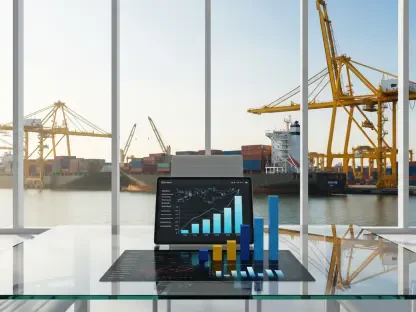
The once-predictable rhythm of global trade, a steady pulse of vessels traversing established ocean routes, has given way to a far more erratic and uncertain cadence. For years, businesses operated under the assumption that disruptions were temporary anomalies in an otherwise stable system, but the operating environment of 2026 is fundamentally different. Persistent geopolitical tensions, a strategic redistribution of global manufacturing, and ongoing tariff unpredictability have woven volatility into the very fabric of the freight industry. This is not a fleeting storm to be weathered, but a permanent change in the climate of global commerce. Consequently, the traditional metrics of success—primarily centered on cost—are being rapidly supplanted by a more nuanced understanding of what it takes to thrive in an era of perpetual instability. The new paradigm demands a shift from a recovery-based mindset to one that embraces structural change and builds resilience through intelligence and strategic foresight.
Navigating the Shifting Tides of Global Trade
The Great Supply Chain Realignment
A profound and strategic diversification of supply chains away from historical manufacturing centers is reshaping the landscape of global logistics. This migration is not a fleeting reaction to temporary tariffs but a calculated, long-term realignment aimed at mitigating geopolitical risk and building more resilient production networks. Companies are increasingly establishing operations in emerging regions across Southeast Asia, Africa, and the Americas, fundamentally altering traditional trade lanes that have been dominant for decades. This geographic redistribution introduces a host of new complexities and infrastructure challenges. Ports and logistics networks in these developing hubs must rapidly scale to accommodate a surge in volume, while shippers must navigate unfamiliar regulatory environments and build new partnerships from the ground up. The result is a complete redrawing of the global logistics map, where old assumptions about transit times, capacity, and key trade corridors no longer apply, forcing businesses to adopt a more dynamic and geographically aware approach to supply chain management.
This realignment is occurring against a backdrop of persistent and severe disruptions in critical shipping corridors, which are no longer being treated as temporary incidents but as enduring structural risks. Events impacting vital waterways like the Red Sea are now understood as components of a new operational reality, creating far-reaching ripple effects that destabilize the entire system. These chokepoints cause immediate and dramatic increases in transit times as vessels are rerouted on longer, more expensive voyages. This, in turn, creates chronic capacity constraints on alternative routes, which were not designed to handle the diverted volume. The cascading impact on freight rates is significant, with price volatility becoming a constant factor that complicates budgeting and financial planning. This environment of high uncertainty means that supply chain managers can no longer rely on historical data to predict future performance. Instead, they must continuously monitor a complex web of interconnected risks and be prepared to adapt their strategies at a moment’s notice to protect against costly delays and unforeseen expenses.
The SMB Imperative in an Unpredictable World
In this high-uncertainty environment, small and medium-sized businesses (SMBs) face a disproportionate level of risk compared to their larger corporate counterparts. Unlike multinational corporations, which often have substantial financial buffers, diversified supplier bases, and dedicated risk management teams, SMBs operate with much thinner margins. An unexpected shipping delay can halt a production line, while a sudden spike in freight costs can erase the profit from an entire product batch. For these businesses, the reliability of their supply chain is not just a matter of efficiency; it is a matter of survival. Consequently, the value proposition from logistics partners has shifted. Predictability and dependability have ascended to equal, and in many cases greater, importance than securing the absolute lowest price. The traditional practice of “blind shipping”—booking passage with the cheapest carrier and simply hoping for the best—has transformed from a cost-saving measure into a high-stakes gamble that most SMBs can no longer afford to take.
This reality necessitates a fundamental pivot from a reactive to a proactive logistics management model for SMBs. Success is no longer about responding to problems as they arise but about anticipating and mitigating them before they can impact the business. This proactive stance is made possible by leveraging technology platforms and partners that provide real-time, end-to-end visibility into the entire shipping journey. Access to transparent, all-inclusive pricing is equally critical, as it eliminates the threat of hidden fees and allows for accurate financial forecasting. Armed with this information, SMBs can make informed, strategic trade-offs. For example, they might choose a slightly more expensive but demonstrably more reliable shipping route to guarantee that a critical component arrives in time for a manufacturing run, thereby avoiding a far costlier factory shutdown. This data-driven approach empowers smaller businesses to navigate volatility with the same level of sophistication as their larger competitors, turning logistics into a source of competitive advantage rather than a constant source of risk.
Redefining Logistics as a Strategic Partnership
The Evolution of Freight Services
In response to the market’s demand for greater stability and financial predictability, logistics providers are undergoing a significant evolution, expanding their role far beyond the simple transportation of cargo from one point to another. The trend for 2026 is a move toward fully integrated service offerings that address the core operational and financial challenges their clients face. Recognizing that unpredictable costs and transit times can severely strain a company’s finances, many providers now offer flexible payment terms, allowing businesses to better manage their cash flow in a volatile market. Furthermore, some are introducing financing options that can help SMBs fund larger inventory purchases or bridge financial gaps caused by extended shipping cycles. This transformation marks a crucial shift in the client-provider relationship, turning what was once a transactional arrangement into a deeper, more strategic partnership focused on mutual success and resilience.
This evolution is perhaps best exemplified by the growing adoption of sophisticated service models like Delivered Duty Paid (DDP). Under a DDP agreement, the logistics provider assumes responsibility for all the risks and costs associated with the shipment until it reaches the final destination. This includes not only the core transportation costs but also customs clearance, import duties, and taxes. By bundling these disparate and often unpredictable expenses into a single, transparent, and upfront price, the DDP model effectively insulates the shipper from the financial shocks of unexpected fees or regulatory hurdles in foreign markets. This level of service provides the financial clarity and risk mitigation that businesses, particularly SMBs, desperately need to operate confidently in the global marketplace. As a result, comprehensive and risk-absorbing service models are rapidly becoming key differentiators, separating modern logistics partners from traditional freight forwarders.
The Future Was Forged in Adaptability
In this persistently volatile landscape, competitive advantage was ultimately defined less by a company’s physical assets and more by its operational intelligence and organizational agility. The businesses that thrived were those that successfully elevated logistics from a siloed, back-office function to a central pillar of their overarching corporate strategy. They understood that their supply chain was not merely a cost center but a dynamic variable that directly influenced their market responsiveness, customer satisfaction, and financial health. This strategic prioritization led them to invest in data-driven decision-making, utilizing real-time information to pivot their sourcing, routing, and inventory strategies in immediate response to emerging disruptions or opportunities. The most crucial factor in their success, however, was the ability to cultivate deep, collaborative partnerships with logistics providers who offered a potent combination of advanced technological platforms, innovative financial flexibility, and an unwavering commitment to reliability in a world where stability had become the rarest of commodities.