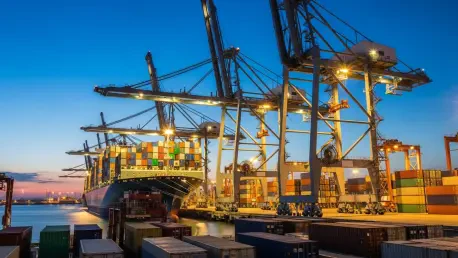

The once-predictable rhythm of global commerce has been irrevocably replaced by a persistent state of disruption, forcing businesses to confront a costly new reality where operational failures are no longer the exception but the rule. This shift marks a fundamental change in the global economic landscape, transforming logistics from a background operational function into a primary determinant of corporate success or failure. In this environment, understanding the full spectrum of costs associated with supply chain breakdowns—from financial penalties to the erosion of customer trust—is no longer just a matter of operational efficiency but a critical strategic necessity for survival and growth.
The New Operational Reality: From Episodic Shocks to Perpetual Disruption
The modern business environment has moved beyond the era of occasional, isolated supply chain shocks. Today, companies navigate a state of perpetual disruption, a constant and costly condition that redefines operational norms. What were once considered rare events are now recurring challenges, creating an atmosphere of instability that directly impacts productivity and profitability. This new reality demands a fundamental rethinking of how logistics are managed, moving from reactive problem-solving to proactive resilience-building.
Modern logistics has evolved into a critical business function, acting as the circulatory system of the global economy. Its efficiency dictates the pace of commerce, the availability of goods, and the stability of markets. When this system falters, the effects are felt far beyond a single company or industry, creating ripple effects that can slow economic growth and strain international trade relationships. The intricate web of suppliers, manufacturers, and distributors, powered by advanced technology and data analytics, has become both a source of unprecedented efficiency and a point of significant vulnerability.
This complex network is shaped by a confluence of powerful forces. Key market players, from global shipping conglomerates to specialized third-party logistics providers, set the operational standards. Simultaneously, technological advancements in automation, artificial intelligence, and data tracking are constantly reshaping what is possible. These influences create a dynamic but often fragmented ecosystem where a failure in one node can trigger a cascade of problems across the entire chain, making comprehensive oversight and coordination more critical than ever.
The Tangible Impact of Constant Failure
Beyond the Warehouse Walls: How Breakdowns Erode Customer Trust
The consequences of operational failures extend far beyond internal metrics, directly impacting a company’s most valuable asset: its customer relationships. When logistics break down, the effects are increasingly visible to the end consumer, leading to tangible commercial risks. An overwhelming majority of companies, between 80% and 95%, report a direct correlation between supply chain issues and a rise in customer complaints. These escalations are not minor inconveniences; they represent a fundamental breach of the brand promise, eroding loyalty and confidence with each missed delivery or stockout.
This erosion of trust often culminates in significant financial and reputational damage. Persistent logistics issues are a leading cause of lost contracts and strained partner relationships, as businesses become reluctant to rely on undependable suppliers. The cumulative impact of these failures tarnishes brand reputation, making it difficult to attract new customers and retain existing ones. In this context, operational inefficiency ceases to be a mere internal problem and becomes a direct threat to a company’s market position and long-term viability.
Quantifying the Damage: The Multi-Billion Dollar Price Tag of Inefficiency
The scale of this operational friction is staggering when quantified. Recent data reveals that over half of global companies lose more than a month of productive capacity each year due to logistics failures. This lost time is not simply a delay; it represents a significant drain on resources, revenue, and growth potential, creating a persistent drag on performance that compounds over time.
These capacity losses translate into recurring, multi-billion-dollar financial penalties across key sectors. The automotive industry, for example, faces an estimated $13 billion in annual costs stemming from disruptions, while the technology sector absorbs losses of around $16 billion. Other major industries, including industrial goods, chemicals, and consumer goods, are not immune, each suffering multi-billion-dollar losses annually. These figures underscore a critical truth: the cost of supply chain disruption is not a one-time expense but a sustained financial hemorrhage that undermines profitability and competitive strength.
A Fractured Landscape: Industry-Specific Vulnerabilities and Responses
The nature of supply chain disruption is not uniform; it manifests differently across various industries, creating a fractured landscape of challenges. Sectors that depend on speed and freshness, such as retail, healthcare, and perishables, contend with near-constant, high-frequency disruptions that demand exceptional agility. In contrast, industries like automotive and technology face fewer but far more damaging and expensive incidents, where a single component shortage can halt production for weeks and take months to resolve.
In response to this varied threat, global strategies for building resilience are diverging. Businesses in some of the most exposed markets are making aggressive investments in strengthening their supply chains, viewing it as a critical competitive necessity. However, other regions, including parts of Europe, exhibit greater hesitation and lower confidence in their logistics partners, despite facing similarly high levels of disruption. This growing divide in strategic response is creating a world of logistical haves and have-nots, where preparedness levels vary dramatically.
The Rising Bar for Resilience: Meeting New Standards for Operational Excellence
The persistent nature of disruption has fundamentally raised the bar for operational performance. Expectations for supply chain transparency and reliability are no longer differentiators but are becoming de facto industry standards. Customers, partners, and investors now demand a level of visibility and predictability that was once considered aspirational. Companies unable to meet these new standards risk being perceived as unreliable, creating a significant competitive disadvantage.
This heightened need for robust supply chains is also influencing corporate governance and strategic decision-making. Supply chain risk is increasingly recognized as a board-level concern, intersecting with compliance, sustainability, and corporate reputation. Strategic decisions, from market expansion to product development, are now being viewed through the lens of logistical feasibility and resilience, integrating supply chain considerations into the very core of corporate planning.
The Strategic Imperative: Why Logistics Has Become a C-Suite Priority
The growing recognition of its impact has elevated logistics from a tactical function to a C-suite priority. Business leaders now understand that a resilient supply chain is not merely a defensive measure but a powerful engine for competitive advantage. According to a broad consensus among executives, with nearly 90% in agreement, the ability to maintain operational continuity in the face of disruption will be a defining characteristic of market leaders in the coming years.
This shift in perspective positions logistics as a core component of corporate strategy. Companies are beginning to leverage their supply chain capabilities to offer superior customer experiences, enter new markets more effectively, and innovate faster than their rivals. The emerging consensus is clear: the future belongs to organizations that treat their supply chains not as a cost to be minimized but as a strategic asset to be cultivated for growth and market dominance.
Charting the Path Forward: Building a Resilient Supply Chain for Lasting Advantage
The most effective defense against perpetual disruption was comprehensive resilience, achieved not through a single solution but through diversified investment. This approach encompassed strengthening factory logistics, optimizing inbound material flows, modernizing warehousing, and implementing advanced digital coordination platforms. For example, consumer goods firms that adopted this broad investment strategy reported disruption costs that were 76% lower than their less-prepared competitors, demonstrating a clear return on investment.
The findings painted a picture of a growing divide between proactive organizations and those falling behind. Companies that strategically invested in building multifaceted resilience were not only mitigating risks but also creating a lasting competitive advantage. In contrast, those that failed to adapt continued to lose revenue, market share, and customer trust with each new disruption. The strategic imperative became clear: sustained investment in a resilient, agile, and transparent supply chain was no longer optional but essential for future success.