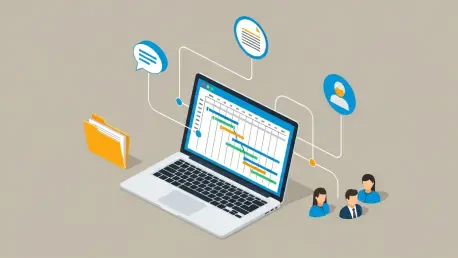

Beyond the Static Timeline: Navigating the World of Free Gantt Chart Tools
The meticulously crafted project plan, with its neatly arranged timelines and clearly defined dependencies, often represents a moment of perfect optimism before the unpredictable realities of execution set in. In today’s dynamic work environments, where market demands shift, resource availability fluctuates, and strategic priorities pivot with little warning, such rigid schedules frequently become obsolete almost as soon as they are approved. The traditional, static Gantt chart, once a cornerstone of project management, can quickly transform from a guiding map into a historical artifact, bearing little resemblance to the team’s actual day-to-day progress and challenges. This disconnect between the planned work and the executed work is a primary source of friction, leading to missed deadlines, inefficient resource allocation, and a pervasive lack of visibility for stakeholders who rely on accurate forecasts. The core challenge, therefore, is not the creation of a plan but the maintenance of a living, adaptable schedule that reflects reality in real time.
Modern, free Gantt chart software emerges as a powerful solution to this persistent problem, offering agile teams the tools to build, monitor, and adjust their project plans with a level of flexibility that was once the exclusive domain of expensive, enterprise-level systems. These platforms move beyond simple timeline visualization, integrating scheduling with collaborative workspaces, resource management modules, and automated workflows. By doing so, they empower teams to respond to change proactively rather than reactively. When a critical task is delayed, dependencies can be automatically reshuffled, stakeholders can be instantly notified, and workload distributions can be rebalanced to mitigate risks before they escalate. This capability to maintain a single source of truth that is both visually intuitive and dynamically updated provides the operational resilience necessary for teams to thrive amidst uncertainty, fostering a culture of transparency and confident execution without incurring significant financial investment.
This comprehensive roundup embarks on a journey through the evolving landscape of free project management tools, designed to equip leaders and teams with the strategic insights needed to make an informed decision. The exploration begins by decoding the current software market, distinguishing between simple schedulers and integrated work ecosystems to establish a clear framework for evaluation. It then proceeds to a head-to-head comparison of the top contenders for 2026, analyzing their distinct strengths, ideal use cases, and the critical trade-offs inherent in their free-tier offerings. The analysis also uncovers the hidden costs and scalability limitations of “free” software, examines the transformative impact of artificial intelligence on project planning, and culminates in a practical framework for selecting, piloting, and successfully implementing the ideal tool. The ultimate goal is to guide organizations toward a solution that not only displays work but actively drives it, building a sustainable foundation for growth and operational excellence.
Decoding the Gantt Software Market: A Strategic Analysis for 2026
Mapping the Terrain: From Simple Schedulers to Integrated Work Ecosystems
The contemporary landscape of free Gantt chart software is fundamentally bifurcated, presenting project managers with a pivotal choice that shapes their entire operational methodology. On one side of this divide lie the basic timeline visualizers, tools designed with a singular focus on creating clean, understandable project schedules. These platforms excel at their core function: mapping out tasks, setting durations, and visualizing dependencies in a linear, chronological format. Their primary value proposition is simplicity and speed, offering a low barrier to entry for teams that need to get a project plan out the door without the overhead of a complex system. They are the digital equivalent of a meticulously drawn blueprint, providing a clear but static picture of the intended path forward, perfectly suited for straightforward projects with predictable workflows and minimal cross-functional complexity.
In stark contrast, the other category consists of comprehensive work management platforms where the Gantt chart is not the main product but rather one integrated feature within a much larger operational ecosystem. These systems are engineered to be the central nervous system of an organization’s work, connecting project schedules to resource allocation, budget tracking, team communication, and strategic business goals. The Gantt view in these platforms is dynamic and data-rich, pulling real-time information from across the system to reflect not just the plan but the actual, ongoing state of execution. Using the analogy of navigation, the simple scheduler is like a paper map—reliable for a fixed route but useless when a road is closed. The integrated work ecosystem, conversely, is an advanced GPS system, offering real-time traffic updates, suggesting alternative routes, and recalculating arrival times based on current conditions, thereby providing the intelligence needed to navigate the complexities of modern projects.
This distinction fuels a significant debate within project management circles regarding the strategic value of standalone simplicity versus interconnected functionality. Proponents of simple schedulers argue that their focused nature prevents feature bloat and reduces the cognitive load on users, ensuring high adoption rates for their primary purpose of timeline visualization. However, this simplicity often comes at the cost of creating data silos, forcing teams to use a patchwork of other tools for communication, file storage, and reporting, which can lead to version control issues and a fragmented view of project health. Conversely, while integrated platforms offer a powerful single source of truth, their initial setup can be more complex, and their free tiers may strategically limit access to the very integration and automation features that constitute their main advantage. The ultimate decision rests on an organization’s maturity, project complexity, and long-term strategic vision, weighing the immediate utility of a simple tool against the scalable, strategic advantage of an interconnected system.
The Top Contenders: A Head to Head Comparison of Leading Platforms
A closer examination of the leading free platforms reveals a market rich with specialized solutions, each engineered to serve distinct operational needs and team structures. For instance, monday work management positions itself as a comprehensive Work Operating System (Work OS), where the Gantt chart is not just a scheduling tool but a dynamic engine connecting project execution directly to high-level strategic objectives. Its strengths lie in portfolio management, cross-functional visibility, and robust automation capabilities, making it an ideal choice for organizations aiming to standardize processes and gain executive-level insights across multiple departments. In this context, the Gantt view becomes a command center for PMOs and operations leaders who need to track dependencies, manage resource capacity, and compare planned progress against actuals using baseline features.
In contrast, platforms like ClickUp and Miro cater to different segments of the market with their unique philosophies. ClickUp champions extreme customizability, offering a vast array of views and fields that allow teams to build a workspace that perfectly mirrors their specific workflow. Its free plan is generous with user seats but imposes limitations on storage and the number of times advanced views like Gantt charts can be used, positioning it as an excellent entry point for small teams or individuals who value flexibility above all else. Miro, on the other hand, excels in the realm of visual collaboration. It treats the Gantt chart as one of many templates on an infinite digital whiteboard, making it exceptionally well-suited for creative teams, product designers, and strategists who need to move fluidly from unstructured brainstorming sessions to structured project roadmaps. Its focus is on collaborative planning and ideation rather than granular task execution and tracking.
This competitive landscape is defined by strategic trade-offs, where the limitations of one platform’s free tier create clear opportunities for another. Zoho Projects, for example, finds its niche by offering a more traditional, feature-rich project management experience for small teams, providing solid Gantt functionality within a tightly integrated suite of business applications. Its user and project caps on the free plan make it a testing ground for those already invested in the Zoho ecosystem. Meanwhile, OpenProject appeals to a highly technical audience with its open-source, self-hosted Community Edition. It offers complete, unrestricted Gantt functionality without any user-based fees, but this freedom comes at the cost of requiring significant technical expertise for setup, maintenance, and security. This dynamic ensures that nearly every type of team, from a loosely organized creative group to a security-conscious government contractor, can find a free tool that aligns with its immediate needs, though the path to long-term scalability varies dramatically between them.
The Hidden Price of Free: Understanding Limitations and Planning for Scalability
The allure of “free” software is powerful, but it often masks a variety of strategic limitations designed to guide growing teams toward paid subscriptions. The most common constraints are quantitative, such as caps on the number of users, active projects, or the amount of available file storage. A free plan might seem perfectly adequate for a team of three working on a single project, but it can quickly become a bottleneck when the team needs to expand or take on concurrent initiatives. These hard limits force organizations into difficult decisions: either continuously purge old data and projects, which compromises historical record-keeping, or fracture workflows by having different teams use different tools, which undermines the goal of a unified project management system. Beyond these numerical caps, free tiers almost universally restrict access to the most powerful, value-driving features, including workflow automation, advanced reporting and analytics, time tracking, and critical path analysis, effectively hobbling the platform’s ability to deliver deep operational insights.
Challenging the notion that “free” equates to no cost requires a deeper analysis of the long-term operational impact of selecting a tool with a low growth ceiling. A platform chosen for its immediate, cost-free availability can become a significant source of “organizational debt” down the line. As a team’s processes mature and its projects grow in complexity, the limitations of a basic free tool can introduce substantial manual workarounds. Teams may find themselves exporting data to spreadsheets for analysis, manually sending status update emails because automation is unavailable, or struggling to manage resource workloads without dedicated planning views. This accumulation of inefficiencies acts as a drag on productivity and can ultimately cost the organization more in lost time and missed opportunities than a paid subscription would have. Furthermore, the process of migrating to a more scalable platform later on is a disruptive and resource-intensive undertaking, involving data transfer, retraining, and the rebuilding of established workflows.
However, the value equation for free software is not static; it is constantly being reshaped by emerging industry trends and competitive pressures. In an effort to capture market share and foster user loyalty in a crowded marketplace, a growing number of platforms are offering increasingly robust free tiers. This shift is driven by the principles of product-led growth, where companies aim to demonstrate overwhelming value to free users, creating a frictionless path to conversion when their needs inevitably scale. For users, this trend is highly beneficial, as it means access to more sophisticated features—such as basic automations, a wider variety of project views, and more generous user limits—without an initial financial commitment. This evolving landscape requires decision-makers to conduct a more nuanced evaluation, looking beyond simple feature checklists to assess the generosity of a free plan’s limits and its true capacity to support a team’s workflow for a meaningful period before an upgrade becomes an operational necessity.
The Intelligent Evolution: How AI and Automation Are Redefining Project Planning
The traditional Gantt chart is undergoing a profound transformation, evolving from a passive visual representation of a project plan into a proactive, intelligent scheduling assistant, largely driven by the integration of artificial intelligence and automation. AI is beginning to infuse every aspect of project planning, fundamentally altering the role of the project manager and the nature of the tools they use. For example, AI algorithms can now analyze project descriptions written in natural language and instantly generate a detailed project plan, complete with suggested tasks, phases, durations, and dependencies. This capability dramatically accelerates the initial planning phase, allowing teams to move from concept to an actionable schedule in minutes rather than hours. Furthermore, AI-powered scheduling assistants can analyze historical project data to provide more accurate time estimates and recommend optimal timelines based on resource availability and past performance, turning planning into a data-driven science rather than an intuitive art.
Expert analysis of the future of project management points toward a paradigm where AI-driven risk detection and automated resource allocation become standard, indispensable features. Instead of relying on project managers to manually identify potential bottlenecks, intelligent systems will proactively scan project plans for risks. They can flag dependencies that are likely to cause delays, identify team members who are over-allocated, and even predict the downstream impact of a single missed milestone on the entire project timeline. These systems will not just highlight problems; they will suggest solutions, such as reassigning tasks to available team members with the right skills or automatically adjusting the schedule to accommodate a delay while minimizing overall impact. This shift from reactive problem-solving to predictive risk mitigation represents a monumental leap in project management maturity, enabling organizations to address issues before they derail progress.
These disruptive innovations are establishing a new performance benchmark that legacy Gantt chart tools and simple schedulers will struggle to meet. Platforms that fail to integrate intelligence and automation will increasingly be seen as relics of a past era, much like a static road map in a world of dynamic, real-time GPS navigation. The competitive advantage will belong to those platforms that can not only visualize a plan but also optimize it, learn from it, and actively help teams execute it more efficiently. As organizations continue to face pressure to deliver complex projects faster and with greater certainty, the demand for intelligent project management tools will only intensify. This evolution is creating a clear divide in the software market, separating the tools that simply display information from the intelligent systems that generate actionable insights and drive successful outcomes.
From Selection to Success: A Practical Framework for Implementing Your Chosen Tool
Synthesizing the core decision criteria for selecting a free Gantt chart software requires a holistic assessment that extends far beyond a simple comparison of features. The most critical factor is the alignment between the software’s inherent capabilities and the organization’s unique operational DNA. This involves a deep analysis of team workflow patterns, determining whether processes are linear and predictable or iterative and adaptive. Equally important is an honest evaluation of project complexity, not just in terms of the number of tasks but in the intricacy of dependencies and the level of cross-functional coordination required. Finally, the decision must be forward-looking, considering the team’s anticipated growth trajectory. Choosing a tool that meets today’s needs but cannot scale to accommodate more users, larger projects, or more sophisticated process requirements is a short-term fix that creates a long-term liability, necessitating a disruptive migration in the future.
To ensure high adoption and derive maximum value from the chosen platform, a structured and phased implementation is essential. The process should begin with a targeted pilot program, where a single, moderately complex project is managed within the new tool. This controlled test serves to validate the software’s fit for the organization’s workflows in a real-world scenario and helps identify champions who can advocate for its broader rollout. Following a successful pilot, the next step is a comprehensive onboarding process that goes beyond basic feature training. This should include establishing clear standards for project naming conventions, task creation, and status reporting to ensure consistency and data integrity. Onboarding materials should be tailored to different roles—executives, project managers, and individual contributors—to highlight the specific benefits and responsibilities for each group.
The final and most crucial phase is the strategic integration of the new Gantt chart platform with the organization’s existing technology stack. A project management tool that operates in isolation is a tool that is destined to become outdated and ignored. To create a true single source of truth, it must seamlessly connect with the applications where work and communication already happen, such as Slack, Microsoft Teams, Google Drive, and Jira. By setting up robust integrations, teams can eliminate the productivity-draining effects of data silos and manual, double-entry of information. Automating the flow of information—for example, by having a completed task in the Gantt chart trigger a notification in a communication channel—not only saves time but also reinforces the platform’s role as the central, indispensable hub for all project-related activity, ensuring its long-term success and adoption.
Building Your Foundation: Choosing a Gantt Chart That Drives Work Not Just Displays It
The central conclusion that emerged from this comprehensive analysis was that the most effective free Gantt chart software is not merely a tool for visualizing plans but an active participant in their execution. A static timeline, however well-constructed, provided a limited snapshot in time, whereas dynamic platforms transformed the Gantt chart into a living command center. These superior systems supported real-time collaboration, automated tedious status updates, and provided predictive insights that allowed teams to navigate complexity with agility. The distinction became clear: one class of tools displayed a plan, while the other provided the operational engine to successfully complete it, making the latter an indispensable asset in any modern work environment.
In selecting a platform, the long-term strategic importance of scalability proved to be the most critical consideration. The decision was never just about solving an immediate scheduling need; it was about laying an operational foundation capable of supporting future growth and evolving process maturity. A tool that could not grow with an organization—by adding more users, accommodating greater project complexity, or integrating with an expanding tech stack—was ultimately a temporary solution that would create significant friction down the line. The wisest choices were made by teams who looked beyond the free features of today and selected a platform with a clear and accessible upgrade path, ensuring that their operational backbone could strengthen and adapt in lockstep with their ambitions.
Ultimately, the selection process called for a shift in perspective. Readers were urged to look beyond a superficial checklist of features and choose a tool that could become a true partner in their work. The goal was to find a platform that would not only chart the course but also help navigate the inevitable storms, a system that would reduce administrative overhead and free up teams to focus on the high-value, strategic work that drives real progress. The final encouragement was to select a tool destined to become the operational backbone of their projects, fostering a culture of clarity, accountability, and sustained success.