
With decades of experience in management consulting, Marco Gaietti is a seasoned expert in Business Management, with a deep focus on strategic management, operations, and the intricate dance of global trade. We’re sitting down with him to discuss the recent groundbreaking move of LogChain, a leader in trade digitalization, as it relocates its global headquarters to the UK. This interview will explore the strategic thinking behind choosing the Liverpool City Region as a new hub for innovation. We’ll touch on how digital infrastructure is becoming a matter of national security, the practical challenges of moving from paper to truly interoperable data, and what this all means for businesses, both large and small, trading between the UK and Southeast Asia. Finally, we’ll get a glimpse into the future of digital trade from a true industry insider.
You’re relocating LogChain’s global HQ to the Liverpool City Region. Beyond its port, what specific innovation credentials and Freeport developments made it the ideal “real economy” testbed? Please elaborate on how this environment will help you scale trusted, interoperable trade infrastructure.
Choosing the Liverpool City Region was a deeply strategic decision that went far beyond just its docks. We see it as a living laboratory, a true ‘real economy’ testbed. You have this incredible convergence of factors: a world-class port where a staggering 45 percent of trans-Atlantic trade flows, a thriving ecosystem with over 6,500 digital and tech businesses, and the forward-thinking Freeport development. This isn’t just about theory; it’s about having the physical trade infrastructure and the digital innovation capacity side-by-side. It creates a powerful feedback loop where we can develop and scale next-generation solutions in a live environment, working directly with partners to build dependable systems that truly underpin international commerce.
Digital trade is increasingly framed as a national capability issue due to geopolitical and cyber risks. How does your infrastructure move beyond operational efficiency to address these security concerns? Could you share an example of how it specifically reduces fraud or improves compliance in a live trade environment?
You’ve hit on a critical point. In today’s world, trade resilience is absolutely a national capability issue, not just a line item for operational efficiency. The entire LogChain platform was built from the ground up as secure infrastructure, not just a handy software tool. We designed it to meet the highest standards of security and compliance because we knew that trust is the currency of global trade. By creating legally robust electronic documentation and trusted data exchange protocols, we fundamentally reduce the opportunities for fraud. For instance, a paper-based bill of lading can be easily forged or lost, but a secure, verifiable digital document moving through our system creates an immutable record. This allows for faster customs clearance and gives authorities and partners real confidence in the legitimacy of every shipment.
LogChain is credited with delivering the world’s first fully digitalized movement of goods. Can you walk us through the practical steps of that achievement? What were the biggest legal or operational barriers you had to overcome to transform the process from paper to secure, interoperable data?
That first fully digitalized shipment was a landmark moment, and it felt like watching the future arrive. It was a demonstration that this wasn’t just a theoretical concept. The biggest hurdles weren’t purely technological; they were deeply rooted in legal and operational traditions that are centuries old. We had to prove that an electronic document could carry the same legal weight as a piece of paper that’s been used for generations. This involved working intensely with legal experts, governments, and industry bodies to establish legally robust frameworks. Operationally, the challenge was creating a system that multiple, often competing, parties—from shippers to ports to banks—could use seamlessly and trust implicitly. It required building truly interoperable data standards, not just a closed system, to prove that the commercial and legal barriers could be overcome in a real, live trade environment.
The move aims to strengthen the UK–Southeast Asia digital trade corridor. What are the primary points of friction in that specific corridor today, and what immediate, concrete steps will your new UK base take to build more trusted and seamless digital workflows between these regions?
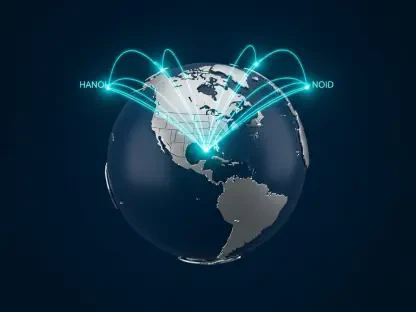
The UK–Southeast Asia corridor is buzzing with opportunity, but it’s also riddled with friction points. You have different regulatory environments, varying levels of digital adoption, and a heavy reliance on manual, paper-based processes that slow everything down and create risk. Our new UK base is designed to be the bridge. The immediate, concrete step is to leverage this new headquarters to work directly with UK government bodies, financial institutions, and industry partners. By establishing this hub, we can strengthen the links between UK capabilities and this vital international corridor, creating multi-party digital workflows that connect both ends of the supply chain with trusted, legally sound data, turning a complex process into a seamless and secure exchange.
You describe your work as true “trade digitalization,” not just “paper on PDFs.” What does this distinction mean for a small or medium-sized enterprise? Please outline the key benefits they gain, such as improved market access or better ESG traceability, using your system.
That distinction is everything, especially for SMEs. “Paper on PDFs” is just a digital version of an old, inefficient process—it’s like faxing from a computer. True trade digitalization, which is what we do, means transforming the underlying process itself through secure digital documentation and interoperable data. For an SME, this is a game-changer. It dramatically lowers the barrier to entry for global markets by simplifying complex customs and compliance procedures. It also provides much better ESG traceability, allowing a small producer to transparently show the journey of their goods, which is increasingly important to consumers and regulators. Ultimately, it improves their access to finance and markets by making them a more trusted and efficient partner in the global supply chain.
The UK is cultivating an environment for “regulated innovation.” From your perspective, what specific legal or regulatory directions-of-travel are most critical for a trade tech firm to scale responsibly? Share some details on how this supportive framework will accelerate your work with governments and financial institutions.
The UK’s commitment to “regulated innovation” is precisely why we’re here. For a company like ours, the most critical direction-of-travel is the formal legal recognition of electronic trade documents. When the law explicitly states that a digital bill of lading is as valid as a paper one, it unlocks immense potential. This supportive framework is an accelerator because it gives governments, ports, and especially financial institutions the confidence they need to fully embrace digital workflows. It removes the ambiguity. This clarity allows us to scale our solutions responsibly and much more quickly, fostering a new level of collaboration where we can build the practical infrastructure for modern trade on a solid legal foundation.
What is your forecast for digital trade?
My forecast is that we are at a tipping point where digital trade infrastructure will become as fundamental as the physical infrastructure of ports and ships. It will no longer be seen as an add-on for efficiency but as a core component of national economic security and competitiveness. We will see the rapid decline of paper-based processes, driven not just by technology firms but by governments and large corporations demanding greater security, resilience, and transparency in their supply chains. The future of trade is one where secure, interoperable data flows as freely and reliably as the goods themselves, opening up global commerce to more participants than ever before.