


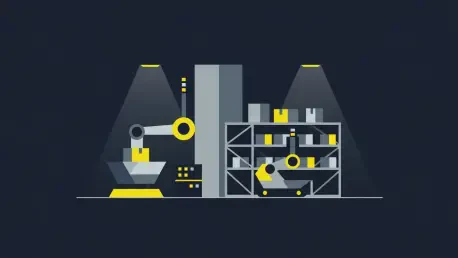

With decades of experience in management consulting and strategic operations, Marco Gaietti has witnessed the slow evolution of the industrial floor firsthand. Today, however, he sees that evolution turning into a revolution as the logistics sector prepares for a seismic shift toward autonomous operations. In this discussion, we explore the transition from human-centric warehouses to software-defined environments where robots take center stage. We dive into the complexities of multiagent orchestration, the financial implications of moving away from manual labor, and the critical role of digital twins in designing the “dark” warehouses of tomorrow.
By 2030, half of new warehouses in developed markets are expected to be designed as robot-centric facilities where humans are optional. What specific operational milestones should companies hit to reach this status, and how do you envision these facilities functioning without traditional lighting or climate control?
The most critical milestone is shifting the human role from being the primary engine of movement to being the manager of exceptions. In these new environments, the facility is designed around the robot’s logic, meaning 50% of the daily floor tasks are handled entirely by autonomous systems without any manual oversight. When you walk into these “dark” warehouses, the sensory experience is jarring; there is no need for the bright overhead LEDs that humans require, and the climate control can be dialed down significantly since machines don’t feel the bite of the cold or the fatigue of the heat. This transition requires a “software-first” mindset where the building itself is an extension of the logic board, allowing for a 24/7 operational cycle that isn’t limited by the physical comforts or biological clocks of a human workforce.
Manual labor models are becoming increasingly difficult to sustain due to rising costs and worker shortages. How does shifting to a robot-centric design fundamentally change a company’s long-term cost structure, and what are the primary challenges when transitioning away from human-led manual tasks?
The shift moves the financial burden from variable operational expenses—like the volatile costs of seasonal labor and recruitment—to a more predictable capital expenditure model. While the upfront investment in intralogistics smart robotics is substantial, it creates a structural cost advantage where the cost per unit handled remains flat or even decreases as volume scales, unlike manual models where costs spike during peak demand. The primary challenge, however, isn’t just the money; it’s the cultural and technical friction of moving away from traditional workflows. Managers must learn to trust an AI-driven environment to self-correct, which is a massive psychological leap from the tactile, visual management of a human team working on a loading dock.
AI now allows warehouse environments to shift from static structures to agile systems that optimize in real-time. Can you explain how software-managed environments reconfigure workflows during peak demand, and what role do multiagent orchestration platforms play in managing fleets of different robot types?
In a static warehouse, a surge in orders usually leads to a frantic scramble and physical bottlenecks, but a software-managed environment treats the floor as a fluid grid. When demand peaks, the orchestration platform identifies the surge and instantly re-routes robotic pickers to high-priority zones, effectively “re-wiring” the facility’s logic in seconds without moving a single shelf. Multiagent orchestration is the “brain” that allows a diverse fleet—perhaps pallet movers from one brand and small sorting bots from another—to communicate and avoid collisions. It ensures that these heterogeneous machines don’t just exist in the same space but work in a synchronized dance that maximizes every square inch of the facility’s throughput.
Modern warehouse design is moving toward software-defined platforms rather than fixed, single-purpose automation. How should firms use digital twins and simulation models during the pre-construction phase to validate layouts, and what steps ensure these facilities remain adaptable to future technological shifts?
Digital twins are no longer a luxury; they are a prerequisite for any firm wanting to avoid building a 20-year monument to obsolete technology. By running millions of simulations in a virtual environment before a single concrete slab is poured, engineers can stress-test how robots will interact under extreme peak-season loads or during hardware failures. To ensure long-term adaptability, firms must prioritize software-defined platforms that allow for “plug-and-play” updates. This means favoring modular workstations and flexible layouts over heavy, bolted-down conveyor systems, so that as new robotic sensors or faster processors emerge, the facility can be upgraded with a software patch rather than a sledgehammer.
The market for smart robotics is highly fragmented, necessitating the use of various robot types from different manufacturers. What strategies should organizations use to build a long-term vendor ecosystem, and how do you handle the technical integration of these diverse machines into a single, cohesive workflow?
The fragmented nature of the market means that “vendor lock-in” is a dangerous trap; instead, organizations should act as curators of a diverse ecosystem. The strategy must focus on open standards and robust APIs that allow a central orchestration layer to command robots from five different manufacturers as if they were one. You handle the technical integration by focusing on the “interoperability” of the data—ensuring that a pallet mover from Vendor A can hand off a load to a sorting arm from Vendor B without a millisecond of lag or a data format error. This requires a long-term partnership approach where you aren’t just buying hardware, but collaborating on a shared technical roadmap that guarantees these diverse machines will continue to “speak” the same language as the facility scales.
What is your forecast for robot-centric warehousing?
My forecast for robot-centric warehousing is that by 2030, we will see a radical bifurcation in the global supply chain, where the 50% of companies that adopt autonomous-first designs will achieve a level of scalability that makes traditional warehouses economically unviable. We are moving toward a reality where the “warehouse” is no longer a building full of people, but a massive, self-optimizing computer that can double its output overnight without a single new hire. This shift will fundamentally redefine the speed of global commerce, as these facilities will operate at a rhythm and precision that human-led operations simply cannot match, effectively ending the era of the static, labor-dependent distribution center.







