
Many organizations have experienced the frustration of investing significant time and resources into video content that appears flawless on paper, only to see the results fall disappointingly short of expectations. The concepts are strong, the production quality is high, and the entire team feels confident about the campaign’s launch, yet the final analytics report reveals moderate view counts, minimal engagement, and a concerning lack of qualified leads. This common scenario often prompts questions from leadership about the true return on investment, leaving marketing teams scrambling to justify their efforts. The core issue arises when video is treated primarily as a creative project rather than a structured business tool designed for conversion. A comprehensive video marketing strategy fundamentally shifts this perspective, providing a robust framework that connects every piece of content to specific, measurable business outcomes. This strategic approach ensures that videos not only capture the audience’s attention but also effectively guide prospects through the sales funnel, build lasting trust, and make a tangible contribution to revenue growth. By transforming creative concepts into a predictable system, businesses can turn video into one of their most powerful assets for achieving long-term success.
1. Build Your Video Marketing Foundation with Six Key Components
A successful video strategy that consistently drives results is built upon six interconnected building blocks, where each component reinforces the others to establish a scalable system that evolves with the business. The first and most critical element is the establishment of defined objectives and measurable Key Performance Indicators (KPIs). Success must be defined by clear, specific targets, such as generating 500 qualified leads from a product video series in a single quarter, rather than vague aspirations like achieving “more views.” This requires tracking meaningful outcomes like conversion rates, not just vanity metrics. Secondly, a well-defined target audience is essential. This goes beyond simple demographics; it involves understanding behavioral patterns, such as whether viewers watch content with the sound off during their commute or if they prefer short social clips over long-form tutorials. Finally, strategic platform selection is crucial. Instead of spreading resources thinly across every available channel, it is far more effective to focus on the two or three platforms where the target audience is most active and engaged. This concentrated effort maximizes impact and ensures that content reaches the right people in the right context, laying the groundwork for a more effective and efficient strategy that turns creative ideas into measurable outcomes.
The remaining three components complete the foundation, ensuring the strategy is both comprehensive and executable. A comprehensive content framework defines the ideal mix of educational, promotional, and entertaining videos designed to nurture leads through every stage of the funnel, which enables a steady production schedule without succumbing to creative burnout. Following this, realistic resource and budget planning is necessary. High-quality video production demands a practical allocation of talent, technology, and time to execute the vision effectively without overextending teams or compromising on quality. Lastly, a robust performance measurement system creates a continuous feedback loop, allowing teams to track progress against their established KPIs. This data-driven approach informs creative direction and optimizes distribution in real time, ensuring the strategy remains agile and effective. It is also important to recognize that B2B and B2C strategies approach these components differently; for example, B2B content often focuses on lead generation with a professional tone on platforms like LinkedIn, while B2C content aims for brand awareness and direct sales with an emotional, entertaining tone on channels like Instagram and TikTok. Visualizing the connections between budget, content, and performance metrics in a unified workspace ensures all these components work together seamlessly.
2. Set Smart Goals for Video Marketing Success
To ensure that creative efforts directly contribute to company-wide success, video marketing goals must align with broader organizational objectives. The SMART framework—Specific, Measurable, Achievable, Relevant, and Time-bound—is an indispensable tool for converting abstract desires into actionable targets that deliver a tangible business impact. For instance, instead of a vague goal like “get more views,” a SMART goal would be: “Generate 500 qualified leads from the Q3 product launch video series by September 30th.” This level of specificity allows teams to plan content, distribution, and measurement with absolute clarity, ensuring every action is purposeful and directed toward a concrete outcome. Setting such precise goals eliminates ambiguity and provides a clear benchmark against which to measure performance, making it easier to justify resource allocation and demonstrate the value of video marketing initiatives to key stakeholders. This structured approach transforms video from a simple creative output into a strategic asset that actively drives business growth and contributes to the bottom line in a predictable and repeatable manner.
Different business objectives necessitate distinct KPIs to accurately measure success at various stages of the customer journey. For awareness-oriented goals, metrics such as reach, impressions, and brand lift provide clear indicators of how effectively videos are introducing the brand to new audiences. When the objective is engagement, KPIs like watch time, shares, and comments signal how well the content resonates with viewers and encourages interaction. For conversion-focused goals, metrics such as click-through rates, leads generated, and customer acquisition cost directly measure the return on investment and the video’s effectiveness in driving desired actions. For example, a brand commercial would prioritize reach and ad recall to build awareness, whereas a product demo would focus on click-through rates and sign-ups as critical conversion metrics. Similarly, a customer testimonial aims to build trust, making its success best measured by its influence on conversion rates and the time viewers spend on the associated page. Utilizing dashboards within modern work management platforms can provide leadership with real-time visibility into these KPIs, clearly demonstrating how specific video content contributes to overarching business outcomes without the need for manual and time-consuming reporting.
3. Research and Understand Your Video Marketing Audience
Effective audience research is the cornerstone of creating video content that resonates, transforming a generic message into a tailored experience for real viewers. This process involves building a detailed profile of the audience, including who they are, how they consume video content, and what topics genuinely engage them. This deep knowledge is instrumental in crafting videos that are perfectly suited to each stage of the buyer journey, from the initial moment of discovery to the final point of decision. There are several powerful methods for conducting this research. Analyzing platform analytics, for instance, provides invaluable insights into viewer behavior; retention graphs can reveal precisely where viewers lose interest, while demographic data helps paint a clearer picture of the audience. Another effective method is social listening, which involves monitoring online forums and social media comment sections to uncover trending topics, common questions, and pain points directly from the target audience. Finally, conducting customer interviews by asking current clients which types of videos would have been most helpful to them during their buying journey can yield highly specific and actionable insights that data alone cannot provide.
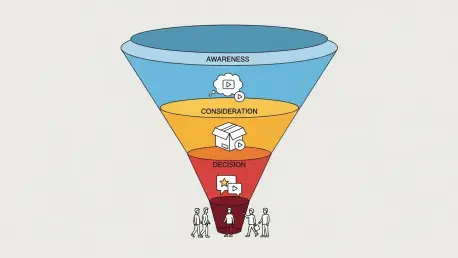
With a deep understanding of the audience, it becomes possible to strategically map content to the different stages of the buyer journey, ensuring that each video serves a specific purpose in moving a prospect forward. During the awareness stage, the audience is typically identifying a problem, making educational how-to videos and content on industry trends ideal for capturing their attention and establishing the brand as a helpful resource. In the consideration stage, prospects are exploring their options, so product comparison videos and detailed explainers that clearly articulate the value proposition are most effective. Once a prospect reaches the decision stage, they are asking, “Why should I choose you?” At this point, case studies, in-depth product demos, and authentic customer testimonials provide the social proof and confidence needed to make a purchase. The journey does not end there; for the retention stage, the goal is to help customers maximize the value of their purchase. Advanced tutorials and videos announcing new feature updates are perfect for keeping existing customers engaged and satisfied. Centralizing these audience insights ensures that all teams—from content creation to sales—are aligned on the target personas, enabling consistent and effective communication across all touchpoints.
4. Choose the Best Platforms for Video Distribution
Selecting the right distribution platforms is a strategic decision that ensures the investment in high-quality video content yields the maximum return by reaching audiences where they are most engaged. Viewer behavior and content consumption habits differ dramatically across various platforms, making a one-size-fits-all approach highly ineffective. Tailoring content to the specific format and context of each channel is essential for capturing attention and driving results. For instance, YouTube excels as a platform for discovery, as it functions as the world’s second-largest search engine. It is optimized for evergreen educational content that can attract organic traffic over the long term through effective SEO. This makes it ideal for in-depth tutorials, product explainers, and building brand authority. In contrast, short-form video platforms like TikTok and Instagram Reels are built for capturing immediate attention and capitalizing on trends. Success on these channels requires an attention-grabbing first few seconds to leverage their powerful algorithmic reach, making them perfect for boosting brand awareness and achieving viral potential with entertaining, easily digestible content.
For businesses operating in the B2B space, LinkedIn provides a professional context that is unparalleled for thought leadership and lead generation. Native video content, such as interviews with industry experts or breakdowns of complex business concepts, performs exceptionally well in this environment. The platform’s professional audience is more inclined to engage with content that offers tangible value and insights relevant to their careers and industries. Meanwhile, a company’s own website remains a critical channel for high-intent prospects who are actively seeking solutions. Embedding videos directly on product pages or landing pages is a powerful conversion tool, as it can provide detailed product education and build trust at a crucial point in the decision-making process. As the digital landscape continues to evolve, it is also wise to consider emerging platforms. Testing new channels can offer significant first-mover advantages, allowing a brand to establish a strong presence before the platform becomes saturated with competitors. Managing a multi-channel video strategy can be complex, but using centralized platforms to track platform-specific requirements and deadlines helps keep everything organized and efficient.
5. Select Video Types that Generate Results
A diversified video portfolio is essential for guiding prospects seamlessly through the customer journey, as different video types are designed to meet the audience’s needs at different stages. A person just discovering a brand for the first time requires content that introduces its value proposition in a clear and compelling way, whereas someone on the verge of making a purchase needs content that provides proof and clear guidance. By including a variety of video formats in a content plan, businesses can keep prospects engaged and consistently moving forward in the sales funnel. For example, explainer videos are highly effective at the awareness stage because they simplify complex concepts into digestible and engaging narratives, quickly establishing a brand’s value. Product demonstrations serve the consideration stage by showing a product in action, highlighting key features and functionalities to prove its capability and usefulness. For the crucial decision stage, customer testimonials provide powerful social proof through authentic stories from real customers, building the trust necessary to close a sale. This strategic alignment of video type to funnel stage ensures that the right message is delivered at the right time.
Beyond the core funnel stages, other video types serve unique purposes in building a stronger brand and fostering deeper connections with the audience. Behind-the-scenes content, for instance, humanizes a brand by showcasing its company culture and the people behind the products, which fosters a sense of connection and can strengthen employer branding efforts. Educational tutorials offer immense utility by solving specific problems for the audience, driving significant SEO traffic and positioning the brand as a trusted authority in its field. Live videos and webinars create opportunities for real-time engagement, allowing for deep-dive educational sessions and interactive Q&A that can build a strong community around the brand. User-generated content can be leveraged for authentic validation, expanding reach by showcasing how real customers use and love the products. Furthermore, the rise of AI-enhanced personalized videos allows for the delivery of customized messages at scale, which can be a game-changer for sales outreach and customer onboarding. Each of these video types comes with varying levels of production complexity and resource requirements, but coordinating their creation and deployment through a centralized system can standardize processes while preserving creative flexibility.
6. Create a Video Content Marketing Strategy
A well-defined content strategy is the antidote to the recurring panic of “what should we make next?” by providing a clear and sustainable roadmap for video creation. Instead of brainstorming ideas sporadically, the most effective approach is to start by identifying three to five core content pillars or themes that the brand can credibly own. These pillars should align with the brand’s expertise and the audience’s primary interests, establishing the brand as an authority in those specific areas. Once these pillars are defined, they can be expanded into dozens of specific video ideas, creating a rich and continuous pipeline of content. This structured approach not only prevents creative fatigue among the production team but also ensures that the content remains consistent and focused, keeping the audience engaged over the long term. A balanced content calendar that strategically mixes promotional material, in-depth educational content, and lighter entertainment ensures that the audience’s interest is maintained without causing subscription burnout from overly sales-focused messaging.
The foundational elements of a creative strategy extend beyond just the content pillars. Establishing a realistic and consistent publishing cadence is critical for maintaining favor with platform algorithms and setting clear expectations with the audience. Whether it is one long-form video per week or three short-form clips, consistency is more important than sheer volume. In addition, modern tools can significantly enhance the ideation process. AI ideation tools, for example, can be used to generate numerous topic variations based on the core pillars, identify content gaps in the market, and even suggest formats that are likely to perform well with the target audience. A practical way to structure this is through a monthly content calendar. For instance, one month might focus on an “Education” theme, with the key asset being a comprehensive industry guide supported by several shorter tips clips and infographics. The next month could shift to a “Product” focus, featuring a deep dive into a new feature, supported by multiple demos and user-generated tips. By building this content calendar directly into a workflow management system, teams can connect each concept to production timelines, assign owners, and set publication dates in a single, unified view.
7. Build an Efficient Video Production Workflow
The critical difference between a chaotic, last-minute approach to video creation and a streamlined, high-output content machine lies in the production workflow. A well-managed workflow prevents bottlenecks, maintains quality standards, and ensures that projects are delivered on time and within budget. The production cycle can be broken down into four distinct phases, each requiring a clear management approach. The first phase, pre-production, is where the vision is defined through concept development, scripting, and resource allocation. This is arguably the most important stage, as detailed planning here prevents costly and time-consuming reshoots later. A thorough creative brief, a finalized script, and a clear storyboard are essential for aligning all stakeholders and ensuring a smooth production process. The second phase, production, involves the efficient scheduling of equipment, talent, and locations to maximize the output of each production day. Clear communication and coordination are paramount to ensure that all necessary shots are captured according to the plan without delays or unforeseen complications.
The final two phases of the production cycle, post-production and approval, are where the raw footage is transformed into a polished final product. Optimizing post-production involves establishing consistent naming conventions for files, maintaining organized project folders, and implementing a clear version control system. These practices are crucial for managing complex edits, sound design, and color correction processes without confusion. The fourth and final phase is creating a structured approval system. This is often where significant bottlenecks occur, as feedback from multiple stakeholders can be disorganized and contradictory. A streamlined review cycle, with clear deadlines and a centralized platform for providing actionable feedback, reduces delays and ensures that revisions are handled efficiently. The total time required for production can vary significantly depending on the video type; a simple social media short might take only a few days from concept to completion, while a high-end commercial could take six to eight weeks. By employing automations within a work management platform, teams can automatically move projects through these stages, notify stakeholders when approvals are needed, and even create distribution tasks once the final master file is ready.
From Creative Chaos to a Strategic Growth Engine
Ultimately, the journey toward effective video marketing was not just about enhancing creativity; it required a fundamental shift toward systems that turned abstract ideas into measurable business results. By aligning compelling creative storytelling with structured, repeatable processes, video was transformed from an unpredictable creative variable into a reliable and powerful engine for growth. The transition from managing one-off projects to implementing a streamlined, strategic system eliminated critical delays, significantly improved the consistency and quality of the final content, and, most importantly, provided a clear way to prove the value of video initiatives to the entire organization. Through the deliberate clarification of objectives, a deeper understanding of target audiences, the strategic optimization of distribution platforms, and the intelligent leveraging of modern workflow tools, teams were able to develop and execute strategies that consistently delivered measurable and impactful outcomes. These efforts demonstrated that a unified approach, where success metrics were defined upfront and performance was tracked with real-time dashboards, enabled teams to work faster, mitigate risks, and achieve consistent results at a scale that was previously unattainable.