
The global automotive supply chain has reached a critical tipping point where the raw volume of vehicles being moved matters less than the staggering complexity of the networks transporting them. For years, the industry prioritized sheer capacity, yet today, the focus has shifted toward the digital infrastructure required to navigate a landscape defined by extreme volatility and rising costs. This evolution represents a departure from traditional tracking methods, moving instead toward holistic systems that can interpret thousands of variables simultaneously. As vehicle manufacturers and logistics providers grapple with these changes, the role of specialized IT has transitioned from a back-office necessity to a core competitive advantage.
The Evolution of IT in Vehicle Logistics
Modern vehicle logistics IT emerged as a response to the fragmentation of global trade routes and the increasing demand for individualized delivery timelines. While early software packages focused primarily on warehouse management or simple tracking, current frameworks are designed to synchronize diverse stakeholders, including ports, rail operators, and trucking fleets. This shift was necessitated by the realization that physical infrastructure alone cannot solve delays; rather, it is the flow of information that determines profitability.
By centering intelligence within the supply chain, companies are attempting to close the gap between projected growth and the actual ability to execute transport. This technological context is vital, as it allows the automotive sector to remain resilient even when physical bottlenecks occur. The technology under review represents the culmination of this transition, providing a unified interface for complex decision-making.
Core Components of Modern Logistics Systems
Decision Intelligence Frameworks
Unlike standard analytics that merely report on what has already happened, decision intelligence frameworks actively suggest the most efficient path forward. These systems analyze real-time disruptions—such as port congestion or labor shortages—and provide optimized alternatives that balance cost against speed. This technology is unique because it shifts the burden of calculation from human planners to algorithmic engines, allowing staff to focus on strategic exceptions rather than routine scheduling.
The performance of these frameworks is measured not just by speed, but by their ability to maintain stability when the surrounding environment becomes unpredictable. This implementation matters because it addresses the primary failure of legacy systems: the inability to act on data. By transforming raw numbers into actionable insights, these frameworks enable a proactive stance that was previously impossible.
Advanced Data Integration and Networking
A significant portion of the industry continues to struggle with a lack of visibility, specifically regarding delivery times and capacity availability. Advanced data integration aims to solve this by creating a unified digital thread that connects every entity in the logistics chain. This level of networking allows for a “glass pipeline” effect where data from a terminal operator is instantly accessible to a manufacturer thousands of miles away.
However, achieving this requires a standardized approach to data formats that the industry has historically lacked. The implementation of these networking tools serves as the foundation for all other high-level technological advancements. Without this integrated data layer, AI and other automation tools lack the necessary fuel to function correctly.
Current Trends in the Automotive Supply Chain
The most dominant trend currently influencing the sector is the move toward extreme flexibility over rigid, long-term contractual planning. Cost pressure has reached a level where a vast majority of industry participants identify it as their primary operational hurdle, forcing a search for efficiency through automation. Consequently, there is a marked shift in behavior where logistics providers are no longer just transportation companies; they are becoming data-centric enterprises.
This trend is driven by the need to manage fluctuating volumes that defy traditional seasonal patterns, requiring a more agile response than legacy systems can provide. Furthermore, the integration of sustainability metrics into logistics software is no longer optional. Modern systems must now account for carbon footprints alongside cost and time, adding another layer of complexity to the optimization process.
Practical Applications Across the Industry
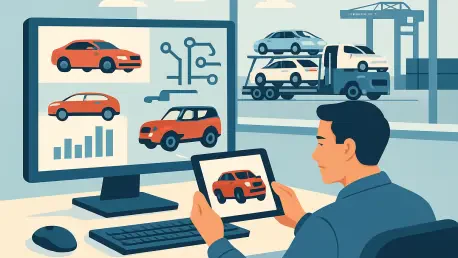
Practical applications of these IT advancements are most visible in large-scale port operations and finished vehicle terminals. In these environments, software coordinates the movement of thousands of vehicles, ensuring that each unit is processed through customs and inspections with minimal dwell time. Notable implementations include automated yard management systems that use geolocation to optimize the shuffle of cars, significantly reducing fuel consumption.
These tools are being deployed across North America and Europe, bridging the gap between high-tech manufacturing and often low-tech transport realities. In the sector of finished vehicle logistics, these applications allow for precise “to-the-minute” scheduling, which reduces the need for massive storage buffers. This real-world usage demonstrates that the technology is not just theoretical but a functional necessity for modern operations.
Operational Hurdles and Implementation Challenges
Despite the clear benefits, several hurdles impede the universal adoption of these advanced systems. Technical limitations often stem from the persistence of siloed legacy software that refuses to communicate with modern cloud-based platforms. Furthermore, the industry faces a significant regulatory challenge regarding data privacy and the sharing of proprietary information across competitive networks.
Organizations frequently hesitate to share capacity data, fearing it might compromise their market position, which ultimately limits the effectiveness of networking tools. Ongoing development efforts are focused on creating secure, “zero-trust” environments where data can be shared for mutual optimization without exposing sensitive business secrets. Overcoming this cultural and technical resistance remains the single biggest obstacle to a fully integrated global network.
The Future of AI and Machine Learning in Logistics
The role of artificial intelligence is moving beyond the experimental phase and into deep operational integration. Future developments are likely to focus on predictive modeling that can foresee supply chain bottlenecks weeks before they occur. Rather than replacing human expertise, these AI systems will act as sophisticated assistants that filter out noise and highlight only the most critical decision points.
This will likely lead to a decentralized management style where local operators have the same level of global insight as central headquarters, fundamentally changing the hierarchy of logistics management. As machine learning algorithms become more refined, they will eventually manage routine disruptions autonomously. This evolution will allow human oversight to transition toward long-term strategic growth rather than daily firefighting.
Conclusion and Strategic Assessment
The assessment of automotive logistics IT revealed that the industry was no longer able to function effectively using manual or siloed processes. Stakeholders recognized that the path to resilience required a fundamental transition from simple visibility to actionable decision intelligence. It became clear that the integration of AI and machine learning was not merely a trend but a survival strategy for navigating an increasingly volatile global market. Ultimately, those who prioritized data networking and algorithmic optimization positioned themselves to handle the rising costs that threatened to stagnate the sector. The focus shifted toward creating a collaborative ecosystem where data transparency served as the primary tool for mitigating operational risk. Moving forward, the industry must prioritize the standardization of data exchange protocols to fully realize the potential of these digital investments. Success depended on the ability to turn vast quantities of raw data into a decisive roadmap for operational excellence.