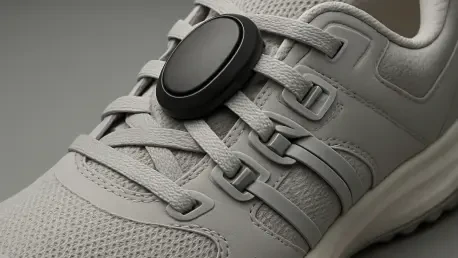

In the high-stakes world of professional athletics, where victory is often decided by mere fractions of a second, the sudden failure of a simple shoelace can mean the difference between a gold medal and a devastating injury. While multi-billion-dollar corporations invest heavily in advanced foam chemistry and aerodynamic apparel, the fundamental mechanism that secures footwear to the human foot remained largely unchanged for decades. This oversight created a significant vulnerability in sports performance, leading to inconsistent pressure distribution and mid-game distractions that hindered even the most elite competitors. Emerging from this gap in the market, BRCĒ has introduced a sophisticated approach to footwear security that treats the humble shoelace as a precision-engineered component rather than a disposable accessory. By addressing the mechanical deficiencies inherent in traditional lacing systems, this innovation seeks to eliminate the micro-movements that cause friction and instability during high-intensity movements, thereby transforming how athletes interact with their gear.
Engineering Performance Through Material Science
The Evolution: From Academic Theory to Applied Physics
The genesis of BRCĒ was not found in a corporate boardroom but in the personal frustration of Michigan State University students Madhav Aggarwal and Tanvi Gadamsetti. Both founders shared a history of career-ending athletic injuries directly attributed to failing shoelaces, a realization that prompted them to pivot their academic focus from computer science to material science in 2024. Working from a college apartment, they applied rigorous engineering principles to solve the problem of kinetic energy loss in footwear. Their research led to the development of a patented high-performance polymer-composite lace designed to withstand the extreme forces generated during sprinting and lateral cutting. This transition from software logic to physical substance allowed them to rethink the architecture of the lace itself, moving away from porous natural fibers that stretch and degrade. By 2025, their technical excellence was recognized by the US Patent and Trademark Office and the National Inventors Hall of Fame, which ranked their work among the top five innovations of the year.
This material breakthrough provides a level of structural integrity that standard accessories cannot match, functioning as a dynamic tension-management system. The proprietary polymer-composite is engineered to maintain a constant “lock” on the foot, ensuring that the initial tightness set by the athlete remains identical from the first minute of competition to the last. Unlike nylon or cotton, which absorb moisture and lose elasticity under heat, this composite maintains its physical properties regardless of environmental conditions. This consistency is vital for preventing the minor gear failures that lead to physical strain, such as plantar fasciitis or ankle instability. By treating the shoelace as a functional tool rather than a textile afterthought, the brand has successfully addressed the mechanical root causes of lace-related performance degradation. This approach ensures that the energy transferred from the leg to the ground is not dissipated through loose lacing, effectively maximizing the output of every stride an athlete takes during a game.
Technical Precision: Maintaining Consistent Tension and Safety
Traditional laces suffer from a phenomenon known as “creep,” where the material slowly elongates under stress, leading to a loss of tension that necessitates frequent retying. BRCĒ has solved this by utilizing a non-stretch core wrapped in a high-friction outer sheath that grips the eyelets of the shoe with surgical precision. This ensures that once the lace is tied, it stays tied without the need for double-knotting or specialized clips. For athletes, this means one less distraction during critical moments, allowing for total focus on the task at hand. The reduction in micro-slippage within the shoe also significantly decreases the risk of blisters and hot spots, which are often the result of the foot moving independently of the sole. By creating a unified system between the foot and the footwear, the technology provides a more stable platform for explosive movements. This level of security is particularly beneficial in high-impact sports where sudden changes in direction put immense lateral pressure on the shoe’s upper.
Furthermore, the implementation of these high-tech laces serves as a preventive measure against common mechanical injuries that plague both amateur and professional runners. When a lace loosens, the foot shifts forward, causing toe jamming and potential structural damage to the metatarsals. BRCĒ’s tension-retention technology prevents this forward migration, maintaining the foot in its optimal biomechanical position throughout the duration of an activity. This stability is not just about comfort; it is about maintaining the alignment of the kinetic chain from the foot up through the knee and hip. By ensuring that the footwear provides the support it was designed to offer, these laces act as a safeguard for the athlete’s long-term health. The engineering team continues to conduct material testing to refine the balance between flexibility and rigidity, ensuring that the laces provide enough “give” to accommodate natural foot swelling without sacrificing the security required for peak performance.
Strategic Market Expansion and Community Integration
Growth Models: Direct Engagement and Performance Validation
Operating with a strategic direct-to-consumer model, BRCĒ has prioritized accessibility and professional validation to build its market presence. Led by Aggarwal as CEO and Gadamsetti as COO, the company manages everything from complex material testing to global supply chain coordination from its centralized headquarters. Their flagship “Running Laces” entered the market at a competitive $19.99 price point, positioning the product as an affordable but essential upgrade for any serious runner. To bolster visibility and prove the efficacy of their polymer-composite, the brand utilizes a comprehensive athlete ambassador program. This initiative does more than just promote the product; it creates a vital feedback loop where professional athletes provide real-world data on how the laces perform under extreme stress. This data is then used to iterate on the design, ensuring that the product evolves alongside the needs of the sporting community. This focus on performance-driven marketing has allowed the brand to grow rapidly without relying on traditional advertising.
The success of the ambassador program has fostered a loyal community of early adopters who view the brand as a disruptor in the specialized athletic gear industry. By engaging directly with users through digital platforms and seasonal promotions, the company has bypassed the traditional retail barriers that often stifle innovation in the footwear sector. This direct connection allows for rapid response to market trends and specific athlete needs, such as the demand for different colors or lengths tailored to specific shoe models. Building on this foundation, the company has demonstrated that a student-led startup can challenge industry giants by focusing on a single, high-impact solution. The operational efficiency achieved through their engineering backgrounds has enabled them to maintain high quality control while scaling production to meet increasing demand. This blend of advanced science and strategic business management has established BRCĒ as a legitimate player in the sports technology landscape, proving that even the smallest gear can have a massive impact.
Diversification: Expanding the Reach of Technical Footwear
As the brand moves through the 2026-2028 period, the roadmap for expansion includes the introduction of specialized versions for a wider array of sports. Recognizing that the mechanical requirements of a hockey player differ significantly from those of a tennis player, the engineering team is developing laces with varied friction coefficients and tensile strengths. Upcoming releases for basketball and football will feature reinforced cores to handle the extreme lateral torque of court and field sports. Additionally, a dedicated line for children is in development, addressing the safety and convenience needs of younger athletes who often struggle with lace security. This diversification strategy ensures that the benefits of polymer-composite technology are available to every demographic, from the professional pitch to the elementary school playground. By tailoring the material properties to specific athletic movements, the brand is moving toward a future where every sport has its own optimized lacing solution.
In retrospect, the shift toward high-performance lacing systems represented a necessary evolution in athletic equipment. Athletes who integrated these advanced materials into their gear reported fewer distractions and a measurable increase in footwear stability. The transition from traditional fibers to polymer-composites proved that no component of sports gear was too small to benefit from rigorous scientific inquiry. Moving forward, the industry should have prioritized the integration of material science into all aspects of footwear to ensure maximum safety and efficiency. Organizations and individuals seeking to optimize their physical output looked toward these specialized tools as essential components of their performance kit. The success of this technology suggested that the future of sports gear lay in the precision of the details, encouraging a wider adoption of high-tech solutions for everyday athletic challenges. These advancements paved the way for a new standard in gear reliability, ensuring that athletes remained focused on their goals rather than their equipment.