An unprecedented shift in public and political sentiment is reshaping America’s energy future, turning decades of opposition to nuclear power on its head as the artificial intelligence revolution creates an almost insatiable demand for clean, reliable electricity. For years, the prevailing attitude toward nuclear projects was a firm “Not In My Backyard,” born from concerns over safety and waste. Now, however, a new industrial age powered by AI is dawning, and its computational factories require energy on a scale not seen since the height of heavy manufacturing. This reality is fostering a dramatic transformation, with community leaders and policymakers who once resisted nuclear development now proactively asking to “Build It Here,” viewing advanced nuclear energy not as a liability, but as a foundational pillar for economic prosperity and technological leadership in the 21st century. This change represents a pragmatic pivot driven by the undeniable calculus of modern technological progress.
The Dawn of a New Economic Catalyst
The primary driver behind this evolving perspective is a compelling economic argument that reframes advanced nuclear projects as powerful engines for regional revitalization and long-term growth. Communities are increasingly recognizing that attracting one of these next-generation power facilities is a once-in-a-generation opportunity. A landmark partnership in Ohio between a major technology company and an advanced nuclear developer serves as a compelling case study. This multiyear endeavor, set to be built on a former Department of Energy site, is projected to create thousands of stable, high-paying jobs and inject tens of millions of dollars into the local economy through tax revenues and sustained investment. For areas seeking to build a resilient economic future, the promise of such a project extends beyond the facility itself, providing the clean, safe, and consistently available energy needed to attract other high-tech industries, most notably the very data centers that are driving this energy demand.
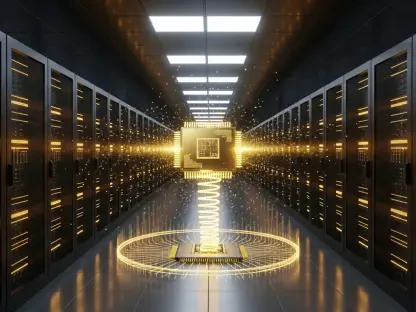
This burgeoning relationship between advanced nuclear energy and the tech industry highlights a powerful symbiosis that is set to define the next era of industrial development. The data centers powering artificial intelligence are the factories of the future, and their operational requirements mirror those of the great steel mills and chemical plants of the past, which demanded enormous and absolutely uninterrupted supplies of power. The intermittency of renewable sources like wind and solar, while critical for the overall energy mix, cannot alone satisfy the stringent 24/7 power demands of AI computing, which has virtually zero tolerance for outages. This positions nuclear power as the only clean energy source capable of providing the constant, reliable baseload electricity necessary to fuel the AI revolution. As every major corporation moves toward accelerated computing, the race to secure this foundational power infrastructure is becoming a central element of competitive strategy, promising a multidecade cycle of development.
Redefining Nuclear with Advanced Technology
Today’s advanced nuclear reactors are a world away from the massive, aging plants that have long dominated the public imagination and fueled safety concerns. The old paradigm of 1,000-megawatt facilities with colossal cooling towers and sprawling footprints is being replaced by a new generation of powerhouses that are smaller, more efficient, and designed to integrate seamlessly into their environments. These modern reactors can be as small as 75 megawatts and require only a few acres of land, allowing for greater flexibility in siting. Their design philosophy also represents a significant departure, with some developers creating sleek, aesthetically pleasing structures that more closely resemble a tech campus or an Apple Store than a traditional industrial complex. This evolution in form factor and design not only makes the technology more palatable to local communities but also reflects the underlying efficiency and sophistication of the engineering within.
The most profound advancements, however, lie in the core principles of safety and sustainability that underpin this new nuclear technology. Unlike older reactors, which relied on complex, active safety systems requiring external power and human intervention in an emergency, advanced plants are designed with passive safety features. They leverage natural forces like gravity and convection to cool the reactor core automatically and indefinitely, without any need for electricity or operator action, rendering a meltdown virtually impossible. Furthermore, these new designs fundamentally alter the conversation around nuclear waste by treating it as a valuable asset. Used uranium fuel from conventional reactors retains approximately 95% of its potential energy. Advanced reactors are capable of recycling this material, turning a long-term storage problem into a vast energy resource. The potential is staggering; recycling the United States’ current inventory of used fuel could power the entire country for over 100 years.
Historical Precedents and Future Dominance
History offers a powerful lesson on the transformative impact of large-scale, reliable energy infrastructure. The construction of the Hoover Dam in the 1930s provided the power that enabled Las Vegas to grow from a small desert town into a global entertainment hub. Similarly, the Grand Coulee Dam on the Columbia River fueled the expansion of Boeing and the broader industrial effort during World War II, solidifying the Pacific Northwest as an economic powerhouse. In more recent decades, the Palo Verde Generating Station, America’s largest nuclear plant, provided the clean and consistent electricity that allowed Phoenix to blossom into a major metropolitan area. These historical precedents demonstrate a clear and repeating pattern: the development of foundational energy projects consistently sparks economic booms, attracts new industries, and fundamentally reshapes the destiny of entire regions. The current moment mirrors these transformative periods, with advanced nuclear poised to play the same catalytic role for the AI era.
This realization has ignited a new competitive race, not just between nations but also among states vying for a leadership position in the global AI economy. The agreement to build an advanced nuclear plant to power data centers in Ohio is not an isolated event but rather the harbinger of a broader national trend. Policymakers and economic development leaders in states like Texas, Tennessee, Idaho, Wyoming, Utah, and Virginia are actively working to create regulatory and political environments that will attract these next-generation energy projects. They understand that the communities that embrace AI factories powered by advanced nuclear will gain a decisive competitive advantage, securing a prosperous future built on technological innovation. This widespread, bipartisan enthusiasm marks a profound strategic pivot, signaling that the future of economic dominance will be directly linked to the abundance of clean, reliable energy.
A Consensus for an Energized Future
The convergence of technological innovation, immense new energy demands, and shifting economic priorities created a new paradigm for American energy development. The rapid and profound transition from widespread public opposition to the active recruitment of nuclear projects was not merely a change in opinion; it was a fundamental realignment of national strategy in the face of the dawning AI revolution. This movement from fear to a proactive embrace of innovation marked a pivotal chapter, not only for the nuclear industry but for any community that chose to build a future founded on economic growth and energy abundance. The widespread consensus that emerged across the country demonstrated a renewed belief in the nation’s ability to build the critical infrastructure necessary to lead the world into a new technological age.