
The familiar blue collection box on the street corner has long represented a final, reliable step in meeting America’s most critical deadlines, a symbol of trust between citizens and the institutions they answer to. For decades, dropping a tax return or a legal document into that box on its due date was enough to secure a timely filing. However, a fundamental shift in U.S. Postal Service policy threatens to unravel this long-standing assurance, creating new risks for taxpayers, donors, and anyone relying on the mail for time-sensitive correspondence. This guide will navigate the complexities of this change, explain the potential financial and legal consequences, and provide clear, actionable strategies to ensure your important documents are always considered on time.
The Mailbox Rule: A Taxpayer Safeguard Under Threat
The “mailbox rule” is a legal principle deeply embedded in American common law, providing a predictable and fair standard for when a mailed item is considered sent. It establishes that once a properly addressed and stamped piece of mail is placed in the care of the U.S. Postal Service, it is officially dispatched. This rule is not merely a custom; it is a critical safeguard that protects individuals from penalties caused by postal delays or processing issues that are entirely beyond their control. From contract acceptances to court filings, this principle has brought certainty to countless transactions.
This long-standing safeguard is now facing an unprecedented challenge due to a recent policy adjustment by the USPS. The change redefines what a postmark signifies, shifting its meaning from the date of deposit to the date of processing. This seemingly minor administrative tweak has significant implications for anyone who relies on a postmark to prove they met a deadline. The purpose of this guide is to dissect this new policy, illuminate the risks it poses to taxpayers and charitable donors, and offer a clear set of protective measures to navigate this new landscape successfully. By understanding the new rules and adopting new habits, individuals can continue to meet their obligations with confidence.
Why a Simple Stamp Carries So Much Legal Weight
The legal significance of a postmark is rooted in centuries of law designed to create order and fairness in communication. Historically, proving when something was sent was crucial for everything from business contracts to legal notices. The mailbox rule evolved to provide a clear, uniform answer: the date it was handed over to the postal service. This principle prevents a recipient from denying the timeliness of a document by simply claiming it arrived late. It places the burden of performance on the postal system after the sender has fulfilled their duty of mailing the item correctly and on time.
Recognizing its importance for the nation’s revenue system, Congress codified this principle into federal tax law with the passage of Section 7502 of the Internal Revenue Code. This statute explicitly states that a U.S. postmark on a tax return, payment, or claim is deemed the date of delivery or filing. For generations, this law has been a bedrock of the tax compliance system. It has empowered taxpayers to use the mail up to the final minute of a deadline day, secure in the knowledge that the stamp applied by the USPS would serve as irrefutable proof of their timeliness, thereby avoiding late-filing penalties and interest charges stemming from mail system delays.
Navigating the New USPS Postmark Policy
Event 1: The USPS Redefines the Postmark
The core of the recent policy shift lies in a critical redefinition of the postmark itself. Under the new guidelines, the date stamped on most mail is no longer guaranteed to reflect the day the sender deposited it in a mailbox or at a post office. Instead, the postmark will now represent the date the mailpiece undergoes postal processing, which often occurs at a centralized facility and may happen hours or even a day after the mail was collected. This change breaks the traditional link between the sender’s action and the official date of mailing.
This procedural adjustment creates a significant gap between public expectation and operational reality. For example, a taxpayer who diligently drops their tax return in a collection box on the evening of April 15th might assume they have met their obligation. However, if that mail is not transported to a processing center and sorted until after midnight, it will receive an April 16th postmark. According to a strict interpretation of tax law, this would render the filing untimely, even though the taxpayer acted in good faith and followed a practice that has been reliable for decades.
Event 2: Identifying the Risks to Taxpayers and Donors
The direct consequences of a postmark that is a day later than expected can be severe and costly. For taxpayers, a late postmark on a return can trigger automatic late-filing penalties, which can be substantial, along with interest charges that accrue from the deadline. The same risk applies to tax payments, estimated tax vouchers, and responses to IRS notices, all of which often carry strict deadlines. Beyond tax filings, petitions to the U.S. Tax Court are governed by uncompromising timely-mailing rules, and a late postmark can result in the dismissal of a case, denying the taxpayer their day in court.
This policy change also creates a specific and problematic issue for charitable giving, particularly for year-end donations. Federal tax law allows a deduction for a charitable contribution in the year the gift is made. For mailed checks, the postmark date has always served as the legal date of the donation. Under the new system, a check mailed on December 31st could easily receive a January 1st postmark, thereby shifting the tax deduction to the following year. This could disrupt financial planning for donors and create accounting uncertainties for the non-profit organizations that depend on these crucial end-of-year contributions.
Event 3: Actionable Steps to Guarantee Proof of Timely Mailing
Method 1: Use the Post Office Retail Counter
The most straightforward way to eliminate any uncertainty about your mailing date is to conduct your transaction in person with a postal employee. When you purchase postage for a letter or package at a retail counter, the clerk will affix a Postage Validation Imprint (PVI) label. This sticky label is printed at the point of sale and includes the date, time, and location of the transaction.
The PVI label serves as an official USPS receipt printed directly on your mailpiece, providing clear and dated proof that the Postal Service has taken possession of your item. This method removes any ambiguity created by processing delays at sorting facilities. For any document where the mailing date is critical, such as a tax return or a court filing, walking it to the counter and having a PVI label applied is a simple, effective strategy to guarantee proof of timely acceptance.
Method 2: Request a Manual Postmark
For an equally effective and no-cost alternative, taxpayers can specifically request a manual postmark at the post office counter. This process involves a postal employee using a traditional hand-stamp device to imprint the day’s date directly onto the envelope. This hand-stamped postmark serves the same function as a PVI label, confirming the exact date that the USPS accepted the mailpiece from you.
This service is available for free upon request and is a long-standing practice recognized as official proof of mailing. It is particularly useful when sending pre-stamped envelopes. It is important to note that if you are mailing a large volume of items (typically 50 or more), the USPS advises contacting the local postmaster in advance to ensure they can accommodate your request without disrupting service. Politely asking for a “hand-cancel” or “manual postmark” is all that is needed to secure this valuable proof.
Method 3: Invest in Official Mailing Services
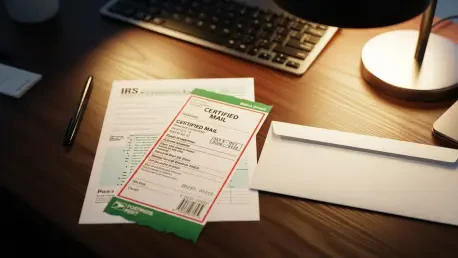
For the highest level of assurance and legal protection, the USPS offers several premium services that provide indisputable proof of the mailing date. Services like Certified Mail and Registered Mail furnish the sender with an official paper receipt at the time of mailing. This receipt is stamped with the date of acceptance and serves as legally recognized evidence of a timely filing, a fact the IRS has long encouraged taxpayers to utilize.
Certified Mail provides proof of both mailing and delivery, while Registered Mail offers enhanced security for valuable items. Another option is a Certificate of Mailing, which is less expensive and provides evidence that a specific mailpiece was presented to the USPS on a certain date, although it does not include tracking or proof of delivery. Choosing one of these services creates a paper trail that can be indispensable in a dispute with the IRS or a court over a filing deadline.
Warning: What Doesn’t Count as Proof
In this new environment, it is crucial to understand what no longer constitutes sufficient proof of a timely mailing. Many modern postage methods are convenient but fail to prove when the USPS actually took possession of your mail. For example, postage printed from a self-service kiosk in a post office lobby or purchased online through services like Click-N-Ship only indicates when the postage was bought, not when the item was mailed.
Similarly, a postmark generated by a private postage meter in an office only shows the date selected by the user. It does not prove that the item was deposited with the USPS on that date. As courts have repeatedly affirmed, if an item has both a private meter mark and a later USPS postmark, the official USPS postmark is the one that controls the filing date. Relying solely on these methods for deadline-sensitive documents is a significant and avoidable risk.
Broader Impacts: Ripples Across Legal and Charitable Sectors
The High Stakes in Tax Court and Legal Filings
The new postmark policy has profound implications within the legal system, where filing deadlines are strictly enforced and often non-negotiable. The U.S. Tax Court, in particular, adheres rigidly to the statutory definition of a timely filing as determined by the postmark date. A petition that arrives with a postmark even one day past the deadline is typically dismissed for lack of jurisdiction, regardless of the taxpayer’s intent or when the item was actually placed in a mailbox. This unforgiving standard leaves no room for error.
The case of Thomas v. Comm’r. serves as a stark illustration of this principle. In that case, a couple used a private postage meter to stamp their Tax Court petition with the deadline date, March 5th, and dropped it in a mailbox. However, the USPS-applied postmark was dated March 6th. The court sided with the IRS, disregarding the private meter date and ruling that the official USPS postmark was the only one that mattered. The petition was dismissed as untimely, demonstrating that courts will not bend the rules, making verifiable proof of mailing more critical than ever.
Securing Your Year-End Charitable Giving
The effects of the postmark change extend directly to the philanthropic sector, impacting both donors and the charities they support. Under federal tax law, the timing of a charitable contribution is determined by when the gift is completed. For donations made by check, the rule has consistently been that the date of the postmark is the date of the gift. This has allowed donors to confidently mail checks on December 31st and claim the deduction for that tax year.
With postmarks now reflecting processing dates, a donation mailed on New Year’s Eve could very likely receive a postmark from the new year, disqualifying it for a deduction in the year the donor intended. To avoid this outcome, financial advisors and charitable organizations must now proactively educate donors. Recommending earlier mailing in December, promoting the use of electronic donation platforms, or advising donors to obtain a counter-stamped postmark for last-minute gifts are essential new strategies to ensure contributions are properly timed and deductions are secured as planned.
Key Takeaways: A Summary of Protective Measures
Go to the Counter: The most reliable way to ensure a same-day postmark is to have your mail processed by a postal employee. A transaction at the retail counter generates a dated PVI label directly on your mailpiece, serving as conclusive proof of acceptance.
Request a Hand Stamp: A manual postmark, which can be requested for free at the counter, provides clear, dated evidence of when the USPS took possession of your mail. This simple action eliminates any ambiguity caused by backend processing delays.
Use Tracking Services: Services such as Certified Mail or Registered Mail provide an official, date-stamped receipt that serves as legal proof of your mailing date. This paper trail is invaluable for critical documents sent to the IRS or courts.
Avoid Last-Minute Drops: Dropping mail in a collection box on a deadline is no longer a guaranteed strategy for a timely postmark. To avoid the risk of a next-day processing date, plan to mail important items earlier or use an in-person service.
Final Advice: Adapting to the New Reality of Mailing
The foundational principle of the mailbox rule, while not eliminated, has been significantly altered by the new USPS postmarking procedure. The certainty that once came with dropping a letter in the mail on a deadline has diminished, but taxpayers and donors are not without recourse. The power now lies in being proactive and informed, understanding that old habits may no longer provide the protection they once did.
Ultimately, navigating this change requires a conscious shift in behavior. For any time-sensitive document, whether it is a tax return, a court petition, or a year-end charitable gift, the new best practice is to abandon the last-minute drop-off. Instead, by adopting the habit of visiting the post office counter and utilizing services that provide a dated receipt or a same-day postmark, you can maintain full control over your compliance. Taking these extra steps provides not only legal protection but also invaluable peace of mind in an evolving landscape.