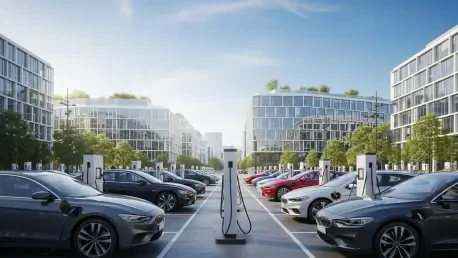

The volatile landscape of global energy markets has reached a critical tipping point as skyrocketing petrol and diesel prices push European consumers toward electric mobility at an unprecedented pace. With the ongoing conflict in Iran destabilizing traditional supply chains, the financial burden of maintaining internal combustion engines has shifted from a manageable expense to a significant economic liability for millions of households. This sudden shift in market dynamics is reflected in the most recent data, which reveals that electric vehicle registrations across mainland Europe surged by an impressive 51 percent during the month of March alone. Beyond a simple preference for newer technology, this migration represents a fundamental change in consumer behavior driven by necessity and the search for long-term fiscal stability. As traditional fuel prices remain erratic, the transition to battery electric power is no longer viewed as a luxury but as a vital hedge against geopolitical instability. Data from 15 European nations indicates that over 224,000 electric vehicles were registered in March, contributing to a total of 500,000 registrations in the first quarter, marking a 33.5 percent increase compared to the start of the previous year.
Regional Growth and Policy Effectiveness
Expansion: Beyond the Nordic Strongholds
While Nordic countries continue to lead the charge in electrification, with Norway reaching a staggering 98 percent market share for new car sales, the growth has spread rapidly into central and southern Europe. Germany, France, Spain, Italy, and Poland recorded a collective 40 percent increase in uptake during the first quarter, signaling that the electric transition is no longer confined to the wealthiest northern enclaves. This geographic expansion is critical for the long-term viability of the European automotive sector, as it proves that battery electric vehicles can succeed in diverse climates and varying economic conditions. The mass adoption seen in central Europe suggests that the infrastructure is finally catching up with consumer demand, alleviating long-standing concerns regarding range anxiety and charging availability. Even in regions where adoption was previously slow, the sheer cost of fossil fuels has acted as a primary catalyst, forcing a reconsideration of transport budgets. The resilience of the market in these areas demonstrates that the shift is grounded in economic reality rather than purely environmental sentiment, as buyers prioritize the lower operational costs of electric drivetrains over traditional internal combustion options.
Strategic Impact: Targeted Incentives and Market Resilience
France has been particularly successful by implementing aggressive government incentives, including a social leasing scheme and grants of up to 5,700 euros for low-income households. These targeted financial measures have democratized access to clean technology, ensuring that the transition is inclusive rather than limited to premium market segments. Even Italy, traditionally a laggard in the electrification race, saw a 65 percent year-on-year increase in March, proving that when the financial incentives align with high fuel costs, consumer resistance evaporates. The European automotive industry is showing remarkable resilience despite previous concerns regarding waning demand and the influx of foreign competitors. Germany, in particular, has solidified its position as a primary hub for electrification, now manufacturing half of all electric cars sold on the continent. This domestic production capability is vital for maintaining economic stability, as it protects local jobs while reducing the carbon footprint associated with vehicle logistics. By fostering a robust internal market, European nations are creating a virtuous cycle where increased demand leads to greater economies of scale, further driving down the purchase price of new electric models for the average consumer.
Energy Security and Infrastructure Development
Strategic Autonomy: Reducing Oil Dependence
The consensus among industry experts is that this trend represents a major gain for European energy security by significantly reducing the continent’s reliance on imported petroleum products. By shifting the energy demand from oil to the electrical grid, the transition is calculated to reduce oil demand by approximately 2 million barrels per year. This reduction mitigates a key economic vulnerability that was exposed by the Iran conflict, allowing European economies to decouple their transport sectors from the whims of global oil cartels. Furthermore, the shift toward electric power encourages the integration of renewable energy sources, as the grid can increasingly be powered by domestic wind, solar, and nuclear assets. This move toward strategic autonomy is not merely an environmental initiative but a calculated economic response to global volatility that ensures long-term price stability for commuters. The ability to produce transportation fuel locally through electricity generation provides a level of sovereign control that was previously impossible under a fossil fuel-based regime. As nations continue to invest in grid modernization, the synergy between electric transport and renewable energy production will only strengthen the broader economic framework.
Future Readiness: Past Actions and Next Steps
The transition away from internal combustion engines accelerated throughout the first quarter as geopolitical instability and rising fuel costs overrode political skepticism. Government officials and industry leaders prioritized the rapid expansion of charging infrastructure to ensure that the surge in vehicle adoption did not outpace the utility of the network. Stakeholders focused on standardizing charging protocols and increasing the density of fast-charging stations along major transit corridors to support long-distance travel. To maintain this momentum, future considerations must include the development of secondary markets for used electric vehicles and the implementation of robust battery recycling programs to secure raw material supply chains. Manufacturers and policymakers recognized that the shift was no longer a theoretical goal but a strategic economic necessity that required immediate and sustained investment. By establishing a comprehensive ecosystem that supports every stage of the vehicle lifecycle, Europe positioned itself to lead the global movement toward a post-oil economy. These proactive measures ensured that the region remained competitive while providing citizens with a more predictable and cost-effective method of personal transportation in an increasingly unpredictable world.