
Expert IT leader Marco Gaietti brings decades of management consulting experience to the table, specializing in the intersection of strategic operations and emerging technology. In this conversation, we explore the shifting landscape of enterprise risk, moving beyond traditional cybersecurity to address the “silent failures” of ungoverned AI, the fragility of sprawling SaaS ecosystems, and the critical need for architectural standards. Gaietti provides a roadmap for balancing rapid innovation with long-term operational resilience, emphasizing how to protect competitive differentiation even when tethered to major cloud providers.
The following interview summarizes high-level strategies for mitigating technical debt, fostering “T-shaped” talent, and communicating complex risks to board members through the lens of business outcomes.
The Model Context Protocol (MCP) for AI agent communication is currently in a state similar to the early, unencrypted days of the internet. How should organizations secure these emerging standards, and what specific guardrails prevent “black box” automation errors from scaling out of control? Please provide a step-by-step approach.
We have to treat the current state of MCP exactly like the early days of HTTP before the ‘S’ was added; essentially, the burden of security rests entirely on the organization because industry-wide standards don’t exist yet. To prevent black box errors from scaling, I recommend a three-step approach: first, establish strict internal communication protocols that treat every AI agent interaction as a potential security vulnerability. Second, implement a “human-in-the-loop” verification layer for any automated output that impacts financial or operational data, ensuring errors are caught before they reach the “blast radius” of the wider enterprise. Finally, you must conduct regular “stress tests” on these models to identify bias, drift, or hallucinations early, effectively creating an observability layer around the AI’s decision-making process.
SaaS sprawl and a lack of architectural standards often lead to operational fragility within an enterprise. How do you implement observability to track these disparate systems, and what specific metrics do you use to determine if legacy debt is compromising the stability of a new digital transformation?
Operational fragility is a compounding risk that occurs when a CIO inherits a disorganized ecosystem where disparate technologies pop up without oversight. To counter this, we implement observability by mapping every SaaS tool against a central architectural standard, looking specifically for “integration friction” points where data flow slows down or breaks. The key metrics I track are the frequency of “rework” required during new deployments and the “blast radius” of a single system failure—if a minor update in one tool causes a cascade of errors across the ecosystem, your debt is too high. By monitoring these stability markers, we can see if our transformation is building on a solid foundation or a house of cards.
Relying on a few specialists creates significant bottlenecks when proprietary models or systems need updates. How do you structure “T-shaped” teams to balance deep expertise with broad cross-training, and what role do early-career STEM initiatives play in your long-term talent retention strategy?
The danger of concentrated talent is that it leads to slower delivery and higher fragility because only a few people truly understand the “why” behind the code. We solve this by building “T-shaped” teams where every member has the breadth to understand the workflows to their left and right, while maintaining deep expertise in their specific niche. This cross-training reduces bottlenecks because the team can support one another during high-demand periods without losing technical integrity. Beyond the immediate team, we invest in the future by running STEM programs in high schools and diverse communities, because if we don’t inspire the next generation to see how “cool” this field is, we simply won’t have enough humans left to manage the AI we are building.
Strategic flexibility is often limited by deep dependencies on ERP or cloud providers. What architectural standards allow you to leverage a vendor’s “design authority” while using microservices to protect your unique competitive workflows? How do you identify if a platform decision has become truly irreversible?
Vendor lock-in is a reality we must manage rather than avoid, so we adopt an architecture that grants the vendor “design authority” over the core functions—like HR or basic supply chain—to ensure the system works as intended. However, we strictly build our competitive differentiators, such as unique customer workflows, using microservices and service layers on the periphery of that core. This “buffer” prevents the vendor’s roadmap from dictating our unique value proposition. A platform decision becomes truly irreversible when the cost of decoupling those peripheral microservices exceeds the value of the platform itself; at that point, you’ve lost your strategic flexibility.
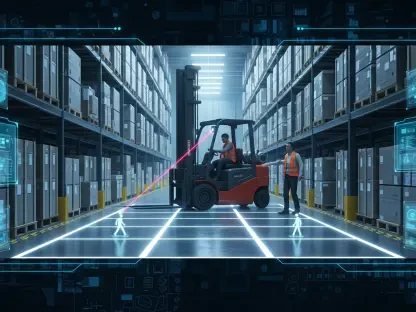
In highly automated environments like distribution centers, a single point of failure in robotics can halt revenue immediately. How do you design systems that allow for manual bypasses or physical redundancy, and what criteria do you use to balance these expensive investments against the likelihood of disruption?
In our distribution centers, we look at the three-tier system of suppliers and retailers and realize that IT is the thread holding them together, so a halt in robotics is a halt in revenue. We design for redundancy by ensuring that even the most advanced automated storage and retrieval systems have physical workarounds or secondary “manual bypass” routes that humans can operate if the power or logic fails. We balance these investments by calculating the “acceptable impact” of a shutdown—if a 24-hour disruption costs more than the redundancy hardware, the investment is a mandate. It’s about ensuring that as we introduce wearables and robotics, we never lose sight of how humans remain the ultimate failsafe in the loop.
Board members often prioritize continuity and strategic flexibility over technical specifications. How do you translate technical risks into specific outcome-based scenarios, such as order flow disruptions or regulatory exposure, to secure funding? Could you share an anecdote regarding a successful communication strategy?
The secret to board communication is to never use “tech speech” and instead focus exclusively on revenue, cost, and continuity. I once successfully secured funding for a massive platform overhaul not by talking about server latency, but by demonstrating exactly how a platform failure would freeze our order flow and halt our growth trajectory. When I framed the technical debt as a “regulatory exposure” risk that could lead to non-compliance in our three-tier distribution system, the conversation shifted from a “cost center” to a “business survival” necessity. By focusing on the outcome—keeping the wine and spirits moving—the board could clearly see the link between the technology and the bottom line.
Ungoverned AI introduces risks ranging from data leakage to “silent failures” that humans might not immediately notice. What specific auditing processes ensure that AI remains a tool for human benefit rather than a liability, and how do you decide when a model is stable enough to scale?
We aren’t afraid of AI, but we are deeply concerned about “silent failures”—errors that happen behind the scenes in a black box that go unnoticed until they’ve scaled. To mitigate this, we use a rigorous auditing process that checks for IP leakage and data privacy compliance against evolving U.S. laws before any model is moved past the pilot stage. A model is only considered “stable enough to scale” when it demonstrates consistent value in a controlled environment and when our teams are fully trained to intervene if the model drifts. We prioritize “governed AI,” meaning we don’t scale anything unless the benefit to the human worker is clear and the redundancy is already in place.
What is your forecast for the future of AI governance and operational resilience?
I believe we are entering an era where “Resilience by Design” will become the primary competitive advantage for enterprises. In the next few years, we will see a shift where the successful companies aren’t just the ones with the best AI models, but the ones with the most robust governance frameworks to manage the “mishmash” of AI agents popping up across their SaaS tools. We will likely see a move toward standardized communication protocols—an “HTTPS for AI”—but until then, the CIOs who win will be those who balance bold innovation with a disciplined, architectural approach to risk. Ultimately, technology will continue to move faster than ever, but the human element—our ability to govern these tools and maintain strategic flexibility—will remain the most critical factor in long-term enterprise health.