
The landscape of global industry is witnessing a profound transformation where the pursuit of sustainability has transitioned from a corporate social responsibility initiative into a core strategy for fiscal survival. In the current economic climate, organizations are no longer prioritizing “green” initiatives solely to appease environmental advocates; instead, they are leveraging these technologies to insulate themselves from the volatility of energy markets and the persistent challenges of labor scarcity. This pragmatic shift recognizes that resource efficiency is synonymous with financial resilience, particularly when traditional energy costs fluctuate unpredictably. As global instability continues to disrupt established supply chains, the adoption of sustainable advancements has become a vital defensive mechanism. By focusing on high-tech solutions that offer immediate operational savings, companies are redesigning their foundational structures to ensure longevity. The modern motivation for innovation is clear: it is less about altruism and more about maintaining a competitive edge in a world where waste is a financial liability.
Streamlining Operations With Autonomous Freight Solutions
Long-haul trucking serves as a primary example of how necessity catalyzes technological adoption to solve urgent financial dilemmas. The industry currently faces a severe shortage of qualified drivers, which has driven up labor costs and created significant bottlenecks in the movement of goods across the country. Autonomous trucking systems have emerged as a high-performance solution that addresses these shortages while simultaneously slashing fuel expenditures. Unlike human operators, automated systems utilize sophisticated algorithms to maintain optimal speeds and minimize aggressive maneuvers like rapid acceleration or hard braking. This precision can reduce fuel consumption by as much as 15%, a figure that translates into massive savings when operating a fleet of hundreds of vehicles. By integrating self-driving technology, logistics providers are effectively decoupling their growth from the rising costs of traditional fuel and manual labor markets.
Beyond the immediate reduction in fuel use, autonomous systems provide a level of operational uptime that remains impossible for traditional fleets to achieve. Human drivers are subject to strict hours-of-service regulations designed to prevent fatigue, which necessitates frequent and lengthy rest periods that stall the progress of cargo. In contrast, autonomous units can operate almost continuously, pausing only for refueling or routine maintenance checks. This increased utilization rate allows companies to cover significantly more mileage in a 24-hour cycle, effectively lowering the total cost of ownership for every vehicle in the fleet. When diesel prices remain high and consumer demand fluctuates, the ability to move goods faster and more predictably becomes a decisive economic advantage. These systems represent a shift toward a more resilient logistics framework that prioritizes efficiency and reliability over the outdated models of the past decades.
Industrial Marine Electrification and Resource Stability
The maritime sector is undergoing a similar evolution as port operators move away from fossil fuels in favor of industrial-scale electrification. While electric propulsion was once considered a niche application for smaller leisure boats, the focus has shifted toward heavy-duty workhorses such as tugboats and short-sea vessels. These ships operate in demanding environments where they burn enormous quantities of expensive diesel fuel every day. By transitioning to high-capacity battery systems, operators are finding they can eliminate the volatility of oil prices while meeting increasingly stringent environmental mandates at major global shipping hubs. The high initial investment is quickly offset by the significantly lower costs of electricity and the reduced maintenance requirements of electric motors compared to internal combustion engines. This transition is not merely an environmental choice but a calculated move to secure long-term profitability in a high-cost harbor ecosystem.
This shift mirrors the progress seen in the rail industry, where electric motors have long demonstrated their superior efficiency in moving heavy freight across long distances. Utilizing electricity for industrial shipping acts as a strategic hedge against the unpredictable nature of global oil markets, providing a level of cost certainty that is impossible with traditional fuels. As the technology for marine batteries matures, the industry expects to see a wider range of vessels, including ferries and military support craft, adopting hybrid or fully electric systems. These advancements ensure that critical maritime operations can continue reliably, regardless of the fluctuations in global fuel availability. By investing in these resilient power systems, the maritime industry is positioning itself to thrive even as energy markets remain unstable. The goal is to build a fleet that is not only cleaner but also fundamentally more economical to operate under the pressures of modern global commerce.
Domestic Solar Manufacturing and Supply Chain Security
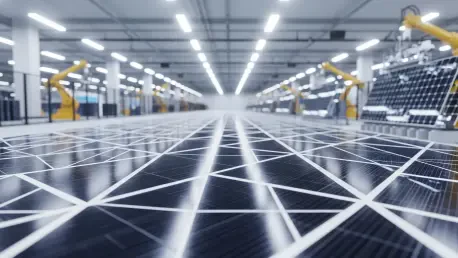
Solar energy production is rapidly moving toward a model of domestic independence as a way to mitigate the risks associated with complex international trade. For several years, the industry relied heavily on foreign components, leaving manufacturers vulnerable to geopolitical tensions and shipping disruptions that could halt entire projects. To counter these vulnerabilities, companies are now focusing on localizing their supply chains, sourcing essential materials like high-grade polysilicon and glass from regional suppliers. This shift toward domestic production helps insulate the clean energy sector from the sudden price spikes and delays often associated with global trade disputes. By building a localized ecosystem for solar components, developers can ensure a more stable and predictable flow of parts, which is essential for meeting large-scale energy infrastructure goals. This move toward self-sufficiency is a direct response to the economic instability of the current global trade landscape.
Regulatory frameworks are reinforcing this trend by shifting away from simple financial incentives toward strict mandates for domestic content. Recent policy updates have introduced requirements that prioritize products manufactured with a significant percentage of locally sourced parts to qualify for government contracts or subsidies. Companies that fail to adapt to these “made in America” standards find themselves at a competitive disadvantage, risking their position in a rapidly consolidating market. This pressure is forcing a reorganization of the solar industry, favoring firms that have proactively built their business models around local manufacturing and domestic energy security. As a result, the industry is becoming more robust, with a focus on creating a manufacturing base that is resilient to external shocks. The drive for green energy is thus being accelerated by the need for national economic security and the desire to build a more reliable, locally managed power infrastructure for the coming decade.
Navigating Policy Fluctuations and Frontier Technologies
The transition toward a sustainable economy is currently facing a set of complex challenges rooted in shifting policy landscapes and tightening budgets. Some regulatory bodies have recently scaled back on transparency requirements regarding carbon disclosures, reflecting a more cautious approach from governments facing fiscal constraints. Local municipalities, once the leaders in setting ambitious climate goals, are being forced to reconcile their environmental aspirations with the realities of limited funding and competing public priorities. These headwinds indicate that the pace of sustainable innovation will likely be determined more by what is affordable and practically achievable than by environmental idealism alone. However, this environment also forces a more disciplined approach to innovation, where only the most economically viable technologies receive the necessary investment to scale. The focus has moved toward solutions that provide a clear and immediate return on investment in a cost-conscious economy.
To overcome these structural obstacles, investors and researchers are increasingly looking toward frontier technologies that offer high-reward potential for energy independence. These ventures include highly advanced concepts such as space-based solar arrays designed to provide consistent power to high-demand infrastructure like regional data centers. Additionally, autonomous systems are being developed to harvest critical minerals from the ocean floor, securing the raw materials needed for battery production without relying on volatile international markets. Even nuclear energy is experiencing a significant resurgence, as it offers a reliable and high-capacity way to power the national grid with minimal interruption. These high-tech solutions demonstrate that the next phase of industrial innovation is firmly rooted in the creation of a resilient foundation that can thrive despite economic uncertainty. By focusing on these breakthrough areas, the industry is preparing for a future where energy security is the ultimate competitive advantage.
Advancing Industrial Resilience Through Strategic Investment
Forward-thinking organizations recognized that the integration of sustainable technology was the most effective way to navigate the complexities of the current economic environment. They prioritized investments in autonomous logistics and localized manufacturing to buffer themselves against the rising costs of fuel and labor. Rather than viewing environmental standards as a burden, these leaders treated them as a blueprint for operational efficiency and long-term risk management. This proactive stance allowed them to secure market share while competitors struggled with the inefficiencies of older, fossil-fuel-dependent models. The successful transition required a thorough reassessment of every aspect of the supply chain, from the sourcing of raw materials to the final delivery of goods. By focusing on the economic necessity of these changes, businesses successfully bridged the gap between environmental responsibility and financial profitability, setting a new standard for industrial success in an unpredictable world.
The path forward necessitated a focus on scalability and the practical application of emerging technologies to ensure they met the rigorous demands of the marketplace. Leaders identified that the most resilient systems were those that reduced dependency on external variables and maximized the use of domestic resources. They moved beyond traditional cost-cutting measures and instead looked toward fundamental structural changes that provided a lasting advantage. This included adopting modular nuclear reactors for consistent power and utilizing advanced robotics to offset the ongoing challenges of a shrinking workforce. The emphasis shifted toward creating an industrial base that was both adaptable and self-sufficient, capable of weathering any economic storm. By aligning financial objectives with technological innovation, the global economy moved toward a more stable and sustainable future. This strategy provided a clear roadmap for others to follow, proving that economic necessity remains the most powerful catalyst for meaningful and lasting industrial change.