
Global manufacturing leaders are increasingly realizing that merely collecting massive amounts of sensor data is insufficient for maintaining a competitive edge in an era defined by rapid fluctuations in supply chain stability and labor availability. While the previous decade focused on the basic connectivity of the Internet of Things, the current landscape demands a shift toward systems that do more than just report problems; they must possess the intelligence to solve them. This transition necessitates a move away from passive dashboards toward active, agentic solutions that can interpret complex industrial environments and make decisions in real time. As factories become more complex, the friction caused by manual data interpretation and slow response times becomes a significant bottleneck. Consequently, the industry is witnessing a strategic push toward integrating artificial intelligence directly into the operational fabric of the production floor, ensuring that every machine and process is optimized autonomously.
Advancing the Paradigm of Industrial Intelligence
Integrating Leadership for Unified Innovation
The appointment of Anoop Mohan as the inaugural Chief Product and Technology Officer marks a pivotal moment in the alignment of technological vision with operational execution within the industrial sector. With a background that includes a quarter-century of experience and a significant tenure leading agentic AI solutions at Google Cloud, Mohan is positioned to bridge the gap between high-level software engineering and the gritty reality of manufacturing. His primary objective involves the consolidation of disparate departments—product management, engineering, and AI incubation—into a single, high-functioning organization designed to accelerate the delivery of advanced tools. This structural reorganization is not merely an internal shift but a strategic move to ensure that product development is informed by the latest breakthroughs in machine learning. By breaking down traditional silos, the company ensures that the AI models being developed are perfectly tuned to the specific needs of maintenance teams and plant managers on the ground.
Building on this leadership transition, the company has successfully attracted a cohort of senior executives from some of the most influential technology firms in the world, including Meta, Amazon, and Microsoft. This influx of talent, which includes specialists in platform management and product operations like Gilad Bornstein and Itamar Cohen, reflects a broader trend of “Big Tech” expertise migrating toward industrial applications. This specialized team is tasked with transforming raw technical capabilities into intuitive products that can be deployed across diverse manufacturing environments without requiring extensive specialized training for the end users. The synergy between veteran industrial knowledge and cutting-edge software expertise allows for the creation of a platform that is both robust and agile. This approach ensures that the technological roadmap remains focused on solving the most pressing challenges in the industry, such as reducing unplanned downtime and maximizing the efficiency of limited human resources in high-pressure production settings.
Transitioning from Monitoring to Autonomous Action
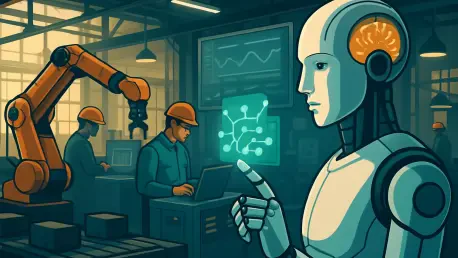
The shift from traditional predictive maintenance to agentic AI represents a fundamental change in how industrial organizations perceive machine health and operational workflows. In the past, technology was primarily used to provide early warnings of equipment failure, leaving the actual coordination of repairs and process adjustments to human operators who were often overwhelmed by data. Agentic AI, however, is designed to take the next step by actively orchestrating these workflows, effectively acting as a digital member of the workforce that can initiate actions based on its findings. This means the system does not just identify a vibrating bearing; it can potentially trigger a work order, check spare parts inventory, and suggest the optimal time for a technician to intervene based on the current production schedule. By removing the manual steps that typically lead to delays, the technology allows manufacturers to operate with a level of precision that was previously unattainable through human oversight alone.
Furthermore, this evolution toward agency is supported by the integration of deep learning models that can understand the context of an entire facility rather than just individual components. This holistic view enables the AI to provide recommendations that consider the ripple effects of a single machine’s performance on the rest of the production line. For instance, if a pump is showing signs of wear, the agentic system can determine whether to slow down a specific process to extend the asset’s life or to push for a quick replacement to meet a critical delivery deadline. This level of sophisticated decision-making is what characterizes the next generation of industrial technology, moving beyond simple “if-then” logic into complex, goal-oriented behaviors. As these systems become more prevalent, the role of the industrial worker will continue to evolve from a reactive troubleshooter to a strategic overseer of an increasingly autonomous and self-healing manufacturing ecosystem.
Building a Foundation for Scalable Success
Harnessing Deep Data Insights for Reliability
The effectiveness of any AI-driven solution is fundamentally tied to the quality and volume of the data used to train its underlying models, a reality that gives established players a significant advantage. Having spent over fifteen years accumulating data from a diverse array of industrial assets, the company now possesses a repository encompassing more than one billion monitored machine hours. This massive dataset provides a unique historical perspective on how different types of equipment behave under various stress factors and environmental conditions. Because the AI has “seen” almost every possible failure mode across thousands of different machines, it can recognize subtle patterns that would be invisible to less experienced systems. This historical depth is what allows for the high levels of accuracy required in mission-critical industries where a single false positive or missed alert can result in millions of dollars in lost revenue or significant safety risks for the onsite personnel.
Moreover, the current strategy involves using this data foundation to refine the agentic capabilities of the platform, ensuring that the autonomous actions taken are grounded in empirical evidence rather than theoretical models. By continuously feeding real-time performance data back into the system, the AI learns from every intervention, further improving its predictive and prescriptive capabilities over time. This creates a virtuous cycle where the system becomes more intelligent and reliable with every hour of operation. In an industry where trust is a prerequisite for adoption, the ability to demonstrate a proven track record of data-backed insights is essential. Manufacturers are more likely to grant autonomous authority to a system that has demonstrated its reliability over millions of cycles. This data-driven approach not only enhances the performance of individual factories but also provides a benchmark for operational excellence that can be applied across entire global enterprises.
Cultivating a High-Performance Technical Ecosystem
The recent momentum in the industrial AI sector is perhaps best exemplified by significant capital infusions and high marks from independent industry analysts. A successful Series F funding round in early 2025 provided the financial runway needed to support ambitious research and development goals, while high rankings in benchmarks like the Verdantix Green Quadrant validated the company’s market position. These accolades are more than just trophies; they serve as a signal to the broader manufacturing community that the transition toward agentic AI is a viable and necessary path forward. For organizations looking to modernize their operations, these evaluations provide a framework for selecting partners that can deliver long-term value. The focus has moved from experimental pilots to full-scale deployments that can be measured in terms of return on investment, sustainability metrics, and overall equipment effectiveness, which are the primary KPIs for any modern industrial leader.
Implementing Autonomous Industrial Strategies
Successful integration of agentic AI required a shift in organizational culture toward a more data-centric approach to decision-making. Manufacturers who adopted these systems found that the most effective first step was to identify high-impact areas where manual coordination was the primary cause of inefficiency. By deploying agentic tools in these specific segments, teams demonstrated immediate value, which then facilitated broader adoption across the entire enterprise. It was crucial for leadership to ensure that the technical workforce was upskilled to work alongside these autonomous agents, treating the AI as a collaborative partner rather than a replacement. The past implementations showed that the best results occurred when the technology handled the repetitive data processing and routine scheduling, allowing human experts to focus on complex problem-solving and long-term strategic planning. Moving forward, industrial leaders should prioritize the scalability of their AI infrastructure to ensure that the benefits of agentic systems can be felt across every level of the supply chain.