
I’m thrilled to sit down with Marco Gaietti, a veteran in the field of clean energy and sustainability, whose extensive background in business management has positioned him as a leading voice in municipal energy transitions. With decades of experience guiding strategic initiatives, Marco has been deeply involved in projects that pivot cities toward greener futures, including Los Angeles’ groundbreaking shift to green hydrogen. Today, we’ll explore the monumental changes at the Intermountain Power Project, the innovative technologies driving L.A.’s carbon-free goals, the challenges of scaling hydrogen solutions, and the city’s inspiring journey from coal dependency to a 60% carbon-free energy mix.
Can you take us behind the scenes of Los Angeles’ historic shift away from coal, particularly with the Intermountain Power Project in Utah transitioning to a mix of natural gas and hydrogen by 2026? What were the pivotal steps or obstacles in retrofitting such a massive facility?
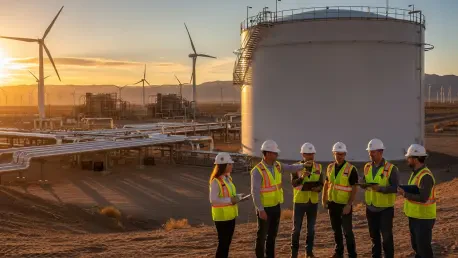
Absolutely, Richard, this transition is a landmark moment for L.A. and a testament to years of strategic planning. The Intermountain Power Project, which has been supplying power to the city since the 1980s, was originally a coal-fired beast, but the push for decarbonization by 2035 forced a complete rethink. The key steps started with assessing the feasibility of converting the existing turbines to handle a blend of 70% natural gas and 30% hydrogen, which involved not just technical retrofits but also securing renewable energy to produce green hydrogen on-site. One of the biggest challenges was ensuring the infrastructure could handle hydrogen’s unique properties—it’s lighter and burns hotter than coal or gas, so we had to overhaul combustion systems and safety protocols. I remember standing in the control room during early testing, feeling the hum of the turbines and a mix of nerves and excitement as we hit a milestone: the first successful test burn. It’s staggering to think this facility, once a coal giant, will soon help L.A. eliminate coal entirely from its energy mix.
The storage solution for hydrogen at the Utah site—a salt cavern the size of the Empire State Building—sounds fascinating. How did the team come up with this idea, and what makes it such a perfect fit for hydrogen storage?
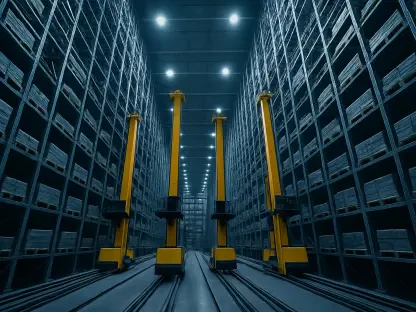
It’s one of those serendipitous discoveries that turned out to be a game-changer. The Intermountain site was built atop this massive salt cavern decades ago, but back then, no one saw its potential beyond geological curiosity. When we started planning hydrogen production, the need for safe, large-scale storage became paramount, and our engineers revisited the cavern’s properties—salt formations are incredibly impermeable, which means hydrogen, a notoriously leaky gas, can be stored without significant loss. Setting it up involved drilling access points and reinforcing the structure, but the real hurdle was ensuring long-term stability under pressure; we had sleepless nights over early seismic data that suggested minor risks. Standing at the edge of the site, peering into the vast underground void through monitoring equipment, you can’t help but feel awestruck by nature’s engineering. It’s an ideal solution because it’s not just huge—capable of holding immense volumes—but also naturally seals itself against leaks, making it a cornerstone of this project.
L.A.’s journey from just 3% renewable energy in 2003 to 60% carbon-free today is remarkable. What were the key projects or policies that fueled this transformation, and do you have a personal memory that captures the scale of this progress?
It’s been an incredible ride, Richard, and it didn’t happen overnight. Back in 2003, coal was over 50% of L.A.’s energy mix, and the shift started with aggressive policies mandating renewable portfolio standards, pushing utilities like LADWP to invest in wind, solar, and later hydrogen. Pivotal projects included early solar farms in the Mojave Desert and the phasedown of coal contracts, but the Intermountain transition is the crown jewel—it’s not just about replacing coal but reimagining how we power a metropolis. I’ll never forget a community meeting in the early 2000s, standing in a packed room with residents skeptical about renewables, hearing their fears about blackouts while I pointed to a chart showing that measly 3% renewable slice. Fast forward to today, seeing Mayor Bass announce we’re coal-free last week gave me chills—it’s a full-circle moment. That jump to 60% carbon-free shows what’s possible when policy, technology, and public will align, though we’ve still got work to do by 2035.
The Utah facility is hailed as the world’s largest green hydrogen project, producing 21 million kilograms annually at 220 megawatts. How does LADWP plan to evolve this operation, and what excites you most about the technology behind it?
We’re just scratching the surface with the Utah project, Richard. The current output of 21 million kilograms of hydrogen per year is a start, but the long-term vision is to transition the fuel mix to 100% hydrogen, phasing out the 70% natural gas component entirely as we scale up renewable energy inputs. The plan involves expanding electrolyzer capacity—those are the machines splitting water into hydrogen and oxygen using electricity—and integrating more efficient models as technology advances. What gets me fired up is the sheer innovation in these 220-megawatt electrolyzers; they’re powered by renewables on-site, releasing only oxygen as a byproduct, and seeing them hum along in test runs feels like watching the future unfold. A key lesson we’ve learned is the importance of redundancy—early on, a single unit failure set us back weeks, so now we’re building in backups. I can’t wait to see how next-gen designs will cut costs and boost output, making green hydrogen a mainstream power source.
Burning hydrogen produces nitrogen oxides, a pollutant, but the Utah plant uses selective catalytic reduction systems to manage emissions. Can you explain how these systems work and share an insight from their implementation?
Absolutely, managing emissions is non-negotiable, even with a clean fuel like hydrogen. When hydrogen burns, it creates nitrogen oxides, or NOx, because of the high combustion temperatures interacting with nitrogen in the air, but selective catalytic reduction—SCR—systems tackle this head-on. Essentially, SCR injects a reducing agent, like ammonia, into the exhaust stream, and as it passes over a catalyst, it converts NOx into harmless nitrogen and water vapor, keeping emissions way below permitted limits. Setting this up at Utah was meticulous—we had to fine-tune the ammonia dosage during testing to avoid waste or slippage, and I recall the tension in the air as we analyzed the first stack readings, hoping for compliance. One standout moment was seeing test results showing NOx levels so low they surprised even our engineers; it was a quiet victory, smelling the crisp Utah air outside the plant, knowing we’re not just cutting CO2 but also protecting local air quality. It’s proof that clean energy can be truly clean with the right tech.
Sourcing electrolyzers from China for the 220-megawatt scale was a significant decision for the Utah project. What drove that choice, and how did collaboration with Mitsubishi Power’s U.S. arm play a role in this process?
It was a pragmatic call, Richard, driven by scale and availability. At 220 megawatts, the capacity we needed for the Utah project was unprecedented, and no U.S. manufacturer could meet the volume or timeline—domestic production just wasn’t there yet. Sourcing from China, through Mitsubishi Power’s U.S. arm, ensured we got top-tier equipment without derailing our schedule, though it did add layers of complexity with logistics and quality checks, not to mention cost considerations. Working with Mitsubishi was a lifeline; their expertise in power systems bridged cultural and technical gaps, and I vividly recall a late-night call with their team, troubleshooting a shipment delay while sipping bitter coffee, feeling the weight of the project’s timeline. Their commitment to rigorous testing before deployment gave us confidence, and it’s a partnership that’s taught us how global collaboration can accelerate local clean energy goals.
Looking ahead, LADWP plans to convert the Scattergood Generating Station in West L.A. to hydrogen next year. What’s the strategy for phasing out natural gas there, and how has the team or community responded to this upcoming shift?
The Scattergood conversion is our next big leap, and the strategy mirrors Utah but with a local twist. We’re starting by retrofitting the existing natural gas turbines to handle hydrogen blends, leveraging lessons from Intermountain on combustion adjustments and safety systems, while ensuring a steady hydrogen supply pipeline—likely tied to regional production. Logistically, it’s about minimizing downtime; we’ve got detailed outage schedules to swap components, and we’re pre-testing blends to avoid surprises. Community response has been mixed—I was at a town hall recently where residents near Scattergood voiced excitement about cleaner air but also real concern about costs trickling down to their bills, and I could feel their unease in the room’s silence after my reassurances. Internally, the team is energized; engineers are practically buzzing to apply Utah’s playbook closer to home. It’s a chance to show that hydrogen isn’t just a distant experiment but a tangible step for L.A.’s backyard.
Given the challenges facing green hydrogen in the U.S., like federal funding cuts for hydrogen hubs, how is LADWP maintaining momentum on projects like the Utah facility with its $504 million loan guarantee? What keeps the drive alive amidst these setbacks?
It’s tough, Richard, no question—federal funding cuts for hydrogen hubs have stung, casting a shadow over the industry’s growth in the U.S. But LADWP’s commitment to the Utah project, backed by that $504 million loan guarantee from the Biden administration in 2022, remains rock-solid because the infrastructure is already in place and operational. What keeps us going is the bigger picture—L.A.’s goal of 100% carbon-free energy by 2035 isn’t just a target; it’s a moral imperative for a city choking on smog not long ago. A recent challenge was a supply chain snag for critical components, delaying a phase by weeks, but resolving it through sheer grit and late-night brainstorming reminded us why we’re here. I think of standing on the Utah site, wind whipping dust around, feeling the weight of knowing this project powers millions of homes cleanly. It’s that visceral connection to impact, plus the support of local leaders and communities, that fuels our resolve to push through uncertainty.
What is your forecast for the future of green hydrogen in municipal energy transitions, especially given both the technological promise and the current economic and political headwinds?
Looking ahead, I’m cautiously optimistic about green hydrogen’s role in municipal energy transitions, Richard. The technology—like what we’re proving at Utah with 21 million kilograms annually—has immense potential to decarbonize not just power but also transport and industry, especially as electrolyzer costs drop and renewable energy becomes cheaper. However, the economic headwinds, with hydrogen production still pricier than natural gas alternatives, and political shifts dampening federal support, mean cities will need to lean on local funding and private partnerships to bridge the gap. I foresee a patchwork adoption over the next decade, where pioneering cities like L.A. set the blueprint, but widespread scaling hinges on policy stability and innovation breakthroughs. My hope is that in ten years, I’m standing at another plant opening, smelling fresh air free of pollutants, celebrating hydrogen as a norm rather than an experiment. What do you think the next big leap needs to be to get us there?