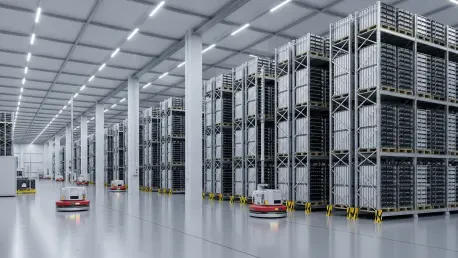

The rapid acceleration of the European electric vehicle market has fundamentally altered traditional supply chain requirements, necessitating a specialized infrastructure capable of managing the high-risk and high-value nature of lithium-ion batteries. As automotive manufacturers transition away from internal combustion engines, the demand for sophisticated logistics centers that prioritize thermal monitoring and hazard containment has reached an all-time high. DHL Supply Chain is responding to this critical need by unveiling a state-of-the-art facility designed specifically to serve as a central node for European battery distribution. This hub represents a significant departure from standard warehousing, incorporating advanced automated systems that handle everything from incoming cell shipments to the final delivery of integrated power packs. By positioning this infrastructure at the heart of the continent, the company is bridging the gap between gigafactories and assembly lines, ensuring that the lifeblood of the electric revolution flows without interruption.
Safety Engineering: Technical Standards for High-Voltage Storage
Constructing a facility of this magnitude requires an uncompromising approach to safety engineering that addresses the unique volatile characteristics of energy storage systems. Lithium-ion components are susceptible to thermal runaway, which means the warehouse environment must be equipped with specialized sensors and high-capacity fire suppression systems tailored for chemical blazes. Unlike conventional storage units, this new hub utilizes a compartmentalized design where individual sections can be isolated immediately upon the detection of an abnormal temperature spike or gas release. Specialized racking systems and robotic handling units minimize human contact with high-voltage materials, significantly reducing the risk of workplace accidents while maximizing space efficiency. This focus on preventative technology ensures that the hub serves not only as a storage point but also as a high-security vault for the most valuable components in the modern automotive sector. Such a rigid technical framework allows manufacturers to outsource their most sensitive logistics operations with total confidence in the operational continuity.
Operational Compliance: Managing Dangerous Goods and Traceability
Beyond the physical infrastructure, the hub functions as a regulatory compliance center that navigates the complex web of European dangerous goods transport regulations. Handling batteries at scale requires a workforce that is specifically certified in dangerous goods protocols and emergency response procedures tailored for chemical incidents. Every stage of the logistics process, from the initial unloading of maritime containers to the loading of specialized freight trucks, follows a strict sequence of safety checks and documentation audits. This meticulous attention to detail ensures that every battery module moving through the facility remains fully traceable throughout its entire journey across the European continent. Furthermore, the hub provides value-added services such as state-of-health testing and modular repairs, which are becoming increasingly essential as the industry shifts toward circular economy models. By centralizing these complex technical tasks within a single specialized facility, the company is effectively streamlining the supply chain, allowing automotive manufacturers to focus their resources on vehicle assembly while leaving the dangerous goods management to the experts.
Strategic Outcomes: Future-Proofing the Circular Supply Chain
Stakeholders in the electric vehicle sector observed how the implementation of this centralized hub transformed the landscape of battery logistics through increased efficiency and enhanced safety standards. Companies that integrated their operations with this facility successfully reduced their overhead costs while simultaneously improving their compliance with stringent environmental and safety mandates. It became evident that long-term success in the transition to electric mobility required a shift away from makeshift storage toward purpose-built specialized infrastructure. Moving forward, manufacturers were encouraged to prioritize the development of end-of-life logistics pipelines, ensuring that the hub served as a gateway for battery recycling and raw material recovery. This strategy addressed the growing pressure for sustainable mineral sourcing and closed-loop manufacturing processes. By adopting these integrated solutions, the industry moved closer to a fully circular and resilient energy ecosystem. These advancements provided a clear roadmap for other regions to follow through 2027 and beyond.