
Shipping a standard pair of sneakers in a box sized for a microwave oven is no longer just an environmental oversight; it is a financial catastrophe that modern logistics can no longer afford to ignore. For years, fulfillment centers relied on a limited range of standard box sizes, leading to shipments that were frequently composed of more air than actual product. This “empty space” problem has evolved from a minor nuisance into a critical drain on profitability as global freight costs soar and dimensional weight pricing becomes the industry standard.
Consequently, the shift in consumer expectations toward more responsible and compact delivery methods has forced a total rethink of traditional packing strategies. Shoppers today are far more likely to scrutinize the environmental footprint of their purchases, making oversized packaging a direct liability for brand reputation.
The High Cost of Shipping Air
The inefficiency of a “one-size-fits-all” box approach extends beyond the warehouse floor, impacting the entire transportation network. When packages contain excessive void space, fewer items fit into a single delivery vehicle, which directly increases the number of trips required and the associated fuel consumption. This inefficiency drains margins by forcing companies to pay for the transportation of empty air rather than high-density cargo.
Moreover, this spatial waste is no longer a sustainable way to do business in a market where operational efficiency defines the winner. By addressing the empty space problem, companies can unlock significant cost savings while meeting the growing demand for lean, purpose-driven logistics operations. The move toward volume optimization is no longer a luxury but a fundamental requirement for survival.
Legislative Pressures and the Push for Circularity
Regulatory bodies have taken notice of this waste, transforming voluntary sustainability goals into strict legal mandates that international shippers must prioritize. The European Union’s Packaging and Packaging Waste Regulation (PPWR) serves as the primary catalyst, setting aggressive targets for volume reduction and packaging circularity across the supply chain. This regulation ensures that businesses cannot ignore their environmental impact without facing significant penalties.
Compliance is shifting from a corporate social responsibility initiative to a legal necessity for maintaining market access. During the CID26 summit, the dialogue between policymakers and industrial leaders emphasized that these regulations act as a mandatory floor for future operational standards. Bridging the gap between legal requirements and industrial capacity is now the primary focus for logistics leaders worldwide.
The Technological Vanguard: Flexible and Vertical Fulfillment
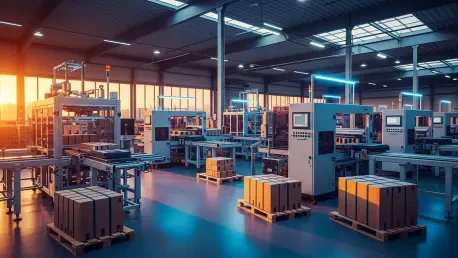
To meet these rigorous standards, a new technological vanguard has emerged, focusing on flexible fulfillment solutions that maximize every square inch of the warehouse. The unveiling of the CMC Genesys PRIMA signaled a move toward ultra-responsive packaging, where machines create custom boxes in real-time to match the unique dimensions of any order. This flexibility eliminates the need for plastic fillers and oversized cardboard.
Similarly, the CMC Vertical ONE concept reimagines spatial efficiency within high-volume centers, proving that throughput can increase even as physical footprints shrink. Evidence from the field shows that existing systems like the CMC CartonWrap DUO and Paper-PRO reduce material waste by significant margins while maintaining the high speeds required for modern eCommerce. These innovations allow facilities to process more orders with less physical waste.
Unified Innovation: Lessons from the CID26 Ecosystem
Hardware is only one piece of the puzzle; the future of logistics requires what CEO Francesco Ponti identifies as “ecosystem thinking” to thrive in a complex global market. Rather than implementing isolated improvements, businesses are encouraged to view the entire fulfillment process as an interconnected network of technology, data, and long-term partnerships. This collaborative approach ensures that every part of the value chain is optimized for the same goal.
Perspectives shared by European Parliament members at CID26 highlighted the necessity of cross-sector cooperation to meet overarching climate targets without compromising industrial growth. By synthesizing data and customer case studies, leaders proved that the return on investment for right-sized automated workflows extends into operational resilience and brand loyalty. This collective intelligence is what drives the industry toward a more sustainable future.
Strategic Pathways for Right-Sized Automation Adoption
Adopting right-sized automation required a methodical evaluation of fulfillment workflows to identify volume optimization gaps and areas of material excess. Businesses successfully moved from fragmented, manual-heavy logistics to an integrated value chain that prioritized engineering excellence and modular scalability. This shift ensured that organizations remained agile enough to handle fluctuating demand while maintaining a low carbon footprint.
This framework allowed organizations to adapt to rapid regulatory changes while simultaneously reducing their carbon footprint through smarter packaging choices. Ultimately, the collaboration fostered at the CID26 summit established a unified roadmap for a more sustainable and integrated global logistics network, proving that innovation was most effective when it involved the entire value chain. Organizations that embraced these modular solutions found themselves better positioned to lead the market into a circular economy.