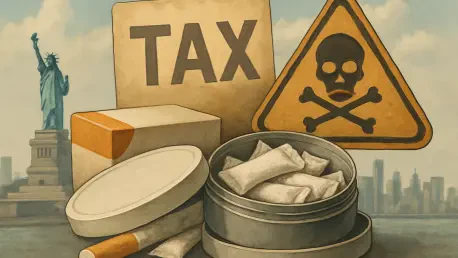

The decision to impose a staggering 75% excise tax on nicotine pouches creates a financial wall between smokers and a significantly less harmful way to consume nicotine. While New York often positions itself as a leader in progressive health policy, this specific fiscal maneuver suggests a shift toward penalizing those who are actively trying to quit smoking. By treating a small pouch used between the lip and gum with the same severity as a pack of combustible cigarettes, the state risks turning a vital tool for survival into an unaffordable luxury.
This policy shift raises uncomfortable questions about the government’s motivations during a time of tightening budgets. If the cost of a safer alternative rises to match the price of a lethal habit, the incentive to switch vanishes for many low-income residents. Instead of encouraging health-conscious transitions, the state appears to be prioritizing revenue targets over the long-term respiratory health of its citizens.
The High Cost of Quitting: When Revenue Targets Harm Reduction
Financial barriers play a massive role in how people manage their addictions. When a state taxes harm-reduction products at nearly the same rate as the most dangerous tobacco options, it essentially tells the public that there is no benefit to making a healthier choice. This strategy punishes the very people who have struggled to find success with traditional patches or gums, leaving them stranded in a market where the cheapest option remains the most deadly.
Moreover, the fiscal logic behind this tax ignores the social cost of tobacco-related illness. While the immediate influx of tax dollars might help bridge a budget gap, the long-term strain on the healthcare system from continued smoking rates will far outweigh these gains. Lawmakers are effectively trading future public wellness for immediate liquidity, a move that many experts view as short-sighted and regressive.
Understanding the Continuum of Risk in the Nicotine Market
To navigate this debate, one must recognize that not all nicotine delivery systems are created equal. For decades, public health consensus has held that while nicotine is the addictive component that keeps people using, it is the tar, carbon monoxide, and thousands of other carcinogens in smoke that cause death. Nicotine pouches offer a modern evolution in this landscape, providing the stimulant without the inhalation of toxic combustion byproducts.
As smoking rates stagnate in many urban areas, these smokeless alternatives have emerged as a bridge for those who have failed with every other cessation method. They provide a discrete, smoke-free experience that eliminates secondhand smoke risks to the public. By ignoring this risk continuum, the state treats a fire extinguisher with the same suspicion as the fire itself, confusing the public about which products are actually responsible for the cancer crisis.
Bridging the Gap Between State Policy and Federal Science
The proposed tax highlights a widening rift between Albany’s aggressive fiscal goals and federal scientific standards. While state officials argue that all nicotine products must be treated identically to discourage any use, the U.S. Food and Drug Administration (FDA) has adopted a more evidence-based approach. The FDA’s authorization of several nicotine pouch products followed rigorous reviews that determined these tools are appropriate for the protection of public health.
This creates a dangerous environment where New Yorkers receive conflicting messages. On one hand, federal health authorities recognize the value of harm reduction; on the other, the state imposes punitive taxes that contradict this scientific validation. When policy ignores science for the sake of the treasury, the credibility of health mandates suffers, and citizens are left to wonder if their well-being is truly the priority of the administration.
The Global Perspective and the Danger of Misinformation
International comparisons reveal how far New York is drifting from modern, evidence-based cessation strategies. In the United Kingdom, health authorities have successfully lowered lung cancer rates by actively distributing nicotine alternatives to current smokers. They recognize that a “quit or die” approach is often ineffective for the most vulnerable populations. New York’s move to tax these products out of reach stands in stark contrast to these global successes.
Furthermore, when officials claim there is “no difference” between a pouch and a cigarette, they contribute to a growing crisis of public distrust. Experts have warned that labeling this tax as a health measure is a form of medical malpractice. Misleading the public about the relative risks of different products can lead directly to an increase in preventable tobacco-related deaths as people give up on switching.
Strategies for a Science-First Approach to Nicotine Regulation
Navigating this complex policy environment required a shift toward transparency and data over rhetoric. A more effective framework would have involved a risk-proportionate tax structure where the most dangerous products—combustible cigarettes—carried the highest burden. This would have ensured that lower-risk alternatives remained accessible to those who needed them most, keeping the financial incentive aligned with the desired health outcome.
Moving forward, the state had to reconcile its fiscal needs with the reality of addiction science. Ensuring that the cost of choosing a safer alternative never outweighed the cost of a lethal habit was the only way to protect the public. Advocacy for clear, science-based regulation became essential to restore trust and ensure that future health policies were designed to save lives rather than simply fill coffers.