
The persistent widening of the socioeconomic gap between thriving metropolitan hubs and stagnant regional towns has reached a critical juncture that demands a complete overhaul of traditional fiscal policies. Nigel Wilcock, the Executive Director of the Institute of Economic Development, is now leading a vigorous campaign to dismantle the long-held assumption that market-driven expansion naturally trickles down to benefit the entirety of the population. For decades, the prevailing economic logic suggested that by fueling high-level investment and boosting productivity in elite sectors, the resulting wealth would eventually saturate the broader community through job creation and increased spending. However, the current landscape proves that this passive reliance on market forces has largely failed to uplift those at the margins. Wilcock posits that the modern economy requires a more deliberate and structured intervention, moving toward a model where innovation and social inclusion are treated as inseparable pillars of a single, cohesive strategy for national progress.
Solving the Disconnect in Modern Growth
Addressing the Prosperity Paradox
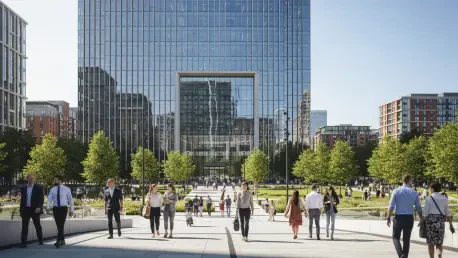
A striking contradiction has emerged within many urban landscapes where gleaming glass towers and high-tech research clusters exist only blocks away from neighborhoods suffering from generational poverty and chronic underemployment. This prosperity paradox suggests that while the macroeconomic engine is rotating at high speed, the actual transmission of that energy to the local resident base is fundamentally broken. When global tech firms or financial institutions establish headquarters in a city, they often trigger a surge in property values and service costs that effectively price out the original workforce they were intended to support. This creates a situation where the physical skyline of a city improves while the quality of life for its long-term inhabitants remains stagnant or even declines. The disconnect highlights a failure in the current developmental architecture, which prioritizes the attraction of external capital without establishing the necessary infrastructure to ensure that capital circulates within the immediate community.
The challenge of modern urban redevelopment often lies in its narrow focus on aesthetic and structural modernization rather than the enhancement of human capital and social mobility. Many regeneration projects are deemed successful based on the square footage of office space created or the total volume of inward investment secured, yet these metrics provide no insight into whether the local youth have gained better career prospects. If a shiny new industrial park is built but the surrounding community lacks the specific technical training or reliable transit to access those roles, the project remains an isolated island of wealth. Wilcock argues that this lack of progress in tangible living standards, despite rising productivity figures, necessitates a fundamental shift in how growth is engineered. Policy makers must recognize that physical improvements do not automatically lead to better lives for the community; instead, they require intentional linkages that bridge the gap between high-value industries and the people living in their shadow.
Deploying the Twin-Track Model
To address these systemic failings, the proposed strategic framework introduces a twin-track model that simultaneously pursues high-level innovation and ground-level social inclusion. The first track focuses on the innovation-led sectors that are essential for maintaining a competitive edge on the global stage, such as advanced manufacturing, biotechnology, and green energy solutions. These high-value industries are the primary drivers of the revenue needed to fund essential public services and large-scale infrastructure projects. By providing robust support for these cutting-edge fields, the economy secures the resources required to invest in its future. However, the innovation track is not an end in itself; it serves as the financial and technological engine that powers the second, equally important track of the strategy. This dual approach ensures that the pursuit of excellence in the global market does not come at the expense of domestic stability or social cohesion.
The second track of this model prioritizes the inclusion of marginalized neighborhoods and the strengthening of the everyday economy, which includes vital sectors like logistics, social care, construction, and local retail. These industries often provide the bulk of employment for a region’s residents but have historically been overlooked in favor of more glamorous tech-oriented investments. Under the inclusion track, the focus shifts to providing vocational skills training, improving public transport connectivity, and fostering local institutional strength. The goal is to create a seamless pathway for individuals to transition from low-skill roles into more stable and rewarding employment within their own communities. By treating the everyday economy as a strategic priority rather than a secondary concern, the government can ensure that the benefits of national growth are felt in the daily lives of citizens. This symmetry between high-end innovation and local participation creates a more resilient and sustainable economic foundation.
Practical Tools and New Standards
Local Governance and Procurement
The effective implementation of an inclusive growth strategy requires local authorities to leverage their existing regulatory powers to make every investment work harder for the resident population. Tools such as planning agreements and social value frameworks must be reimagined as powerful engines for community wealth building rather than being dismissed as mere administrative hurdles. When a new commercial development is approved, the local government has the opportunity to mandate that a specific percentage of the workforce be recruited from the immediate area or that supply chains prioritize local vendors. This approach ensures that capital does not simply pass through a neighborhood on its way to global shareholders but instead stays within the local ecosystem to fund small businesses and create apprenticeships. By turning every construction site and corporate contract into a direct pathway for stable employment, cities can transform passive growth into active community development.
Furthermore, a significant shift away from centralized decision-making is necessary to align economic goals with the specific realities of different regions and towns. National investment strategies often fail because they are designed in a vacuum, neglecting the micro-level barriers that prevent local residents from participating in the wider economy. For instance, a multi-million-dollar job hub is of little use to a community if the existing bus routes do not connect them to that location during work hours. Stronger devolution allows local leaders to control investment budgets and tailor infrastructure projects to the practical daily needs of their constituents. This localized control enables a more agile response to economic shifts and ensures that transit, education, and housing policies are synchronized to support a cohesive growth plan. When local leaders are empowered to solve regional problems, the resulting economic activity becomes more relevant and accessible to the people it is meant to serve.
Shifting the Focus to Human Impact
The traditional reliance on Gross Value Added and total investment volumes as the primary measures of economic health has proven to be an insufficient method for evaluating true societal progress. Wilcock advocates for a human-centric approach to economic assessment that moves beyond cold statistics to ask fundamental questions about the actual well-being of the population. If a region reports a significant increase in productivity while disposable incomes remain flat and child poverty rates continue to rise, then the growth being achieved is effectively hollow. The new standard for success must be “impactful growth,” which is defined by improvements in living standards, the accumulation of social capital, and expanded access to high-quality work. This shift requires a cultural change among policy makers, who must learn to view inclusion as a prerequisite for any economic strategy rather than a luxury to be addressed only after high-level growth has been secured.
By integrating inclusion into the very design of economic policy, the focus shifts toward long-term stability and the reduction of regional inequality. This involves tracking metrics that reflect the health of the everyday economy, such as the availability of affordable housing near job centers and the graduation rates of local vocational programs. When these human-centric indicators are placed on the same level as corporate profits and industrial output, the true cost of neglect becomes visible. This comprehensive view of prosperity recognizes that a healthy economy is one where everyone has a stake and a clear path toward improvement. Ultimately, the goal is to create a durable model where the pursuit of innovation and the commitment to social equity reinforce each other. By making inclusion a fundamental condition for the execution of any developmental project, the nation can build a more unified and prosperous future that benefits every citizen regardless of their location or background.
In conclusion, Nigel Wilcock’s strategic vision provided a necessary blueprint for moving toward a more equitable economic landscape. The core findings indicated that traditional market forces alone were insufficient to bridge the gap between high-level growth and local prosperity. Instead, the implementation of a twin-track model allowed for the simultaneous advancement of global competitiveness and community-based inclusion. Authorities utilized local procurement and social value frameworks to ensure that investment remained within the neighborhood, effectively turning development into a tool for social mobility. By shifting the focus from abstract statistics to tangible human impact, the framework established a new standard for national success. This transition away from growth at all costs toward growth with purpose ensured that economic progress became a shared reality for all members of society.