
The global race to redefine industrial self-sufficiency is no longer a matter of distant speculation but a high-stakes competition where chemistry, physics, and federal mandates collide. As the domestic landscape shifts under the weight of climate objectives and the sheer energy demands of artificial intelligence, a new architecture for infrastructure is beginning to emerge. This transformation is not merely about replacing old fuels with new ones; it involves a fundamental reimagining of how substances are regulated, how power is generated, and how essential minerals are processed. The current environment demands an unprecedented level of coordination between environmental protection agencies and private-sector innovators to ensure that the next generation of industrial growth does not come at the expense of ecological stability.
Strategic thinkers across various sectors observe that the traditional siloed approach to policy and engineering is rapidly becoming obsolete. The modern industrial economy requires a holistic view that accounts for the lifecycle of products, from the microscopic contaminants they leave behind to the subterranean reactors that might one day power their production. This convergence is visible in the way federal oversight now targets “forever chemicals” while simultaneously paving the way for advanced nuclear solutions. By examining these developments as an integrated system, it becomes clear that the goal is not just a greener economy but a more resilient and self-reliant national framework that can withstand the geopolitical and environmental shocks of the coming decade.
Market analysts and environmental advocates alike point to a period of intense transition where legacy systems must be dismantled or upgraded to meet modern standards. The pressure to onshore critical supply chains, particularly for battery minerals, has created a fertile ground for technologies that bypass traditional, high-pollution methods. This shift is occurring alongside a revolution in baseload power generation, where modularity and safety are prioritized over the massive, centralized models of the past. As these distinct technological paths begin to cross, the resulting infrastructure promises to be more distributed, less invasive, and significantly more efficient than anything seen in the previous century.
Bridging the Gap Between Policy Directives and Technological Implementation
From Symbolic Gestures to Enforceable Water Quality Standards
The recent focus on microplastics and pharmaceutical residues within federal regulatory frameworks represents a pivotal acknowledgment of a growing public health crisis. For years, these contaminants have permeated the environment, yet they remained largely outside the scope of enforceable water quality standards. Current shifts in the Environmental Protection Agency’s approach indicate a move toward identifying these substances as significant threats, placing them on candidate lists for future regulation. While some view this as a progressive step toward a cleaner water supply, others argue that the pace of regulation is still lagging behind the speed of environmental degradation. The inclusion of these pollutants signals a high-level recognition of the problem, yet the transition from observation to strict enforcement remains a primary point of contention between health advocates and industrial stakeholders.
Industry observers note that the petrochemical sector often views these regulatory shifts with apprehension, fearing that strict limits on synthetic materials could disrupt established manufacturing processes. This tension creates a regulatory landscape where federal intent must navigate a complex web of industrial lobbying and economic considerations. The challenge lies in moving substances from a “candidate” status to a definitive list of regulated contaminants with clear, science-based maximum allowable levels. Without such enforcement, the initial identification of microplastics and “forever chemicals” may remain more symbolic than substantive. The ongoing dialogue between policymakers and the scientific community is essential to ensure that the American water supply is protected from the long-term systemic effects of unregulated synthetic fragments.
Furthermore, the environmental impact of these pollutants extends far beyond human consumption, affecting aquatic ecosystems and the very soil used for domestic agriculture. The accumulation of synthetic fibers and chemical residues in the food chain has prompted calls for more aggressive intervention strategies. Some experts suggest that the current regulatory model must evolve to keep pace with the sheer volume of new chemical compounds introduced into the market each year. As the public becomes more aware of the health risks associated with plastic ingestion and pharmaceutical runoff, the pressure on the federal government to act decisively continues to mount. This environment requires a delicate balance between maintaining industrial productivity and fulfilling the fundamental mandate to safeguard the physical well-being of the citizenry.
Subterranean Nuclear Solutions: Decentralizing the Power Grid
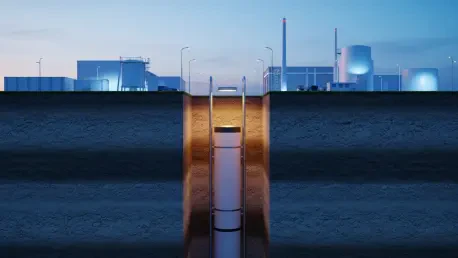
The evolution of nuclear energy is currently undergoing a radical transformation as innovators seek to move beyond the high costs and safety concerns of the past. One of the most compelling developments in this field is the move toward subterranean, modular reactors that utilize deep boreholes to secure the energy source far beneath the earth’s surface. By leveraging the natural geological pressure found at depths of approximately one mile, these systems can eliminate the need for the massive, expensive containment structures that typically drive up the price of nuclear power. This approach represents a departure from the “gigawatt-scale” philosophy, focusing instead on smaller, distributed units that can be deployed closer to the points of demand, such as high-intensity data centers and industrial hubs.
Energy specialists highlight that these modular designs offer a unique solution to the energy trilemmthe need for reliable, cost-effective, and carbon-free power. Traditional nuclear plants often face significant public opposition and a “Not In My Backyard” sentiment, but placing reactors deep underground significantly mitigates many of these safety and aesthetic concerns. By using narrow boreholes, the footprint on the surface is minimized, making it a more viable option for regions where land use is a sensitive issue. Moreover, the ability to scale energy production by adding individual units allows for more flexible capital investment, making advanced nuclear technology accessible to a wider range of private-sector players and municipal utilities.
As the demand for constant baseload power surges—driven largely by the expansion of artificial intelligence and the electrification of the transport sector—the limitations of intermittent renewable sources like wind and solar become more apparent. Subterranean nuclear technology provides a consistent power supply that does not rely on weather conditions or expensive battery storage systems. This makes it an ideal candidate for supporting the massive energy requirements of the next generation of computing infrastructure. The shift toward this decentralized model could eventually lead to a more resilient national grid, where localized power sources reduce the vulnerability associated with massive, centralized plants and long-distance transmission lines.
Disrupting the Refining Monolith Through Electro-Abstraction
The supply chain for critical minerals, essential for the production of electric vehicle batteries and renewable energy hardware, has long been concentrated in overseas markets. However, the emergence of “electro-abstraction” technology is beginning to challenge the dominance of traditional chemical-intensive refining. This process allows for the recovery of high-value minerals like nickel and lithium through modular units that can be deployed directly at the source of recycled material or “black mass.” By eliminating the need for massive, centralized refineries that utilize harsh acids and solvents, this decentralized approach lowers the environmental and economic barriers to domestic mineral processing.
This technological shift is particularly important for creating a circular economy where the materials from end-of-life batteries are efficiently reclaimed and reintegrated into the supply chain. Traditional refining models require multi-billion-dollar investments and a steady, high-volume stream of feedstock to be profitable, which often makes domestic operations uncompetitive. In contrast, modular refining units are agile and can adapt to the varying chemical compositions of battery waste found across different regions. This flexibility enables a more localized approach to mineral security, reducing the reliance on long-range logistics and vulnerable international trade routes.
Moreover, the lower capital intensity of electro-abstraction makes it an attractive option for startups and established industrial players looking to enter the critical minerals market. By reducing the physical footprint and environmental impact of refining, these technologies align more closely with modern ESG (Environmental, Social, and Governance) standards. As the world moves toward a future defined by electric mobility and renewable energy storage, the ability to refine minerals sustainably and domestically will be a key differentiator for national economic competitiveness. This transition represents a fundamental move away from the high-impact mining and refining practices of the past toward a more precise, efficient, and ecologically conscious industrial model.
The Energy Trilemma and the Friction of Industrial Legacy
The transition to a sustainable industrial future is frequently complicated by the conflicting interests of emerging clean-tech firms and established energy incumbents. While significant capital is flowing into green solutions, the reality of maintaining a stable and affordable grid often necessitates the continued use of fossil fuels, particularly natural gas, as a bridge. This dynamic creates a visible friction between the long-term goals of carbon neutrality and the immediate requirements of energy security. Legal battles over climate accountability and the lobbying efforts of the chemical industry further illustrate the resistance that legacy sectors often exert against rapid regulatory and technological changes.
Market analysts observe that while tech giants are increasingly committed to green energy, their massive power needs sometimes force them to rely on traditional sources when cleaner alternatives are not yet available at scale. This discrepancy highlights the “energy trilemma” where the pursuit of sustainability can sometimes clash with the need for immediate reliability and cost-effectiveness. The result is a complex policy environment where the federal government must balance the promotion of innovation with the practical realities of a grid that is still largely dependent on older infrastructure. Navigating this landscape requires a nuanced understanding of how to incentivize the transition without compromising the stability of the broader economy.
Despite these challenges, the momentum toward cleaner technologies remains strong, driven by both market demand and the increasing obviousness of environmental externalities. The rise of private-sector initiatives, such as timber-based construction and advanced recycling methods, suggests that innovation is outpacing the slow-moving machinery of federal legislation in many areas. However, the friction between the old and the new remains a defining feature of the current era. Understanding the political and economic pressures that shape these decisions is crucial for any stakeholder looking to navigate the complex path toward a resilient and sustainable industrial future.
Strategic Frameworks for a Resilient Industrial Future
To thrive in this evolving landscape, industry leaders and policymakers must adopt an integrated approach that prioritizes technological agility and local resilience. This involves moving away from centralized, fragile systems in favor of modular technologies that can be deployed quickly and adapted to changing market conditions. By diversifying energy portfolios with modular nuclear assets, companies can ensure long-term price stability and a reduced carbon footprint, providing a competitive edge in an increasingly carbon-conscious global market. At the same time, the adoption of decentralized refining techniques allows for a more flexible supply chain that is less susceptible to the volatility of international mineral markets.
Strategic planning should also focus on the proactive management of environmental liabilities. As federal oversight of microplastics and chemical residues intensifies, businesses that invest in advanced filtration and waste-reduction technologies will be better positioned to navigate the coming wave of regulations. Rather than waiting for mandates to be finalized, forward-thinking organizations are already integrating circular economy principles into their operations. This not only mitigates regulatory risk but also uncovers new value streams from materials that were previously considered waste. The integration of science-based management practices into the core of industrial strategy is no longer just an ethical choice but a practical necessity for long-term survival.
Policymakers play a critical role in this framework by providing the market certainty required for large-scale investment in new infrastructure. By accelerating the transition from candidate lists to firm, enforceable standards, the government can create a level playing field that rewards innovation and punishes pollution. Furthermore, streamlining the permitting processes for low-impact technologies like subterranean nuclear and modular refining will encourage the rapid deployment of these solutions. A cohesive strategy that aligns federal goals with the capabilities of private-sector innovators will be the most effective way to build a resilient, self-sufficient, and environmentally sustainable industrial base.
Synchronizing Innovation with National Objectives
The convergence of nuclear breakthroughs, mineral innovation, and federal policy shifts has laid the groundwork for a profound restructuring of the American industrial economy. While the path forward was often obscured by regulatory inertia and the influence of legacy industries, the emergence of scalable, low-impact technologies provided a clear trajectory for future growth. The successful integration of these sectors demonstrated that economic expansion and environmental stewardship did not have to be mutually exclusive. Instead, they became the dual engines of a new era of industrial excellence, where efficiency was measured not just in output, but in the long-term health of the ecosystem and the stability of the national supply chain.
Stakeholders successfully moved beyond the limitations of traditional infrastructure by embracing the potential of modularity and subterranean engineering. The shift toward decentralized power and refining allowed for a more democratic and resilient grid, capable of meeting the massive data demands of a digital world without sacrificing air or water quality. This transition was supported by a policy framework that finally prioritized the removal of persistent toxins from the environment, providing a safer and more predictable landscape for both businesses and the public. The collective efforts of scientists, engineers, and legislators resulted in a circular economy that valued resource recovery as much as resource extraction.
Ultimately, the advancements made in these fields ensured that the nation remained a leader in the global energy transition. By aligning technological innovation with strategic national objectives, the industrial sector was able to overcome the “energy trilemma” and establish a sustainable blueprint for the future. The legacy of this period was defined by a commitment to resilience, where the lessons of the past were used to build a more secure and ecologically balanced infrastructure. As the focus shifted toward long-term stewardship, the integration of advanced physics and material science became the standard for a modern, independent, and thriving society.