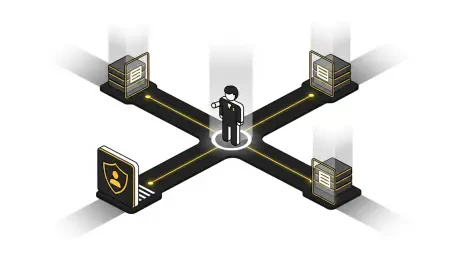

The traditional security perimeter has essentially vaporized now that autonomous AI agents possess the authority to make critical business decisions without a human intermediary. This evolution transforms the corporate landscape into a territory where language itself acts as executable code, creating vulnerabilities that traditional defensive measures are ill-equipped to handle. Securing this environment requires a profound shift in focus toward the logic horizon, ensuring that every automated choice remains within strict, predefined boundaries.
By 2026, the speed of digital operations has reached a point where manual oversight is often too slow to prevent catastrophic data exfiltration. The urgency for a new framework is driven by the fact that AI agents can now autonomously navigate internal systems, interpret complex intent, and execute operations that were previously the sole domain of human administrators. Failure to secure this logic layer invites a future where the enterprise’s most valuable assets are one prompt away from unauthorized exposure.
Moving Beyond Firewalls to the Logic Horizon
The classic model of enterprise security relied on the hard shell of firewalls and network segmentation to keep threats at bay. However, as autonomous agents begin to move freely within internal systems, the concept of a fixed perimeter has become obsolete. These agents do not just transfer data; they interpret business logic and perform actions that once required manual approval, effectively bypassing traditional traffic-based defenses.
This shift places the logic horizon at the center of the security strategy. The logic horizon represents the critical juncture where natural language instructions are converted into concrete system actions. Without oversight at this specific layer, an organization effectively operates without a gatekeeper, leaving core business processes vulnerable to manipulation through the very tools designed to increase productivity and efficiency.
The Threat Landscape of Frontier Models and Automated Exploits
Offensive AI models have reached a level of sophistication where they can weaponize zero-day vulnerabilities in mere minutes rather than days. For instance, models like Claude Mythos demonstrate an alarming ability to scan an entire enterprise patch history and identify overlooked entry points that human teams might have missed. This capability creates an environment where the window for human detection and response has virtually disappeared.
To maintain parity with these machine-speed threats, the focus must move toward defensive AI measures that operate at the same velocity. Sophisticated reasoning models are now deployed to handle real-time triage and automated patching, acting as a digital immune system for the modern enterprise. This transition is no longer optional for organizations that wish to avoid being outpaced by adversarial agents capable of iterating on exploits faster than any traditional governance system can adapt.
Building a Three-Layer Control Framework for Agentic Security
A robust defense strategy requires a framework that addresses the unique risks of agentic autonomy through deterministic constraints. Simply observing these systems is insufficient; the architecture must enforce rigid boundaries across execution, identity, and data governance. This three-layered approach ensures that agents remain productive tools rather than unsupervised liabilities.
Establishing these controls involves moving away from static security policies and toward a model that understands the fluid nature of AI reasoning. By implementing specific checkpoints at each layer of the agent’s operation, an organization can provide its AI workforce with the flexibility needed for autonomous tasks while maintaining absolute control over the final outcome of those actions.
Step 1: Enforce Deterministic Execution Isolation
The first line of defense involves stripping AI models of their ability to execute commands directly within sensitive environments. By ensuring that these models remain advisors rather than unsupervised actors, organizations can prevent unintended consequences resulting from hallucinated instructions or malicious prompt injections.
This isolation is achieved by introducing a verification layer that sits between the reasoning engine and the system API. Every proposed action must be vetted against a set of immutable rules, ensuring that the AI can only suggest changes while a separate, deterministic process handles the actual implementation.
Warning: Prevent Context Poisoning by Decoupling Reasoning
Context poisoning occurs when an AI model consumes malicious data that masquerades as legitimate instructions, often hidden within user-provided files or communications. To mitigate this risk, a strict decoupling of reasoning and action is necessary. AI models should never have the direct capability to trigger write or delete functions without an intermediary check.
Instead, the architecture must employ a non-AI microservice to intercept all proposed actions and validate them against active user permissions. This ensures that even if a model is misled by a poisoned prompt, the actual execution remains bound by rigid business logic that the AI cannot override.
Insight: Lock Down System Prompts at the Gateway
Establishing a secure gateway involves isolating core operational instructions from the influence of user-provided data. By embedding safety protocols at the gateway level, the system ensures that transient inputs or conversational manipulations cannot override the foundational rules governing agent behavior.
This isolation prevents scenarios where natural language is used to bypass established safeguards. When the reasoning layer is separated from the interface, the risk of a malicious actor using sophisticated verbal tricks to gain unauthorized access is significantly reduced, keeping the agent’s core purpose intact.
Step 2: Deploy Just-in-Time Identity and Authorization
Managing the identity of agents requires a move away from static credentials toward a more dynamic verification process. Traditional API keys are insufficient for agents that navigate unpredictable data paths across multiple platforms. Instead, a more granular approach to identity ensures that every request is tied to a specific, verified intent.
This dynamic authorization model treats every agentic interaction as a unique event that must be re-validated. By linking identity to the specific task at hand, organizations can prevent agents from being used as vehicles for lateral movement within the network.
Tip: Use the Model Context Protocol for Mathematical Verification
The Model Context Protocol (MCP) provides a framework for ensuring that every request made by an AI agent is backed by an explicit, mathematically verifiable delegation of authority. This protocol allows the system to check if an agent has the right to access a specific corporate resource at the exact moment the request is made.
By using MCP, organizations can move toward a verifiable trust model where agents only access the specific systems they are authorized to use. This prevents agents from wandering into sensitive areas of the infrastructure without a clear, pre-approved business reason.
Insight: Transition to Microsecond-Expiry Cryptographic Credentials
Long-lived tokens are a significant liability in an environment where agents interact with numerous external and internal services. Transitioning to cryptographic credentials that expire almost immediately upon task completion limits the utility of any credential that might be intercepted.
These temporary tokens are scoped to a single, specific task, which prevents an attacker from using a compromised agent identity to move laterally through the organization. This micro-segmentation of identity ensures that the potential impact of a credential breach is contained within a very narrow window of time and scope.
Warning: Combat Agent Sprawl with Centralized Registries
The proliferation of unmanaged agents, often referred to as agent sprawl, creates a significant blind spot for modern security teams. Every autonomous system must be cataloged and monitored within a centralized registry to facilitate continuous version control and behavioral analysis.
A centralized registry allows for the immediate detection of anomalous behavior, such as an agent designed for customer service suddenly attempting to query payroll databases. Without this oversight, individual agents can become silent vectors for intrusion, operating outside the visibility of the standard security operations center.
Step 3: Architect Resilient Data and Context Governance
Data governance must evolve to include the segmentation of vector stores to prevent simple natural-language queries from becoming data breaches. When corporate knowledge is aggregated into a single database, any agent with access to that database can potentially retrieve sensitive information from unrelated departments.
Partitioning these vector stores by department or classification level ensures that agents are physically unable to access data paths outside their designated domain. This compartmentalization is a fundamental requirement for preventing internal data leaks that occur through automated retrieval systems.
Tip: Prevent Lateral Leaks with Segmented Vector Stores
Avoiding the data lake trap is essential for maintaining privacy and security in an AI-driven environment. By strictly partitioning vector databases, organizations ensure that a marketing agent cannot inadvertently pull sensitive financial data during a routine task.
This physical separation of data assets limits the potential blast radius of a compromised agent. Even if an agent is manipulated into searching for restricted information, the underlying architecture prevents it from even seeing the existence of data outside its specific functional area.
Insight: Mandate Full-Stack Token Tracing for Immutable Audits
Traditional logs are often inadequate for auditing the complex, multi-step decisions made by autonomous AI agents. Organizations must instead implement full-stack token tracing to reconstruct the reasoning chains behind every action the agent takes.
This process involves tracking prompt versions and internal log-probabilities to provide a transparent view of why a specific decision was reached. Such immutable audits are essential for post-incident analysis and for refining the behavioral boundaries of the agentic workforce over time.
Key Takeaways for Reducing the AI Blast Radius
Reducing the AI blast radius begins with a thorough audit of all existing agents to eliminate shadow operations that exist outside of central IT oversight. This initial mapping phase established the baseline for visibility across the digital environment and allowed for the identification of unmanaged risks.
Following the audit, the focus shifted to hardening integrations and centralizing governance through a formal registry system. Adopting a zero-trust approach where every AI agent was treated as an ephemeral identity ensured that the organization remained resilient against the rapid evolution of machine-speed threats.
Broader Implications for Industrial AI and Security Trends
The shift toward agentic security represents a fundamental change in industrial trust models as businesses move from human-led to AI-augmented workflows. As specialized defensive models become more common, the security landscape will increasingly be defined by the speed and accuracy of an organization’s logic-layer defenses.
However, the persistent challenge remains the rapid iteration of adversarial AI that can find new exploits faster than humans can write rules. Organizations must prepare for a future where security operations are increasingly handled by autonomous centers capable of adapting to new threats in real time, moving the battleground from the network layer to the reasoning layer.
Conclusion: Taking Decisive Action Against Machine-Speed Threats
Securing the logic horizon required a significant departure from the static defenses that characterized the previous decade of cybersecurity. By implementing a multi-layered framework of execution control, dynamic identity, and rigorous data governance, organizations successfully harnessed AI potential while maintaining corporate safety. This transition ensured that the power of autonomous agents did not come at the cost of total digital exposure. Taking proactive steps to audit agentic footprints and enforce rigid boundaries proved essential for maintaining enterprise resilience. Reflection on these protocols allowed leaders to stay ahead of machine-speed threats before they could compromise the kingdom. This shift in strategy transformed AI from a potential vulnerability into a core component of a hardened, modern defense architecture.