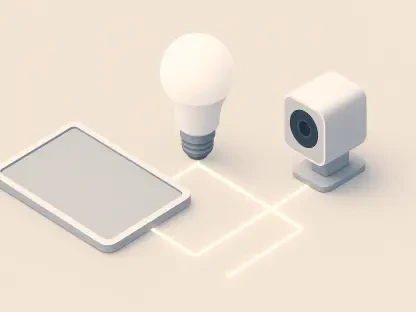

The current landscape of domestic automation often feels like a paradox where the pursuit of extreme convenience has inadvertently created a new layer of manual chores that homeowners never anticipated having to manage. While the early days of smart technology promised a world where humans could finally delegate the mundane tasks of lighting, climate control, and security to invisible digital assistants, the reality in modern households is frequently characterized by a constant scramble to keep various sensors and modules powered. Mechanical engineer Jonathon Jachura has identified this phenomenon as a “battery format zoo,” pointing to the chaotic and often nonsensical variety of power sources required to keep even a basic smart home ecosystem functional. This fragmentation is not merely an oversight of early adopters but represents a systematic shift in how manufacturers prioritize the aesthetic profile of their devices over their long-term operational viability. As homeowners integrate more devices into their living spaces, they find themselves transitioning from users to technicians, spending an increasing amount of time managing a diverse and incompatible inventory of chemical cells that seem designed more for the benefit of retail cycles than for the actual needs of the end-user.
The design choices made by prominent hardware companies frequently ignore the basic principles of energy density in favor of achieving the slimmest possible physical footprint for marketing materials. By choosing small coin cells for high-traffic sensors, manufacturers ensure that devices remain sleek and unobtrusive on door frames or windows, yet this aesthetic success comes at a significant cost to the consumer’s patience. The energy requirements of maintaining a stable wireless connection, whether through Zigbee, Z-Wave, or Thread protocols, are often at odds with the limited milliamps available in these tiny lithium discs. This tension creates a situation where the “smart” functionality of the home is only as reliable as the most depleted battery in the circuit, leading to a cascading series of failures that can disable complex automation routines without warning. The irony of a twenty-first-century home requiring the same level of manual battery maintenance as a collection of children’s toys from decades past is a stark reminder of the technical debt being built into modern living environments.
Navigating the Logistical Burden: The Battery Format Zoo
The most significant hurdle in maintaining a contemporary smart home is the sheer variety of batteries required to keep an average ecosystem of twenty to thirty devices operational. This fragmentation creates a logistical nightmare where even a single brand may use half a dozen different battery types across its various product lines, from standard motion sensors to specialized water leak detectors. A homeowner might find themselves managing an exhausting inventory of incompatible cells, ranging from the common AA and AAA types to more specialized lithium cells like the CR123A or the ubiquitous but low-capacity CR2032 coin cell. Because these devices are rarely synchronized in their power consumption, they fail at unpredictable intervals, forcing the user to maintain a “junk drawer” filled with a confusing array of mismatched power sources. This lack of interchangeability is a direct byproduct of a market where product dimensions dictate battery choice rather than a universal standard for power density, forcing the consumer to adapt to the manufacturer’s design whims.
Managing this inventory requires a level of organizational discipline that few homeowners expected to need when they first purchased a voice-controlled light bulb or a smart doorbell. The stress of ensuring that the correct, often rare, battery is available when a critical security sensor dies at midnight can lead to significant user frustration and a loss of trust in the technology itself. Furthermore, the specialized nature of many of these cells means they are rarely available at local convenience stores, often requiring dedicated trips to electronics retailers or waiting for online shipments to arrive. This downtime results in “dead zones” within the home security or automation grid, where a door remains unmonitored or a light remains on because the sensor intended to control it has lost power. The resulting maintenance burden effectively negates the time-saving benefits that these devices were originally sold on, transforming the smart home into a high-maintenance project that requires constant digital and physical auditing to remain functional.
Technical Disparities: Aesthetics Versus Energy Density
There is a stark technical reality regarding the capacity gap between different battery types that is often glossed over in the glossy brochures of smart home manufacturers. The CR2032 coin cell, which has become a staple of the smart sensor industry, typically holds about 225 milliampere-hours of energy, which is a minuscule amount when compared to a standard AA alkaline battery that offers between 2,500 and 3,000 milliampere-hours. Despite this massive difference in energy capacity, the coin format is pushed as the industry standard for most door and window sensors because its flat, disc-like shape allows for ultra-slim hardware that sits flush against surfaces. This focus on “invisible” technology satisfies the consumer’s desire for a home that doesn’t look like a laboratory, but it ignores the fundamental physics of radio transmission. Every time a sensor communicates its status to a central hub, it draws heavily on the limited reservoir of the coin cell, leading to frequent and frustrating depletions that the average user is ill-equipped to predict or manage.
While many brands market a multi-year battery life, real-world performance in active households often tells a far different story of depletion and failure. In busy environments where front doors or garage entries are opened dozens of times a day, sensors frequently reach their end-of-life within twelve to eighteen months, far short of the promises made on the packaging. The process of replacing these batteries is also surprisingly difficult, often involving prying sensors off their adhesive brackets with small tools or handling tiny cells that are easily dropped or lost. This physical overhead makes the aesthetic convenience of small sensors feel like a poor bargain in the long run, as the user is forced into a cycle of constant replacement. The trade-off between the physical size of the device and its longevity is rarely balanced in the consumer’s favor, yet manufacturers continue to prioritize the initial sale and the visual appeal of the hardware over the practical reality of living with the device for several years.
The Economics: Monetizing the Upkeep of Domestic Security
A central part of the industry’s resistance to universal power standards is the lucrative “consumables” business model that thrives on constant replacements. There is no fundamental engineering law that mandates the use of disposable coin cells for low-power sensors, as technologies like USB-C charging ports or standardized rechargeable lithium cells are technically straightforward and widely available in 2026. However, the industry’s refusal to adopt these standards points toward a deliberate choice to ensure recurring interactions with the product’s maintenance cycles. By forcing consumers to buy disposable batteries in obscure or proprietary formats, companies create a steady revenue stream for battery manufacturers and retailers that would be entirely eliminated if devices were hardwired or easily rechargeable. This turns a one-time hardware purchase into a long-term financial commitment for the homeowner, who must factor in the cost of dozens of lithium cells over the lifespan of their smart home system.
Furthermore, the use of proprietary battery packs in higher-end devices like outdoor security cameras or smart door locks creates a “walled garden” effect that discourages consumers from switching to competitors. If a homeowner has invested hundreds of dollars in several cameras that all use a specific, expensive battery pack, they are far less likely to migrate to a different brand, even if that brand offers superior software or better privacy features. The cost of replacing the existing power infrastructure acts as a significant barrier to market competition, allowing established players to maintain their dominance through hardware lock-in rather than through constant innovation. This creates a paradox where the technology intended to simplify life actually increases the need for manual intervention and financial upkeep. The homeowner essentially becomes a technician for their own domestic environment, trapped in a cycle of managing specialized power needs that are intentionally designed to be inefficient and non-standardized.
Planned Obsolescence: The Role of Fragile Components
Beyond the batteries themselves, the physical components used to house and connect these power sources are often the weakest link in the smart home chain. To keep sensors as small as possible, manufacturers use thin plastic tabs, delicate metal springs, and adhesive backings that are not designed for repeated handling or frequent battery swaps. Over the course of several years, the repeated process of prying open a sensor to replace a coin cell can cause the plastic housing to crack or the electrical contacts to become misaligned. This effectively introduces a form of planned obsolescence where the device is more likely to be broken by the user during routine maintenance than to fail due to a software glitch or electronic malfunction. When a sensor’s plastic clip snaps, the consumer is often forced to replace the entire unit, even if the internal electronics are still perfectly functional, leading to unnecessary electronic waste and additional expenses.
The environmental toll of this disposable culture is becoming increasingly difficult to ignore as millions of smart devices are deployed globally. The production and disposal of billions of specialized lithium batteries every year represent a significant ecological burden, especially when many of these cells are discarded rather than recycled properly. While some forward-thinking manufacturers have begun to experiment with energy-harvesting technologies that use light or kinetic motion to power basic sensors, these remain niche products compared to the flood of cheap, battery-dependent hardware. The industry’s reliance on disposable chemistry is a short-term solution to a long-term engineering challenge, reflecting a lack of commitment to sustainable design. Until there is a regulatory or market-driven push toward standardized, long-life, or rechargeable power sources, the environmental and logistical costs of the “smart” revolution will continue to mount, leaving the consumer to bear the weight of these inefficient choices.
Reclaiming Control: Transitioning to Permanent Power Infrastructure
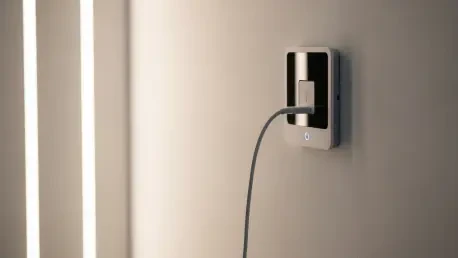
To fight back against the fatigue caused by the battery zoo, savvy homeowners are increasingly moving toward a “wired-first” philosophy for their domestic infrastructure. The most effective way to eliminate the frustration of battery management is to remove the chemical cell from the equation entirely, prioritizing devices that draw power directly from the home’s electrical grid. Smart bulbs are an excellent example of this approach, as they utilize the existing power provided by the light socket to stay connected consistently without ever needing a manual charge. Similarly, hardwired floodlight cameras and video doorbells that connect to existing doorbell wiring offer a level of reliability that battery-operated versions simply cannot match. By choosing a powered alternative over a battery-dependent one, a homeowner can ensure that their most critical security and automation devices remain online regardless of how long it has been since their last maintenance check.
For sensors that are traditionally battery-powered, such as motion or contact sensors, new alternatives are emerging that utilize Power over Ethernet or specialized low-voltage wiring. While these solutions require more initial effort during the installation phase, they offer a “set it and forget it” experience that is the true hallmark of effective automation. Professionals in the industry often recommend that during home renovations, owners should run thin power lines to windows and doors to support these permanent installations. This infrastructure-heavy approach effectively future-proofs the home, allowing for a dense network of sensors that never need to be audited for battery life. By investing in the physical wiring of the home, the user shifts the burden of power management from a recurring manual task to a one-time structural improvement, reclaiming the convenience and peace of mind that the smart home was originally promised to provide.
Strategic Maintenance: Managing the Modern Ecosystem
Since some disposable battery-powered devices are currently unavoidable in most existing homes, adopting a proactive and strategic approach to maintenance is essential. Rather than waiting for a sensor to fail and break an automation routine, homeowners should conduct regular digital audits using their smart home hub’s management interface. Most modern platforms provide a battery percentage readout for each connected device, allowing for scheduled replacements before a unit goes completely offline. Identifying a sensor at low power and replacing the battery on a quiet weekend is much less frustrating than troubleshooting a “dead” device during a security event or when an automated light fails to trigger in the middle of the night. By treating battery management as a logistical task to be optimized rather than a series of emergencies to be solved, the user can maintain a much higher level of system uptime.
Bulk procurement is another necessary logistical step for anyone living with a diverse range of smart home hardware. Buying common coin cells or specialized lithium batteries in packs of fifty significantly reduces the cost per unit and ensures that the home remains operational even during peak failure cycles. Furthermore, standardizing a smart home ecosystem around a specific brand or protocol that uses common battery types, such as those that primarily utilize AA or AAA cells, can simplify the inventory process. Some homeowners have even taken to using battery adapters that allow a device designed for a coin cell to be powered by a larger, external battery pack hidden nearby. While this may detract from the clean aesthetic of the sensor, the trade-off in longevity and reliability is often worth the visual compromise. Ultimately, the path forward involves a combination of smart purchasing decisions and disciplined management to mitigate the inherent inefficiencies of current industry standards.
Advancing Toward Sustainable: Practical Solutions for Tomorrow
The systematic analysis of smart home power standards revealed that the current reliance on fragmented, low-capacity battery formats was a calculated choice by manufacturers to prioritize aesthetics and recurring revenue. By examining the massive disparity between common alkaline batteries and specialized coin cells, it was shown that consumers were being forced into a high-maintenance lifestyle that undermined the very premise of home automation. The research highlighted that while the technology for more efficient, wired, or rechargeable systems existed, the market was being held back by a preference for disposable infrastructure. This realization allowed for a shift in perspective, moving away from the frustration of constant battery swaps and toward a more intentional approach to domestic technology. Homeowners were encouraged to view their smart devices as part of a broader infrastructure that required the same level of planning as plumbing or electrical systems, rather than as simple plug-and-play gadgets.
To overcome the challenges of the battery format zoo, the focus shifted toward building a more resilient and standardized home environment. The transition to wired-first devices and the implementation of proactive digital audits provided a roadmap for reclaiming the convenience that had been lost to inefficient design. The introduction of bulk procurement strategies and the prioritization of standardized ecosystems offered immediate relief from the logistical burden of managing dozens of different power sources. Looking ahead, the demand for better standards should drive manufacturers to adopt more sustainable practices, such as energy harvesting or universal charging ports. By making informed choices today and advocating for better engineering in the products of the future, homeowners ensured that their living spaces remained truly smart, functional, and efficient without the constant shadow of the battery drawer.