
The year 2026 stands as a pivotal threshold for the global sports industry, marking the moment it transitions from a sector guided by tradition and intuition to one that is truly data-native. This profound transformation is redefining the very essence of how sports are managed, consumed, and commercialized. The future of the sports business will no longer be dictated solely by financial might but by an organization’s ability to master sophisticated data governance and foster effective multi-stakeholder collaboration. For decades, data was relegated to a secondary, back-office function—a blunt instrument used for niche applications like performance analytics while crucial strategic decisions were left to gut feelings. The industry was characterized by fragmented, siloed data systems and incomplete information, leading to inefficient operations and missed commercial opportunities. Now, this historical reluctance is rapidly giving way to a new paradigm where data is being elevated from a side project to the core operating system of the entire sports business. While on-field data analysis has long been a competitive asset, the truly disruptive revolution is unfolding off the field as front offices build robust infrastructures to understand fans, optimize operations, and unlock unprecedented commercial resilience.
From Reluctant Adoption to a New Operating System
For decades, the sports industry treated data with cautious skepticism, often viewing it as a tool for performance analysts rather than a cornerstone of business strategy. Major decisions were frequently guided by historical precedent and the intuition of seasoned executives, a practice that left organizations vulnerable to market shifts and unable to fully capitalize on their fan bases. This approach resulted in fragmented data landscapes, where valuable information was trapped in disparate systems, preventing a holistic view of operations or fan behavior. The onset of the COVID-19 pandemic acted as an unforeseen accelerant, thrusting the industry into a digital-first reality out of sheer necessity. As stadiums sat empty, organizations were forced to engage with their audiences through digital channels, making the collection and analysis of fan data not just a strategic advantage but a fundamental mechanism for survival. This period of reactive adaptation shattered old paradigms and laid the groundwork for a more intentional, data-driven future.
This forced evolution has catalyzed a monumental shift in perspective, moving data from the periphery to the very center of strategic planning. The revolution happening now is not on the field, where sabermetrics and AI-powered wearables have been accepted for years, but in the front office. The new frontier is the application of data science to build a deeper, more nuanced understanding of the fan journey, optimize every facet of business operations, and create diversified, resilient revenue streams. While the past two decades treated data as an interesting but non-essential asset, the next decade will see it become the fundamental operating system upon which successful sports organizations are built. This transition involves more than just adopting new software; it requires a cultural transformation where data-informed decision-making is embedded at every level of the organization, empowering teams to move with greater speed, precision, and foresight in an increasingly competitive marketplace.
The Widening Data Divide and Workforce Transformation
Despite the clear direction of change, the industry is experiencing a significant and growing disparity in data maturity. On one end of the spectrum, major entities like Major League Baseball (MLB) and the National Basketball Association (NBA) are pioneering centralized, data-led strategies that create deeply integrated ecosystems. On the other end, a vast number of sports properties remain in the exploratory stages, merely “dipping their toes” in the water. This has resulted in fragmented user experiences and a failure to unlock the immense value that a universal, data-driven approach can provide. Industry research from just a few years ago painted a stark picture of this immaturity, revealing that an alarming 61% of sports organizations were not using data for strategic planning, and a significant 25% collected no fan data at all. This created a clear dichotomy: a small minority of forward-thinking organizations were quietly building the foundations for future dominance, while the majority were effectively “flying blind,” operating without the strategic intelligence needed to compete.
This evolving landscape is also driving a tangible transformation in the sports workforce, though not without its challenges. The vast majority of professional clubs in major European and North American leagues now employ specialists like digital product managers and data scientists, a clear acknowledgment that real change requires embedding expertise directly into the organizational structure. However, a critical skills gap persists. Very few organizations currently employ dedicated innovation leads or specialists in artificial intelligence, despite a projected industry investment of US$9.7 billion in AI and machine learning technologies this year. This points to a crucial next step: it is not enough to simply invest in new dashboards or software. To fully leverage these advanced technologies and close the competitive gap, organizations must also invest in building the human capital required to translate complex data into actionable strategy, empowering data-informed decisions at all levels and ensuring that insights are not siloed at the executive level.
The Advent of the Ecosystem Era
The traditional model of a sports organization as a linear, top-down hierarchy is rapidly becoming obsolete. In its place, the “Ecosystem Era” is emerging, where modern sports entities are understood to exist within complex, interconnected value chains. These ecosystems comprise a diverse array of stakeholders, including athletes, fans, sponsors, broadcasters, federations, and technology partners. Success in this new era is no longer contingent on unilateral control but on the ability to effectively orchestrate these disparate entities, enabling them to share data, coordinate strategies, and align their incentives for mutual benefit. The most advanced sports bodies are moving beyond simple centralized data systems toward hybrid data architectures designed for real-time decision-making and collaborative governance. This approach fosters greater agility, scalability, and diversification of revenue streams, creating a significant competitive advantage. The next great divide in sports will not be between the rich and the poor but between those who operate as coordinated, data-driven ecosystems and those who remain isolated, data-blind hierarchies.
The journey of the Professional Footballers’ Association (PFA) in England and Wales serves as a powerful illustration of this ecosystem model in practice. By undertaking a comprehensive data and digital transformation, the PFA created a fully integrated digital ecosystem with dedicated member and employee portals. This modernization effort replaced outdated, paper-based communication methods, leading to a host of tangible benefits. Member application processing became significantly faster, the user experience for players was vastly improved, and PFA decision-makers gained enhanced visibility into the needs and concerns of their core stakeholders. The PFA’s transformation demonstrates a key principle of the Ecosystem Ermodernizing data infrastructure is not merely a technical upgrade. It represents a fundamental shift in an organization’s capacity to listen to, understand, and serve its constituents, turning a one-way communication channel into a dynamic, responsive, and value-creating dialogue.
The Overlooked Importance of Data Governance
While the potential of data is immense, its ownership alone is insufficient to guarantee success. The true key to unlocking its value lies in the establishment of a robust and comprehensive data governance framework. The compelling argument is that hiring a data scientist without first creating this foundational structure is akin to “hiring a pilot to fly a plane you haven’t built yet.” Owning vast amounts of data is not a strategy in itself; the strategy lies in governing it collaboratively and ethically. This governance provides the essential rules of the road, ensuring data quality, consistency, security, and accessibility across an entire organization and its partner network. Without it, even the most advanced analytics tools and talented data scientists will struggle to produce reliable insights, leading to disconnected projects, inefficient workflows, and a failure to achieve strategic objectives. Effective governance transforms raw data from a passive asset into a dynamic, strategic tool that can drive every aspect of the business forward.
Despite its foundational importance, data governance remains a significantly under-prioritized area, particularly among International Federations (IFs) in their strategic planning for major global events like the Milano Cortina 2026 and LA28 Olympics. Research reveals a startling disparity: while the vast majority of IFs prioritize areas like high performance (90.9%), innovation (86.4%), and digital transformation (81.8%), only 45% place a similar strategic focus on data governance. This represents a critical blind spot in the industry’s strategic thinking. Without shared data standards and consistent policies, even the most brilliant overarching strategy devolves into a collection of inefficient, disconnected projects. Data governance is the essential connective tissue that allows for centralized strategic direction while enabling decentralized execution across hundreds of stakeholders—a model perfectly suited to the complexity of the modern sports ecosystem. It ensures that every part of the organization is working with the same playbook, speaking the same data language, and contributing to a unified strategic vision.
The Future Blueprint and Predictive Analytics
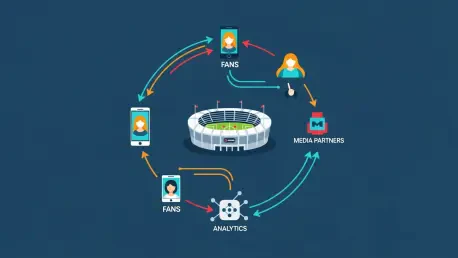
Looking forward, the next frontier in the sports data revolution is the widespread adoption of artificial intelligence and predictive modeling. This evolution is conceptualized through The Fan-Data Feedback Loop™, a proprietary framework that reframes the entire fan journey. It replaces the traditional, linear “fan funnel” with a dynamic, continuous loop that reflects the ongoing conversation between an organization and its audience. This model consists of three essential, interconnected phases: a centralized information system to capture and manage all fan data from various touchpoints; an omnichannel user experience to deliver a seamless and personalized journey across all platforms; and the use of AI-powered trend identification to analyze data and generate predictive insights. This framework allows organizations to move from a reactive posture, where they respond to fan behavior after the fact, to a proactive one, where they can anticipate needs and preferences to deliver hyper-personalized experiences in real time.
LaLiga’s partnership with Microsoft stands as a prime example of this future in action, offering an early blueprint for the “predictive league office.” By generating 3.5 million data points per match and using AI to derive predictive insights for performance, fan engagement, and media production, LaLiga is creating an unprecedented level of strategic intelligence. This capability allows the organization to understand fan behavior so deeply that it can identify when a fan is at risk of disengaging long before the fan is consciously aware of it, enabling timely and relevant interventions to maintain their loyalty. Industry research supports this approach, indicating that sports federations using predictive fan analytics can see a 15–30% increase in annual audience engagement and retention. This demonstrates the immense commercial potential of a truly predictive, data-driven strategy, solidifying the notion that the future of the sports business lies in not just knowing your fans, but knowing them better than they know themselves.
A New Era of Strategic Leadership
The era of instinct-driven management in sports has drawn to a close, supplanted by the undeniable rise of the data-native organization. The current landscape has starkly defined the industry’s leaders and laggards, creating a divide that will only widen in the coming years. Organizations that successfully modernized their data architecture, established rigorous governance, and strategically integrated AI have positioned themselves to thrive in an age of hyper-personalized fandom. They have moved beyond simply collecting data to actively using it as a strategic pillar that informs every decision, from ticket pricing to content creation. This strategic pivot required a fundamental shift in leadership, one that recognizes data not as an IT project but as a core business function essential for growth and resilience. The commitment to this transformation has already begun to pay dividends, separating the innovators from those who remain tethered to outdated hierarchical structures and legacy systems, who now find themselves struggling to remain relevant.