
While traditional intelligence agencies often operate behind closed doors, a new era of citizen analysts is now putting their money where their mouth is, turning high-stakes diplomacy into a tradable commodity that anyone can track in real-time. In an increasingly volatile global landscape, characterized by fragile de-escalation efforts between the United States and Iran, prediction markets are emerging as a more accurate barometer of reality than conventional punditry. These platforms do not merely reflect opinions; they aggregate financial risk to provide a cold, calculated view of international relations. This analysis explores the surge in geopolitical betting, specifically focusing on the Strait of Hormuz diplomatic breakthrough and how platforms like Polymarket are redefining the way stakeholders forecast global stability.
The Data-Driven Evolution of Geopolitical Forecasting
The shift toward market-based intelligence represents a fundamental change in how the public consumes and validates geopolitical news. Instead of relying on a single analyst who may have inherent biases, these markets rely on the collective input of thousands of participants who face financial consequences for being wrong. This financial incentive structure acts as a powerful filter, removing the “noise” of political theater and focusing instead on the underlying probabilities of specific outcomes. As these platforms grow, they create a persistent, living document of global tension that responds faster than traditional media cycles.
Adoption Statistics: The Surge of Real-Money Sentiment
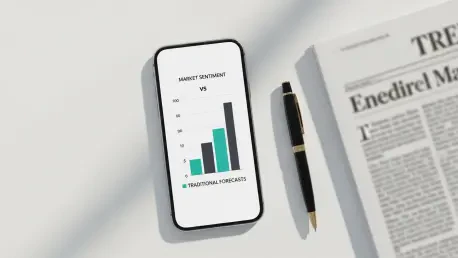
Massive capital inflows are currently defining the geopolitical contract landscape, with shipping and nuclear negotiations now commanding tens of millions of dollars in total trading volume. This influx of liquidity indicates that institutional players and sophisticated retail investors are no longer viewing these platforms as novelty games but as essential tools for risk management. The transition from qualitative expert opinions to quantitative market probabilities is visible in the way volatility is priced during late-night diplomatic sessions. High financial stakes ensure that every piece of leaked information is immediately weighed for its credibility, providing a real-time sentiment gauge that was previously inaccessible to the average observer.
Real-World Application: The Doha Talks and the Strait of Hormuz
A specific case of this phenomenon is the preliminary agreement between the United States and Iran to cease hostilities in the Strait of Hormuz, which triggered immediate fluctuations in market odds. When reports surfaced regarding a scheduled meeting in Doha, Qatar, traders reacted with surgical precision. Despite explicit news reports pointing to Qatar as the host, the market saw a sharp 11.5-point fluctuation in probability. This movement suggested that participants were weighing the difference between a logistical meeting to “halt attacks” and a formal “peace talk,” showing a level of nuance that headlines often miss.
Expert Perspectives on Market-Based Intelligence
Sophisticated observers maintain a “wait-and-see” approach, carefully distinguishing between a single diplomatic encounter and a sustainable policy shift. These experts note that while a meeting in a neutral venue like Qatar is a positive sign, it does not immediately erase years of maritime friction. The wisdom of crowds currently suggests a lingering skepticism regarding a rapid return to normalcy in global shipping lanes. Traders are essentially betting that while the guns may fall silent temporarily, the security premiums and rerouted cargo paths will remain in place until a more permanent framework is established and verified.
Furthermore, the role of hedging has transformed prediction markets into a form of insurance for those vulnerable to regional instability. Energy companies and logistics firms are increasingly using these contracts to offset the financial risks associated with oil price spikes or maritime disruptions. If a conflict escalates, the gains from a correctly placed bet can help mitigate the operational losses incurred by a closed waterway. This practical utility transforms prediction markets from a speculative arena into a vital component of the modern corporate and geopolitical toolkit.
The Future of Geopolitical Prediction Markets
Looking forward, there is significant potential for government and military entities to integrate prediction market data into their own strategic decision-making processes. By monitoring the sentiment of thousands of global participants, intelligence communities can identify blind spots that traditional internal reporting might overlook. The long-term implications for “maritime confidence” contracts are particularly noteworthy, as market sentiment may serve as a leading indicator for the removal of security premiums in global shipping. When the market finally tips toward a high probability of peace, it often precedes the physical withdrawal of naval escorts.
However, the growth of this trend is not without its challenges, as the risk of market manipulation remains a topic of intense debate among regulators. While the transparency of the blockchain-based systems used by platforms like Polymarket provides some defense, the possibility of actors attempting to influence public perception through large trades is a valid concern. Despite these risks, the benefit of having a transparent, real-time gauge of global stability often outweighs the potential for distortion. The evolution of these markets will likely lead to more granular contracts, allowing participants to bet on specific clauses of treaties or the precise timing of troop movements.
Navigating a New Era of Strategic Foresight
The convergence of diplomatic reporting and financial speculation offered a holistic view of modern conflict resolution that was previously impossible to achieve. By synthesizing the “whispers” of the diplomatic circuit with the hard data of real-money trades, observers gained a more pragmatic lens through which to view the slow, phased de-escalation of global tensions. This transition toward market-based forecasting effectively bridged the gap between closed-door diplomacy and public understanding, ensuring that information was no longer the sole province of the elite.
The path to regional peace remained fraught with skepticism, yet prediction markets provided the necessary clarity to navigate that uncertainty. They successfully replaced the static predictions of the past with a dynamic, self-correcting system that rewarded accuracy and punished hyperbole. As these platforms became more integrated into the global consciousness, they fundamentally changed the incentives for transparency in international relations. Ultimately, the rise of geopolitical betting shifted the burden of proof from the speaker to the market, creating a world where the most credible voice was often the one backed by the greatest collective risk.