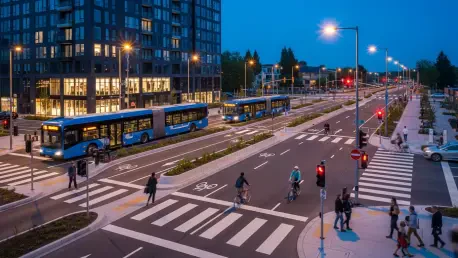

While the world frequently rallies against the visible threats of viral epidemics, a silent pandemic of road traffic crashes continues to claim over one million lives every year without the same level of global urgency. This crisis is no longer viewed as a series of isolated, unfortunate incidents occurring on the periphery of public concern. Instead, road safety has emerged as a central pillar of global health and economic stability. In a rapidly urbanizing landscape, the movement of people and goods is being reimagined not just for speed, but for survival. As cities expand and populations density increases, the management of transit corridors has transitioned from a localized engineering task to a critical international priority that demands systemic solutions.
This shift reflects a growing understanding that the design of a street is a direct reflection of a society’s values regarding human life. Over the last few years, the narrative has moved away from blaming individual behavior and toward addressing the structural failures that make mistakes fatal. This analysis explores the profound evolution of road safety from a mindset of “accidental” chance to one of preventable systemic failure. By examining the latest data, infrastructure breakthroughs, and expert-led strategies, a clear picture emerges of how the next decade of urban planning will be defined by the intersection of safety, sustainability, and equity.
2. Data-Driven Evolution and Real-World Implementation
The modernization of road safety infrastructure is rooted in a rigorous, data-first methodology that prioritizes measurable outcomes over traditional assumptions. For years, traffic management was reactive, often only addressing hazards after a significant number of fatalities occurred at a specific site. Today, predictive modeling and real-time data analytics allow urban planners to identify high-risk corridors before tragedies strike. This proactive stance is supported by a massive influx of private and public capital, creating a foundation for localized interventions that can be scaled across diverse geographic regions.
3. Statistical Trends in Road Safety and Economic Impact
The current global landscape remains sobering, as the World Health Organization continues to report approximately 1.19 million annual deaths resulting from road traffic incidents. Perhaps the most alarming demographic trend is that these crashes remain the leading cause of death for children and young adults aged 5 to 29. This is not merely a public health tragedy; it is a demographic crisis that removes individuals from the workforce during their most productive years. When young lives are cut short or permanently altered by injury, the long-term socio-economic health of a nation is severely compromised.
Furthermore, the economic toll of road trauma is staggering, costing many nations an estimated 3% of their annual Gross Domestic Product. In low- and middle-income regions, where infrastructure is often struggling to keep pace with rapid motorization, this loss creates a cycle of poverty that is difficult to break. However, the scale of investment in safety systems is finally beginning to match the scale of the problem. Philanthropic leaders, including Bloomberg Philanthropies, have committed over $865 million to modernize safety systems globally, providing the necessary leverage for governments to implement high-impact, evidence-based changes.
4. Applied Innovations in Infrastructure and Policy
The “Safe System” approach represents the most significant paradigm shift in recent years, operating on the principle that humans are fallible and that the road system must be designed to absorb those mistakes. Mentor cities like Bogotá and Addis Ababa have become global case studies for this philosophy. By redesigning dangerous intersections to reduce vehicle speeds and improve pedestrian visibility, these cities have proven that physical changes lead to immediate behavioral shifts. Strict speed management, particularly the implementation of 50 kph limits in urban areas and 30 kph in residential zones, has become the gold standard for reducing the kinetic energy involved in collisions.
Beyond motorized traffic, the Bloomberg Initiative for Cycling Infrastructure has catalyzed a cycling revolution by funding hundreds of miles of protected lanes. These lanes do more than just protect cyclists; they organize traffic and reduce the overall CO2 emissions of a city, proving that safety and environmental goals are inherently linked. Meanwhile, legislative milestones in countries like Viet Nam, Uganda, and Colombia have demonstrated that physical infrastructure must be paired with robust policy. Mandates for helmet use, seat-belt requirements, and aggressive drunk driving enforcement have turned legislative papers into lives saved on the asphalt.
5. Perspectives from Global Health and Urban Planning Experts
A critical component of this trend is the intentional reframing of the narrative by global health leaders. Experts like Dr. Kelly Henning have been instrumental in advocating for the total removal of the word “accident” from the professional lexicon. This linguistic change is not merely symbolic; it emphasizes that every crash is a preventable event caused by specific design or policy choices. When a death is labeled an “accident,” it implies it was unavoidable. When it is labeled a systemic failure, it places the burden of responsibility on the engineers and policymakers who have the power to fix the environment.
From an engineering perspective, the consensus has shifted to viewing road safety as a solvable technical challenge rather than a matter of fate. Professionals in urban planning now argue that the tools to eliminate road deaths already exist and only require the “political will” to be implemented. This perspective emphasizes systemic accountability, where data-driven enforcement ensures that safety regulations are not just suggestions but strictly followed protocols. The combination of expert guidance and government commitment is what transforms a dangerous thoroughfare into a safe public space for all users.
6. The Future of Global Road Infrastructure
As the landscape of transportation continues to evolve, new technical challenges are emerging that require immediate attention. The rise of mobile technology has introduced a persistent threat of distracted driving, necessitating new methods of technological and physical intervention. Furthermore, the integration of autonomous and electric vehicles into existing road networks presents a unique opportunity to embed safety protocols into the very software of the vehicles themselves. However, the transition period between manual and automated driving will require specialized infrastructure that can accommodate mixed-use traffic without increasing the risk to pedestrians.
The expansion of the “Safe City” model is set to accelerate, with plans to bring these data-driven initiatives to 30 additional cities across Africa, Asia, and Latin America over the next five years. This scaling effort is expected to have broader implications beyond simple fatality reduction. Safer streets lead to more efficient public transit systems, reduced healthcare burdens on national budgets, and a significant boost to urban livability. By prioritizing the most vulnerable road users, such as pedestrians and cyclists, cities are discovering that they can create more sustainable and vibrant economic hubs. The ambitious goal of saving one million additional lives by 2030 is no longer a distant dream but a tangible target reachable through the intersection of policy and physical design.
7. Conclusion: Engineering a Safer Tomorrow
The global community recognized that road traffic fatalities were not an inevitable cost of progress. Through the aggressive application of data-driven interventions and massive financial investments, several regions successfully lowered their fatality rates and reorganized their urban spaces. The transition from a reactive posture to a proactive, engineering-led strategy allowed planners to mitigate risks before they resulted in tragedy. It was demonstrated that the redesign of infrastructure, when paired with strict legislative enforcement, provided a shield for the most vulnerable populations.
The initiative proved that road safety was a fundamental human right and a necessary pillar of modern development. Governments and philanthropic organizations worked together to treat the road safety crisis with the same urgency as a major epidemic. This collaborative effort transformed the way society viewed mobility, shifting the focus from the speed of the vehicle to the safety of the human being. Ultimately, the lessons learned from these high-impact interventions established a new global standard for how cities protected their citizens. The path toward a world with zero road deaths was paved with evidence, investment, and an unyielding commitment to the value of every life.