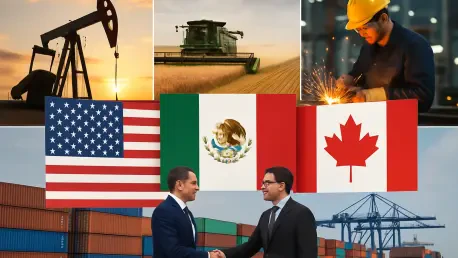

The current formal review of the United States–Mexico–Canada Agreement represents far more than a simple bureaucratic milestone; it is a stress test for a $1.5 trillion economic engine that supports millions of jobs across North America. As the mandatory “sunset clause” review process begins, the focus shifts from the theoretical benefits of regional cooperation toward the practical vulnerabilities of deeply integrated supply chains. This analysis moves beyond the conventional rhetoric of national dominance to uncover the specific risks that could destabilize regional commerce. By examining the hidden interdependencies in energy, agriculture, and labor, it becomes evident that any friction in this negotiation cycle carries the potential for significant economic fallout. The goal is to provide a clear-eyed assessment of the leverage held by each partner and the structural threats that could emerge if political posturing overrides economic logic.
Navigating the Evolution of North American Trade
The transition from the original North American Free Trade Agreement to the current USMCA was marked by intense political friction and a fundamental shift toward more protectionist domestic policies. While the agreement successfully modernized rules for the digital age, it introduced a unique mechanism of mandatory periodic reviews that has fundamentally changed the landscape of regional trade. This provision was intended to ensure the agreement remained relevant, but it has inadvertently fostered a climate of uncertainty that hangs over long-term industrial planning. Understanding this background is essential because the primary risk in the current cycle is not merely a change in specific tariffs, but the potential erosion of the investor confidence that underpins the entire continental economy.
Historically, the growth of trade between the three nations has created a complex ecosystem where manufacturing processes often cross borders multiple times before a final product is completed. This level of integration means that even minor regulatory changes can have compounding effects on production costs. As the United States continues to push for the reshoring of vital industries, the stability of these trade rules serves as the essential foundation for capital investments. If the review process is perceived as volatile or prone to sudden shifts, corporations may freeze expansion plans or divert manufacturing to other global regions. Consequently, the greatest danger lies in the possibility that the “sunset” provision becomes a self-fulfilling prophecy of regional instability.
The Myth of One-Sided Leverage
Energy Security: Grid Stability and Cross-Border Flows
A common misconception in trade analysis is the assumption that the United States holds all the leverage due to its status as a global economic superpower. However, a granular look at the energy sector reveals a profound American vulnerability regarding grid reliability and resource imports. Canada remains the largest supplier of imported electricity to the United States, providing more than 80 percent of all cross-border energy flows. This relationship is a cornerstone of regional stability, particularly for northern border states that rely on Canadian hydropower and nuclear exports as essential baseload power during peak demand periods.
If the 2026 review leads to regulatory friction or trade barriers in the energy sector, the United States could face immediate consequences in the form of electricity price spikes and threats to grid reliability. Leverage in this context is not about the total volume of trade, but about the extreme difficulty of substitution. The United States currently has no immediate, cost-effective alternative to the clean energy imported from its northern neighbor. In an era where domestic energy costs are a highly sensitive political issue, any disruption to this flow would trigger immediate economic and political repercussions for American policymakers, making energy a potent defensive asset for Canadian negotiators.
Agricultural Risks: Potash and Food Security
The risks associated with the trade review extend directly into the American Heartland through a heavy reliance on essential Canadian mineral resources. Canada is a dominant global leader in potash production, which is a mineral indispensable for the fertilizers used in large-scale industrial farming throughout the United States. American farmers have extremely limited options for sourcing potash on a comparable scale from other allies. Any breakdown in trade relations that results in higher costs for these inputs would trigger a domino effect across the agricultural supply chain, ultimately resulting in higher grocery prices for the average consumer.
Because food inflation is a primary concern for voters, Canada’s control over these vital agricultural inputs provides it with an understated but powerful position in the negotiation room. A spike in fertilizer costs would hit the American “Farm Belt” particularly hard, increasing operational expenses for producers of corn, soy, and wheat. This vulnerability highlights the fact that the North American economy is not a collection of independent markets, but a single, interconnected machine. Attempting to extract concessions in one area of trade without considering the repercussions in essential inputs like potash is a strategy fraught with the risk of unintended domestic damage.
Labor Mobility: Modernizing the Visa Framework
Beyond physical commodities, the trade review faces the significant challenge of modernizing the framework for professional labor mobility. The current “TN Visa” program, which allows skilled professionals to work across borders, is still tethered to an occupational list established in the early 1990s. This creates a strategic risk for the U.S. technology and healthcare sectors, which are currently desperate for cybersecurity experts, data scientists, and specialized nurses. These roles did not exist in their current form when the original list was codified, yet they are now essential for maintaining a competitive edge in the global digital economy.
The paradox of the current situation is that while the private sector demands an expanded and modernized labor list, domestic political pressure often views work visas with skepticism. This tension creates a risk that the North American bloc will remain stuck with an analog labor framework in an increasingly digital world. Without a more flexible approach to professional mobility, the region risks losing talent to other global hubs that offer more streamlined pathways for specialized workers. The 2026 review must address this gap, or it will continue to hamper the ability of North American firms to innovate and compete on a global scale.
Emerging Trends: Security Over Low Cost
Looking at the current trajectory of trade, several shifts are likely to define the evolution of the North American partnership. We are witnessing a transition from the traditional focus on “free trade” toward a paradigm of “secure trade,” where the reliability and proximity of supply chains take precedence over finding the lowest possible labor costs. Technological innovations in green energy and the production of electric vehicles are forcing the trade partners to develop new and complex rules regarding the “rules of origin” for critical minerals. This shift suggests that the future of the agreement will be defined by how well the three nations can coordinate their industrial policies to compete against other global trade blocs.
Experts anticipate that the 2026 review will be characterized by incrementalism rather than a total overhaul of the existing framework. The most likely outcome involves pragmatic updates to digital trade rules and environmental standards, aimed at preserving the core of the agreement while addressing modern challenges. However, the speculative risk of “accidental protectionism” remains a significant concern. If populist political cycles in any of the three nations lead to aggressive rhetoric for short-term domestic gains, it could cause long-term structural damage to the continent’s shared economic competitiveness. Maintaining a balance between domestic interests and regional cooperation will be the primary challenge for negotiators.
Strategic Takeaways: Building Resilience
The analysis of the current trade environment suggests that stakeholders must prioritize long-term stability over short-term political wins. For businesses operating within the bloc, the key strategy should be to diversify supply chains while actively lobbying for a clear, multi-year extension of the current agreement to mitigate the risks associated with the sunset clause. Policymakers should focus on streamlining energy regulations and modernizing the professional visa list to ensure that economic interdependencies remain an asset rather than a liability. Recognizing that a victory at the expense of a neighbor’s stability is ultimately a self-inflicted wound will be vital for a successful outcome.
Practical application of these insights requires a shift toward “cooperative competition,” where the North American partners act as a unified front in the global marketplace. This involves creating more resilient infrastructure for the cross-border movement of energy and goods, as well as harmonizing standards for emerging technologies like artificial intelligence and green hydrogen. By reducing the friction at the borders and providing a clear regulatory roadmap, the three nations can ensure that North America remains the most attractive destination for global investment. The goal of the 2026 review should be to strengthen the ties that bind the three economies, rather than testing how much tension they can withstand before they break.
The Enduring Importance of Continental Integration
The 2026 USMCA review process highlighted the profound and often invisible ties that bound the North American economies together into a single functional unit. It was observed that the United States maintained significant vulnerabilities in sectors where it lacked immediate alternatives, such as Canadian energy exports and agricultural minerals. The analysis confirmed that trade leverage was not a simple function of total economic size, but was instead defined by the strategic importance of specific, non-substitutable inputs. As the negotiations progressed, it became clear that the cost of disruption was too high for any one nation to bear without risking severe domestic consequences.
The strategic reality of the review cycle dictated that the most successful path forward involved acknowledging these mutual dependencies. By focusing on modernization rather than confrontation, the partners managed to preserve the integrity of the regional supply chain. This approach ensured that the “sunset clause” did not lead to an economic eclipse, but instead served as a catalyst for refining the rules of the road for a new era of commerce. Ultimately, the preservation of the trade agreement remained a strategic necessity for regional security, reinforcing the idea that in a highly integrated economy, the prosperity of one neighbor was inextricably linked to the stability of the others.