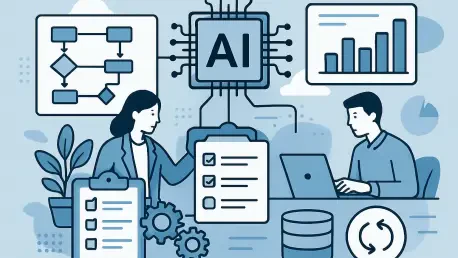

The emergence of AI-powered workflow automation platforms is transforming business operations from simple data movement into a discipline of intelligent execution. As transaction volumes surge and regulatory environments become increasingly complex, the demand for sophisticated automation has transitioned from simple data movement to high-stakes, reliable operational management. Growing organizations are moving away from “duct-taped” operations, characterized by fragmented spreadsheets and fragile manual data entry, toward a model of intelligent execution. In this landscape, traditional manual administrative processes can no longer support the weight of modern commerce, necessitating a shift in how companies handle their back-end functions. The integration of native intelligence into these systems has become the primary benchmark for success, allowing businesses to move beyond passive connectivity. By automating the most critical and repetitive tasks, companies can ensure that their human talent is focused on strategic initiatives rather than mundane data reconciliation.
Evaluating the New Standards of Automated Excellence
Key Metrics: Measuring Performance and Reliability
As automation matures, the market has established specific critical metrics to distinguish between general-purpose integrators and specialized operational engines. Execution reliability and deep financial integration are now paramount, ensuring that workflows complete without fail while understanding complex data models like those found in NetSuite or Stripe. Unlike previous iterations of automation software that merely passed strings of text from one app to another, modern systems must maintain data integrity across diverse environments. This requires a deterministic approach where every action is predictable and reproducible, especially when dealing with revenue-related data. Organizations now prioritize platforms that offer deep visibility into the state of every transaction, allowing for immediate intervention if a process deviates from its expected path.
Beyond mere connectivity, platforms are now judged on their audit readiness and the sophistication of their native AI components. These components have evolved from basic chatbots into autonomous agents capable of building, troubleshooting, and optimizing workflows in real-time. This level of operational ease ensures that non-technical staff can manage complex systems without constant reliance on IT departments. Auditability remains a non-negotiable standard, as businesses must provide a clear trail of every automated action to satisfy internal controls and external regulators. The shift toward these rigorous standards reflects a broader understanding that automation is not just a productivity tool, but a foundational element of corporate governance and financial stability.
The Financial Reality: Impact and Total Cost of Ownership
Total Cost of Ownership (TCO) has become a central strategic consideration for operations teams balancing subscription fees against hidden expenses. These hidden costs often include the “maintenance tax,” which refers to the time and money spent fixing broken links and adjusting to API changes in third-party software. In a complex ecosystem where a single company might use dozens of SaaS applications, the fragility of traditional integrations can lead to significant downtime and financial loss. By evaluating the long-term human intervention required to keep systems running, businesses are finding that specialized tools often provide a higher return on investment. The focus has shifted from the initial sticker price of a software license to the holistic cost of maintaining operational continuity over a multi-year period.
Strategic operations leaders are now meticulously calculating the impact of automated systems on their overall margin and efficiency. The goal is to move beyond cost reduction and toward value creation by enabling faster billing cycles and more accurate financial forecasting. Platforms that offer built-in hosting and managed maintenance allow companies to avoid the overhead of specialized DevOps staffing, further lowering the TCO. By investing in robust, self-sustaining automation, organizations can scale their operations without a linear increase in headcount. This shift in financial perspective allows companies to treat automation as a strategic asset rather than a departmental expense, ensuring that their technological investments directly support long-term growth and stability.
The Technological Shift Toward Autonomous Agents
The New Workforce: The Rise of the AI Finance Engineer
A significant trend involves the emergence of the “AI Finance Engineer,” a new generation of tools that move beyond the manual mapping of logical steps. These intelligent agents possess an inherent understanding of business logic, such as dunning cycles, multi-entity reconciliation, and complex tax compliance. Unlike the tools of the early 2020s, which required users to define every possible branch of a decision tree, these agents can interpret intent and execute tasks with minimal guidance. This shift represents a transition from “if-this-then-that” logic to goal-oriented automation. These systems are capable of recognizing the nuance in financial data, ensuring that exceptions are handled with the same level of care and accuracy as standard transactions.
These intelligent agents proactively monitor operations and can flag potential anomalies before they manifest as significant financial discrepancies. By acting as active participants in workflow construction, they significantly reduce the time required to deploy new operational processes. This proactive stance is particularly valuable in fast-moving industries where missing a single financial signal can lead to missed revenue or compliance violations. As these tools become more integrated into the daily fabric of the finance department, they are effectively redefining the role of the human operator. Instead of performing data entry, finance professionals are now supervising these AI agents, focusing their efforts on high-level strategy and complex problem-solving that requires human intuition.
Resilient Infrastructure: Self-Healing Systems and Proactive Maintenance
Modern automation platforms are increasingly incorporating self-healing capabilities to combat the inherent fragility of traditional software integrations. These systems can automatically detect upstream API changes and adjust their internal logic without human intervention, ensuring that mission-critical workflows remain functional. This transition toward proactive, self-adjusting infrastructure significantly reduces the operational burden on IT and finance teams who previously spent hours debugging broken connections. By utilizing machine learning to predict when a connection might fail or identifying patterns that precede an error, these platforms maintain a level of uptime that was previously unattainable. This resilience is essential for businesses that rely on real-time data to drive their decision-making processes.
This movement toward self-correction ensures that even as the surrounding software ecosystem continues to evolve, the core business processes remain stable. When an external service updates its data format or changes its authentication protocols, the self-healing system identifies the discrepancy and maps the new data structure to the existing workflow. This minimizes the risk of data loss and prevents the cascading failures that often occur when one link in a chain breaks. Consequently, organizations can adopt new software tools with greater confidence, knowing that their automated infrastructure is robust enough to handle change. This technological advancement marks the end of the era of “brittle” automation, ushering in a period of unprecedented operational durability and reliability for businesses of all sizes.
Navigating the Specialized Platform Marketplace
Market Bifurcation: Niche Architects and Universal Connectors
The automation market has bifurcated into specialized architects like Loopfour and ubiquitous connectors like Zapier, each serving distinct business needs. Loopfour focuses exclusively on the needs of financial officers, prioritizing deterministic execution and high-level security protocols for sensitive data. This specialization allows for a deeper understanding of specific industry requirements, such as GAAP compliance and SOC2 Type II standards. For organizations handling high-volume financial transactions, these specialized platforms offer the reliability and audit trails necessary to satisfy rigorous internal and external demands. The choice between these tools often depends on the complexity of the data and the level of risk the business is willing to tolerate.
In contrast, Zapier remains a popular choice for smaller organizations due to its massive integration library and ease of use. It serves as an excellent gateway for businesses that need to connect a wide variety of apps quickly without deep technical knowledge. However, as companies grow and their requirements become more complex, they often find that general-purpose connectors lack the specialized intelligence needed for high-stakes operations. While universal connectors excel at simple data transfers, they may struggle with the nuanced logic required for multi-step financial reconciliations or complex inventory management. This market division allows companies to select the tool that best matches their current operational scale while keeping an eye on the specialized needs that will arise as they expand.
Creative Control: Visual Logic Engines and Open-Source Solutions
For organizations that require different levels of transparency and visualization, platforms like Make and N8N provide distinct advantages for managing complex logic. Make offers a sophisticated visual interface for mapping branching pathways, making it easier to manage data iterations than traditional list-based formats. This visual approach allows operations teams to see the entire flow of data at a glance, facilitating easier debugging and more intuitive design. It is particularly effective for workflows that involve multiple decision points and complex data transformations. By providing a clear representation of the automated process, these tools bridge the gap between technical developers and business-oriented operations managers, fostering better collaboration.
Meanwhile, N8N caters to technical teams who demand data sovereignty and the flexibility to toggle between visual editors and raw code. This open-source approach provides organizations with full control over their data and the ability to host the software on their own infrastructure. For companies in highly regulated industries or those with strict security policies, this level of control is often a decisive factor. However, this flexibility comes with the need for internal resources to manage the associated DevOps requirements and software updates. By offering a hybrid approach, these platforms allow businesses to start with visual tools and dive into custom code only when necessary, providing a scalable solution that grows alongside the technical capabilities of the team.
Enterprise Authority: Standards and Global Governance
At the enterprise level, Workato remains the standard for large-scale corporations requiring multi-departmental oversight and integration with legacy systems like SAP or Oracle. This platform is designed for IT departments that must manage automation across various functions, including HR, IT, and Finance, while maintaining strict version control. Enterprise environments demand a high degree of governance to ensure that automated processes do not conflict with one another or violate corporate security policies. Workato provides the robust environment management and administrative controls necessary to oversee thousands of workflows across a global organization. Its focus on centralized management helps large firms avoid the chaos of “shadow IT” and ensures that all automation projects align with corporate standards.
While characterized by higher costs and longer implementation timelines, these enterprise-grade features provide the necessary control for firms with hundreds of employees. The ability to manage lifecycle stages—from development to testing and production—is critical for maintaining the stability of mission-critical business processes. Furthermore, these platforms often offer pre-built industry solutions and deep integrations with the complex ERP systems that power global commerce. By providing a unified platform for all automation needs, enterprise solutions enable a more cohesive digital strategy. This central authority ensures that data flows securely and efficiently across the entire organization, supporting the complex requirements of modern multinational corporations in an increasingly automated world.
Strategic Decision-Making in a Bipolar Market
Risk Assessment: Matching Tools to Operational Requirements
The choice of an automation tool was ultimately determined by the “cost of failure” associated with a specific workflow or business process. When a failed process merely resulted in a delayed internal notification, cost-effective generalist tools were usually deemed sufficient by the management team. However, when a failure led to an audit discrepancy or a missed payment, businesses increasingly opted for specialized, domain-specific agents. These organizations realized that the savings from cheaper software were quickly erased by the costs of remediation and the loss of stakeholder trust. Consequently, the evaluation process began with a thorough risk assessment of the target workflow to identify potential points of failure and their impact on the bottom line.
Decision-makers also weighed the importance of compliance features and the availability of granular audit logs during their selection process. They understood that in a landscape of increasing regulatory scrutiny, being able to prove how a transaction was processed was as important as the processing itself. By matching the sophistication of the tool to the operational risk, companies maintained a balance between innovation and stability. This strategic alignment ensured that the most critical business functions were protected by the most reliable technology available. Over time, this approach led to a more mature automation ecosystem where reliability was prioritized over sheer quantity of integrations, leading to more resilient and efficient business operations across various sectors.
Moving Forward: The Essential Role of Compliance and Intelligence
As the landscape of business operations evolved, it became clear that AI moved from being a luxury feature to becoming the essential infrastructure of any automation strategy. Tools that lacked intelligent monitoring or comprehensive audit trails were increasingly viewed as liabilities rather than assets by savvy operations professionals. Success in this era depended on a company’s ability to match its automation technology not just to the apps it used, but to its specific operational risks. Organizations that embraced this philosophy were able to navigate the complexities of global commerce with greater agility and precision. They recognized that the true power of automation lay in its ability to provide consistent, compliant, and intelligent results under any circumstances.
The industry shifted its focus toward building systems that were not only efficient but also inherently trustworthy and transparent for all stakeholders involved. Leaders implemented training programs to ensure their teams were capable of supervising these advanced agents, fostering a culture of continuous improvement and technological literacy. By prioritizing intelligence and compliance, these companies set a new standard for excellence in business execution that others were compelled to follow. This strategic shift ensured that automation served as a reliable engine for growth, rather than a source of unforeseen risk or operational friction. Ultimately, the successful integration of AI into workflows became the defining characteristic of high-performing businesses that thrived in an increasingly digital and automated marketplace.