
Today, we’re thrilled to sit down with Marco Gaietti, a seasoned expert in housing economics with decades of experience in analyzing real estate market trends and their broader economic impacts. With a background in management consulting, Marco has guided countless stakeholders through the complexities of shifting housing dynamics, offering strategic insights into how these changes affect sellers, buyers, and the economy at large. In this interview, we dive into the recent shift toward a buyer’s market in several key U.S. regions, explore the challenges facing sellers and borrowers, and unpack the potential risks and lessons from past housing crises. Our conversation touches on the impacts of falling home values, the legacy of pandemic-era boomtowns, and practical strategies for navigating a softening market.
How do you see the recent shift toward a buyer’s market in 21 major housing markets, particularly in the Southeast, Southwest, and Mountain West, impacting local sellers? Can you share a story or specific insight that illustrates their challenges?
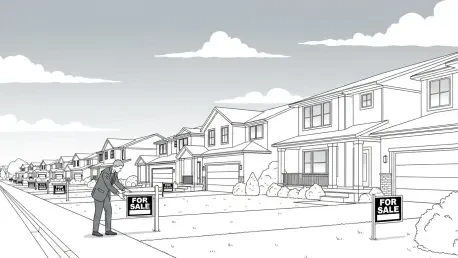
I’m glad you brought this up because this shift is a real game-changer for sellers in these regions. When we look at the data, like the ResiClub analysis of active inventory from Realtor.com, we see a significant build-up of listings compared to 2019 levels, which hands more leverage to buyers. For sellers, this often means longer days on the market, price cuts, or even distressed sales where they’re left with lingering debt after closing. I recall a case in a small town in the Southwest—a family had bought their home at the peak of the pandemic boom, paying well above local income averages. When they needed to relocate for a job last year, they couldn’t sell without taking a $50,000 loss, which they simply couldn’t afford. It’s heartbreaking to see dreams of homeownership turn into financial traps, and in these softening markets, sellers are increasingly forced to either hold on and hope for a rebound or swallow bitter losses. The emotional toll—sleepless nights worrying about mortgage payments—often compounds the financial strain.
Many of these softer markets were once pandemic boomtowns with dramatic price growth. What drove prices so far beyond local income levels during that time, and why are we seeing a correction now? Can you share an example of a boomtown you’ve come across?
The pandemic housing boom was fueled by a perfect storm of factors. You had record-low interest rates, a surge of remote workers fleeing high-cost urban areas, and a cultural shift toward valuing space—think bigger homes for home offices or backyards for sanity. This drove demand through the roof in places like the Southeast and Mountain West, where prices skyrocketed beyond what local wages could sustain. Now, the correction is happening because interest rates have climbed, remote work trends are stabilizing, and inventory is piling up—buyers just aren’t as desperate anymore. Take a city like Boise, Idaho, in the Mountain West, which I visited during the height of the boom. It was wild—homes were selling in days for 30% above asking, often to out-of-state buyers with cash. Walking through neighborhoods, you could feel the frenzy in the air, with “Sold” signs popping up faster than spring flowers. Today, though, I hear from contacts there that listings are sitting longer, and prices are starting to dip as reality sets in. It’s a classic case of speculative bubbles bursting when the fundamentals, like income levels, can’t keep pace.
With warning signs of underwater mortgages and foreclosures emerging in these same regions, how might this trend ripple through the broader housing economy? Can you walk us through the potential fallout with some specific trends or a family’s experience?
This is a critical concern because housing isn’t just about individual transactions—it’s a cornerstone of the wider economy. When we see rising underwater mortgages—where homeowners owe more than their property is worth—and foreclosures in these regions, it signals potential distress that can spread. It erodes consumer confidence, tightens lending standards as banks get nervous, and can even dampen local economic activity since homeowners in distress spend less on goods and services. Based on recent reports, some of these markets are already showing foreclosure rates ticking up compared to pre-pandemic levels, though exact numbers vary by county. Imagine a family in, say, a suburban area of the Southeast: they bought at the peak with a stretched budget, then a job loss hits. They miss a few mortgage payments, and because their home value has dropped 10-15%, they can’t sell without owing the bank. The lender eventually forecloses, their credit is shattered, and they’re forced into renting—often at higher costs than their mortgage was. Meanwhile, each foreclosure drags down neighborhood property values, creating a vicious cycle. I’ve seen this play out in waves, and the quiet desperation in these families’ eyes when they realize they’ve lost everything—it sticks with you.
Falling home values often hit borrowers hardest, especially during life changes like divorce or job loss. What strategies can homeowners use to protect themselves in a buyer’s market, and can you share a practical plan or personal story of someone who weathered this storm?
Homeowners in a buyer’s market need to be proactive, because waiting for a turnaround isn’t always an option. First, build an emergency fund—aim for at least three to six months of mortgage payments if possible—to cushion against unexpected life events. Second, consider refinancing if rates drop or explore loan modification programs with your lender to lower monthly payments before distress hits. Also, don’t overlook renting out a room or part of your property for extra income—it’s an underused tactic that can make a big difference. I remember working with a single mom in the Southwest a few years back during a market dip. After a divorce, she was staring down a mortgage she couldn’t sustain alone on a home that had lost value. We mapped out a plan: she rented out her basement to a tenant, which covered 40% of her payment, and she picked up part-time work while negotiating a temporary forbearance with her bank. It wasn’t glamorous—she told me about nights crying over bills—but her grit paid off, and she held onto the house until values stabilized. Her story taught me that resilience, paired with practical steps, can turn a dire situation into a manageable one.
Reflecting on the 2008 housing crisis, there’s talk of a potential “mail in the keys” scenario today due to heavy reliance on debt. How do today’s risks compare to those of 2008, and have we truly learned any lessons from that time? Can you share a personal observation or detailed comparison?
Comparing today to 2008 is both illuminating and sobering. Back then, the crisis stemmed from rampant subprime lending, speculative buying, and exotic financial instruments that amplified risk—think adjustable-rate mortgages resetting at crippling rates. Today, while lending standards are tighter, we still see a deep reliance on long-term debt to purchase homes, and in softening markets, borrowers can get trapped just as easily when values fall. The “mail in the keys” phenomenon—where homeowners walk away by mailing their keys to the bank—feels less likely on a mass scale now due to stricter regulations, but it’s not impossible in pockets of distress, especially in overbuilt boomtowns. I was consulting for a community organization in 2008, and I’ll never forget visiting a neighborhood in Florida where entire streets were ghost towns—foreclosure notices on doors, overgrown lawns, a palpable sense of abandonment. Today’s risk feels less systemic but more concentrated in specific regions, and I worry we haven’t fully learned our lesson about tying so much of our economy to housing debt without addressing scarcity and affordability at the root. We’ve patched some holes with policy, but the fundamental vulnerability remains.
Looking ahead, what is your forecast for the housing market in these shifting regions over the next few years, and what factors will play the biggest role in shaping that outlook?
I think the next few years will be a mixed bag for these regions in the Southeast, Southwest, and Mountain West. We’re likely to see continued softening in many of these markets as inventory remains high and buyer demand cools, particularly if interest rates stay elevated. However, pockets with strong job growth or unique appeal—like areas near growing tech hubs—could buck the trend and stabilize sooner. Key factors will include wage growth catching up to housing costs, federal monetary policy on rates, and whether we see broader economic disruptions like a recession, which could deepen distress. I’ve been tracking how quickly listings are piling up compared to 2019, and if that trend accelerates, we might see sharper price corrections—potentially 10-20% drops in the hardest-hit spots. But I’m also watching migration patterns; if remote work reignites or new industries move in, demand could shift unpredictably. It’s a tense waiting game, and for many families, the next few years will feel like walking a tightrope—hoping for balance while bracing for a fall.