
The Certainty of Uncertainty in Energy Forecasting
From confident pronouncements heralding the imminent end of the fossil fuel era to dire warnings of perpetual resource scarcity, the world of energy forecasting is dominated by bold predictions that rarely withstand the test of time. A review of history offers a humbling lesson: the ability to accurately project the future of how the world is powered has been remarkably poor. This analysis delves into the profound uncertainty inherent in energy projections, exploring why both critics and advocates of different energy sources so often miss the mark. By examining historical miscalculations and unforeseen modern disruptions, a consistent pattern of fallibility emerges that argues for a deep sense of caution. The central theme is not to advocate for one energy source over another but to embrace the reality that the only certainty in the energy future is its unpredictability.
A Legacy of Miscalculation: Lessons from a Century of Failed Forecasts
The tendency to misjudge the energy landscape is not a recent phenomenon; it is woven into the very fabric of the industry’s history. The early success of oil magnates, for instance, was built not on universal confidence but on widespread skepticism about the long-term viability of petroleum. This prevalent doubt allowed for market consolidation while others hesitated to invest in what seemed like a fleeting resource. Decades later, a 1922 U.S. government report confidently dismissed Venezuela’s oil prospects just before the discovery of vast reserves that would turn the nation into a global energy powerhouse. These historical blunders are crucial because they demonstrate a recurring cognitive bias: the assumption that the present state of technology, resource discovery, and market demand represents a permanent reality rather than a temporary snapshot in a constantly evolving system.
The Anatomy of Flawed Predictions: Why Experts Miss the Mark
The Ghost of ‘Peak Oil’ and the American Shale Revolution
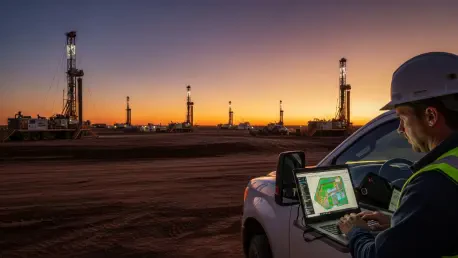
Perhaps no modern example illustrates the fallibility of energy forecasting more powerfully than the rise and fall of “peak oil” theory. In the mid-2000s, the concept gained significant traction, epitomized by an influential 2005 book that argued that Saudi Arabia’s production was on the brink of irreversible decline. At the time, the United States was largely an afterthought in discussions of global oil production leadership. Meanwhile, pioneers of the hydraulic fracturing boom struggled to convince a skeptical world of the immense, untapped oil and gas locked within shale formations in places like North Dakota. Within a few short years, the narrative was completely upended. The U.S. shale revolution not only debunked peak oil theories but transformed the global energy map, creating the “Saudi America” phenomenon—a dramatic and unforeseen shift that almost no mainstream expert saw coming.
The Unforeseen Thirst: How Big Tech Upended the Energy Equation
While the shale revolution provides a lesson in underestimating supply, a more recent shock has come from the demand side, challenging the assumptions of both fossil fuel advocates and their critics. The explosive growth of artificial intelligence has created a sudden and voracious appetite for energy to power massive data centers. As recently as 2022, few, if any, energy models accounted for the exponential increase in electricity consumption that would be required by Big Tech. This development serves as a stark reminder that energy demand is not a simple, linear projection but is subject to radical disruption from technological leaps in entirely different sectors. This blindsiding event admonishes the pro-fossil fuel crowd for its own conceit, proving that even its proponents cannot anticipate the new forces that will shape consumption and drive the market.
Beyond Linear Thinking: The Disruptive Power of Technological Black Swans
The core reason for consistent failure in energy prediction is a reliance on linear thinking in a non-linear world. Forecasts are often extrapolations of current trends, failing to account for “black swan” events—unforeseeable innovations that fundamentally alter the rules of the game. Fracking was one such black swan for supply; AI-driven data centers are another for demand. The common misconception is that the energy transition will be a slow, predictable replacement of one technology with another. History, however, shows that the energy sector evolves through disruptive, often unpredictable, technological and economic shifts. Overlooking the potential for these game-changing innovations is the Achilles’ heel of nearly every long-term energy forecast, regardless of its ideological leaning.
Navigating the Fog: What the Future of Energy Might Hold
Given this history of failed predictions, any attempt to define the future energy mix is an exercise in speculation. The lesson from the shale and AI disruptions is not to try to predict the next black swan but to build systems that are resilient to its arrival. Will it be a breakthrough in nuclear fusion, the development of a revolutionary battery chemistry, or a geopolitical event that redraws the energy map? The answer is unknown. The only reasonable prediction is that the dominant energy narrative of today will likely be challenged by a development that is currently on the fringes or completely unimagined. The future is a landscape of profound uncertainty, where flexibility and adaptability will be far more valuable than rigid, long-term plans based on today’s reality.
From Prediction to Preparation: A New Mindset for an Unknowable Future
The major takeaway from this analysis is the futility of dogmatic certainty in energy debates. The spectacular miscalculation of peak oil and the sudden energy demands of the AI revolution reinforce the same core insight: predictive models are fragile. The most effective strategy, therefore, is not to bet on a single outcome but to prepare for a range of possibilities. For businesses, this means investing in operational flexibility and diversifying energy sources. For policymakers, it means fostering a regulatory environment that encourages broad innovation rather than picking and subsidizing specific “winners.” The goal should shift from accurate prediction to robust preparation, creating systems that can withstand the inevitable shocks and capitalize on unforeseen opportunities.
The First Step Is Admitting We Don’t Know
In conclusion, the history of energy is a continuous lesson in humility. From the misjudged potential of Venezuelan oil a century ago to the unforeseen impacts of the shale revolution and artificial intelligence, the record is clear: experts are consistently wrong. The core theme is not one of cynicism, but of realism. Both the fervent advocates for a fossil-fuel-free future and the steadfast defenders of the status quo should temper their rhetoric with an acknowledgment of this deep, structural uncertainty. The most rational and strategic stance is to admit that what will power the world in the coming decades is simply unknown. Embracing this ignorance is the first and most crucial step toward building a resilient and adaptable energy future.