
With decades of experience in management consulting and strategic operations, Marco Gaietti has become a prominent voice in the business of sustainability and energy markets. He has navigated complex shifts in customer relations and corporate management, providing a unique lens through which to view the current volatility in global energy and transportation. As the world faces unprecedented spikes in fuel costs and supply chain instability, Gaietti’s insights offer a roadmap for how businesses and policymakers can adapt to a rapidly changing landscape.
The following discussion explores the economic barriers to electric vehicle adoption, the critical need for grid modernization through AI, and the ripple effects of geopolitical conflict on agricultural stability.
With new electric vehicles currently averaging $6,000 more than gas-powered models and many premium lines being discontinued, how can manufacturers bridge the affordability gap for the median shopper? Given that used EV sales are growing significantly faster than new ones, what specific steps should dealerships take to manage this inventory?
Bridging the affordability gap requires a shift away from the “luxury-first” mindset that has dominated the sector, especially since the market is currently overloaded with pricey electrics selling for well over $60,000. Manufacturers must prioritize high-volume, affordable models like the revived Bolt at $29,000 or the $30,000 Leaf to meet the median new vehicle price of $49,000. For dealerships, the strategy must pivot toward the thriving used market, which is projected to rise 12% in the first quarter even as new sales slump. We are seeing used EVs sell at auction for thousands over wholesale prices, so dealerships should focus on rapid inventory turnover—some are already turning stock twice as fast as traditional models. By leaning into this secondary market, dealers can provide entry points for the “electrified vehicle consideration” that remains high among shoppers wary of $4-a-gallon gasoline.
Electrical grids often operate at only 35% efficiency to prevent brownouts during peak hours. How can implementing real-time AI and localized microgrids practically increase this capacity without massive new capital expenditures, and what are the primary regulatory hurdles preventing property owners from selling their own solar power back to the grid?
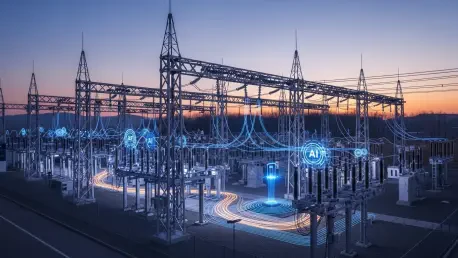
The current 35% efficiency rate is a result of rigid rules designed to protect the grid for a single peak hour of the year, which is a massive waste of existing infrastructure. By implementing real-time information technology and artificial intelligence, we can theoretically boost that efficiency to 60%, essentially “finding” immense capacity without spending tens of billions on new physical lines. The primary hurdle is the legal monopoly structure that characterizes many utilities, rewarding them for heavy capital expenditures rather than efficiency. Under this system, utilities have a perverse incentive to build more “rate base” infrastructure to get a guaranteed return, while blocking the localized competition that would allow property owners to sell solar power through purchase agreements. Changing just a few regulatory rules to allow independent generation would break this monopoly and modernize how we distribute power.
Recent drone attacks on global refineries and the blockade of the Strait of Hormuz have restricted millions of barrels of oil and fertilizer chemicals daily. How do these supply chain disruptions specifically impact the current agricultural planting season, and what alternative logistics strategies can mitigate the resulting spike in food prices?
The blockade of the Strait of Hormuz is a true disaster because it bottles up 18 million barrels per day of oil and, crucially, the chemicals essential for fertilizer right as the planting season begins. This isn’t just about the $1 spike in gas prices; it is about the physical availability of the fossil-fuel-based inputs that American farmers rely on to grow crops. To mitigate the resulting spike in food prices, we must look at alternative logistics that bypass these chokepoints, though the immediate reality is that global markets will drive prices up regardless of local supply. Long-term, the only way to insulate our food supply from these shocks is to decouple agriculture from fossil fuels. We need to remember that solar and wind power don’t have to pass through a narrow strait controlled by hostile actors.
Some regions face utility rates 50% higher than the national average due to legal monopolies and incentives that favor heavy capital spending. How would introducing localized competition fundamentally change the pricing structure for ratepayers, and what specific metrics would define the success of a 25% rate reduction?
Introducing localized competition would fundamentally shift the pricing structure by stripping away the “guaranteed rate of return” on unnecessary capital projects that currently pads utility bills. When property owners and communities are allowed to set up their own solar and battery projects, the utility is forced to compete with cheaper, decentralized energy sources. A 25% rate reduction is not just a pipe dream; it is a necessary correction for regions currently paying 50% more than the rest of the country. Success would be measured by the proliferation of independent power purchase agreements and a measurable decrease in the “capex” charges on monthly bills. This transition moves us from a 20th-century monopoly model to a frenetic, tech-driven market where the plummeting costs of renewables are finally reflected in the consumer’s pocket.
Since the cost of renewable energy and battery storage is falling globally while domestic utility rates remain high, how can infrastructure be modernized to pass these savings to consumers? Please detail the technical requirements for upgrading existing grid hardware and the role that independent electricity generation will play in this transition.
Modernizing the infrastructure requires a technical shift toward “smart” grid hardware that can handle bidirectional flows from thousands of independent generators. Instead of a one-way street from a massive power plant to a home, the grid must become a web where AI manages real-time fluctuations in supply and demand. Independent electricity generation is the cornerstone of this transition, as seen in countries like Germany and Pakistan where citizens are taking power into their own hands. By upgrading existing hardware with sensors and localized storage capacity, we can absorb the “plummeting” costs of solar and wind energy. This removes the middleman—the utility with its outdated legal protections—and allows the market to dictate lower prices based on the actual, lower cost of generation.
What is your forecast for the future of energy independence and electric vehicle adoption?
My forecast is that the next 20 years will see a total upheaval of the traditional energy model, driven by the sheer necessity of bypassing global chokepoints like the Strait of Hormuz. We will see a massive surge in independent electricity generation where communities simply decide to go it alone, effectively saying “no government, no utility.” Electric vehicle adoption will follow a similar path of decentralization; as the used market matures and charging infrastructure becomes as ubiquitous as the internet, the current $6,000 price gap will vanish. We are entering an era of “frenetic” technological advancement where energy becomes a localized, hyper-efficient commodity rather than a centralized, vulnerable one. The transition is no longer just a climate goal—it is a matter of economic and national security that is becoming impossible to ignore.