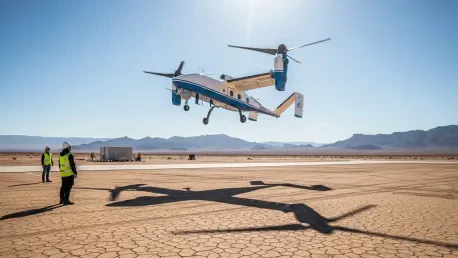

Imagine a future where the skies are filled with safe, efficient, and eco-friendly aircraft, zipping through low-altitude corridors to deliver goods, transport people, and revolutionize how industries operate. This vision is inching closer to reality thanks to Zhuimeng Aerospace Technology, a China-based innovator in the electric aviation and low-altitude economy sector. The company has just clinched a staggering 200 million yuan—roughly $200 million USD—in its Series A funding round, marking its third major financial milestone this year. This isn’t just a cash infusion; it’s a powerful endorsement of a bold mission to transform air mobility with cutting-edge technology. Known also as Dream Aerospace Technology, Zhuimeng is harnessing hybrid tiltrotor systems to tackle long-standing challenges in aviation. With investor confidence soaring and groundbreaking projects underway, the company stands poised to redefine the boundaries of what’s possible in the skies.
Funding Milestone and Strategic Goals
Unlocking Growth with Series A Capital
The aviation landscape is buzzing with excitement as Zhuimeng Aerospace Technology secures a monumental $200 million in Series A funding, a feat that underscores the immense trust investors have in its trajectory. Led by Aviation Investment Fund, with significant contributions from Deqing Industrial Investment and follow-on support from existing stakeholders like Junshan Capital and Haibang Fenghua, this round is a testament to the company’s potential. The capital isn’t merely sitting in the bank—it’s being strategically deployed to fast-track critical initiatives. A major chunk will go toward securing airworthiness certification for the DF600 model, a hybrid tiltrotor UAV, while also kickstarting preparations for mass production. Beyond that, funds will fuel the engineering advancements of the DF3000 model and bolster the core team with top talent. This financial backing arrives at a pivotal moment, enabling Zhuimeng to scale operations in a fiercely competitive market where speed and precision are everything.
Moreover, the significance of this funding extends beyond immediate goals, signaling a broader shift in the industry’s focus toward sustainable aviation solutions. Zhuimeng’s ability to attract such substantial investment in a single round—its third this year, no less—speaks volumes about the growing appetite for technologies that promise to reshape the low-altitude economy. The involvement of strategic players like Aviation Investment Fund suggests not just monetary support but also access to networks and expertise that can amplify the company’s reach. This isn’t just about building aircraft; it’s about building an ecosystem where innovation meets practicality. As Zhuimeng channels these resources into actionable outcomes, from certification to workforce expansion, it positions itself as a frontrunner in a space where timing can make or break a contender. The stakes are high, but with this war chest, the company is well-equipped to navigate the challenges ahead.
Setting the Stage for Industry Leadership
Diving deeper into the implications of this funding, it becomes clear that Zhuimeng Aerospace isn’t playing a short game. The $200 million injection serves as a springboard to solidify its standing as a leader in electric aviation, particularly within China’s rapidly evolving low-altitude economic framework. The focus on mass production readiness for the DF600 isn’t just a technical milestone—it’s a strategic move to capture market share before competitors can catch up. Meanwhile, investing in team expansion ensures that the company isn’t just chasing deadlines but building a sustainable foundation of expertise. This blend of immediate action and long-term planning is what sets Zhuimeng apart in a crowded field.
Additionally, the funding aligns perfectly with national priorities around high-quality development in aviation sectors, giving Zhuimeng a tailwind of policy support. The capital will help bridge the gap between innovation and implementation, turning prototypes into market-ready solutions. It’s a calculated bet on scalability, with every dollar aimed at accelerating the journey from lab to sky. As investors double down on their commitment, they’re not just funding a company—they’re funding a vision of greener, smarter air mobility that could redefine how goods and people move in the coming years. Zhuimeng’s roadmap is ambitious, but with this financial muscle, the path to industry dominance looks clearer than ever.
Technological Innovation
Pioneering Hybrid Tiltrotor Solutions
At the heart of Zhuimeng Aerospace Technology’s rise is a game-changing approach to aviation through hybrid tiltrotor technology, a system that seamlessly blends multiple power sources like oil-electric and hydrogen-electric configurations. This isn’t just tinkering with existing designs; it’s a fundamental rethinking of how aircraft can operate with longer endurance, enhanced safety, and adaptability to diverse scenarios. Unlike traditional models that struggle with range or flexibility, Zhuimeng’s hybrid systems tackle these pain points head-on, offering a compelling solution for industries hungry for reliable low-altitude transport. Whether it’s navigating complex urban environments or covering vast rural distances, this technology promises a level of versatility that’s rare in the current market. It’s no wonder investors are betting big on this innovation as a cornerstone of the future aviation landscape.
What’s more, the hybrid tiltrotor design isn’t just about performance—it’s about practicality in a world increasingly focused on sustainability. By integrating various power methods, Zhuimeng ensures that its aircraft can meet stringent environmental standards while still delivering on operational demands. This balance is crucial in an era where green technology isn’t a bonus but a baseline expectation. The company’s commitment to pushing boundaries in this space sets it apart from competitors who may be slower to adapt. As the low-altitude economy gains traction, having a technology that addresses both ecological and economic needs positions Zhuimeng as a trailblazer. This isn’t just innovation for the sake of headlines; it’s a calculated step toward reshaping how the industry thinks about efficiency and responsibility in tandem.
Competitive Edge Through Technical Mastery
Delving into what makes Zhuimeng’s hybrid tiltrotor technology a standout, it’s evident that the company has honed a deep mastery of systems engineering to bring this concept to life. The ability to merge different power sources into a cohesive, high-performing unit showcases a level of technical sophistication that’s tough to replicate. This isn’t a mere prototype play—every aspect, from safety mechanisms to endurance capabilities, has been meticulously designed to meet real-world demands. The result is an aircraft system that doesn’t just fly but excels in scenarios where others falter, giving Zhuimeng a distinct edge in a market that’s still grappling with the limitations of conventional designs.
Furthermore, this technological prowess isn’t happening in isolation; it’s part of a broader strategy to lead the electric aviation wave sweeping through China and beyond. Zhuimeng’s focus on hybrid systems allows it to cater to a wide range of applications, from logistics to emergency response, where reliability can’t be compromised. This adaptability isn’t just a selling point—it’s a lifeline for industries looking to integrate air mobility into their operations. As the company continues to refine its technology, the ripple effects could redefine competitive dynamics in the sector. With each advancement, Zhuimeng isn’t just solving today’s problems but anticipating tomorrow’s needs, cementing its role as an innovator to watch in the evolving aviation space.
Product Development and Certification
Milestones with the DF600 Model
Turning to the tangible outcomes of Zhuimeng Aerospace Technology’s efforts, the progress with the DF600 model stands out as a landmark achievement in the realm of hybrid tiltrotor UAVs. This aircraft has entered the crucial airworthiness certification phase, with its Type Certificate application officially accepted by the Southwest Regional Administration of the Civil Aviation Administration of China. This isn’t a minor step—it’s a historic first for a hybrid-powered tiltrotor UAV in the country, signaling that Zhuimeng is breaking new ground. The DF600’s journey through certification isn’t just about regulatory checkboxes; it’s about proving that hybrid technology can meet the rigorous standards required for safe, scalable deployment. This milestone sends a powerful message to the industry that Zhuimeng is ready to transition from concept to reality.
Equally important is what this progress means for the broader adoption of low-altitude aviation solutions. The DF600’s certification process is a litmus test for how hybrid systems can integrate into existing frameworks, paving the way for future models. Zhuimeng’s ability to navigate this complex regulatory landscape demonstrates not only technical expertise but also a keen understanding of market readiness. Success here could lower barriers for other innovators, but for now, it gives Zhuimeng a first-mover advantage. As the company pushes forward with testing and validation, the DF600 is shaping up to be more than a product—it’s a proof point for the viability of electric aviation in commercial contexts. The industry is watching closely, and Zhuimeng’s strides with this model could set the tone for years to come.
Advancements in the DF3000 Prototype
Shifting focus to another critical project, the DF3000 model represents Zhuimeng Aerospace’s ambition to scale its hybrid tiltrotor vision to new heights. This aircraft is approaching a significant moment with a full-scale functional prototype nearing its maiden flight, a clear indicator of the company’s ability to manage multiple high-stakes initiatives simultaneously. Unlike the DF600, which is already in the certification lane, the DF3000 is at a pivotal engineering verification stage, where every test and tweak brings it closer to operational reality. This progress isn’t just about meeting internal deadlines; it’s about showcasing Zhuimeng’s capacity to innovate across different scales and applications within the electric aviation space.
Additionally, the development of the DF3000 underlines Zhuimeng’s commitment to a robust product pipeline that can cater to diverse industry needs. While the DF600 targets immediate market entry, the DF3000 hints at longer-term aspirations, potentially addressing heavier payloads or extended ranges. This dual-track approach ensures that the company isn’t putting all its eggs in one basket but instead building a portfolio of solutions. Each successful step with the DF3000 prototype reinforces investor faith and strengthens Zhuimeng’s narrative as a comprehensive player in aviation tech. As the maiden flight looms, the anticipation isn’t just about one aircraft—it’s about the broader validation of a hybrid future that Zhuimeng is tirelessly crafting.
Commercialization Efforts
Revenue Surge and Business Model Evolution
Beyond the lab and testing grounds, Zhuimeng Aerospace Technology is making waves on the commercial front, proving that innovation can indeed translate into tangible financial results. The company’s information intelligence business raked in tens of millions of yuan last year, with projections pointing to a doubling of revenue this year. This isn’t a fluke—it’s the result of a deliberate pivot toward sustainable business models that balance cutting-edge tech with market demands. By focusing on practical applications of its expertise, Zhuimeng is carving out a niche where revenue growth and technological advancement go hand in hand. This balance is vital in an industry where many innovators struggle to move beyond the prototype phase into profitable territory.
Moreover, this revenue surge reflects a deeper strategic shift within Zhuimeng, one that prioritizes real-world impact over mere potential. The ability to generate significant income from a specific business line while still investing heavily in R&D showcases a maturity that’s rare among startups in this space. It’s not just about having a cool product; it’s about ensuring that product fits into a viable commercial ecosystem. As Zhuimeng scales its operations with the recent funding, this financial momentum provides a buffer to experiment and refine its offerings. The doubling of revenue isn’t just a number—it’s a signal to the market that Zhuimeng is here to stay, blending visionary tech with pragmatic economics.
Market Positioning and Scalability Plans
Looking at how Zhuimeng Aerospace is positioning itself for broader market impact, it’s clear that commercialization isn’t an afterthought but a core pillar of its strategy. The revenue growth from the information intelligence segment is a stepping stone toward larger ambitions, where hybrid tiltrotor aircraft like the DF600 become integral to industries ranging from logistics to emergency services. This isn’t about niche applications; it’s about embedding Zhuimeng’s technology into the fabric of everyday operations. By aligning product development with commercial goals, the company ensures that its innovations aren’t just admired but actively adopted, creating a feedback loop that fuels further refinement.
Furthermore, scalability remains at the forefront of Zhuimeng’s market approach, especially with the fresh capital from the Series A round. Plans to ramp up mass production of the DF600, once certified, hint at a future where hybrid aircraft aren’t rare sights but common tools. This scalability isn’t just about quantity—it’s about accessibility, making advanced aviation solutions available to a wider range of customers. As Zhuimeng builds on its early commercial successes, the focus is on creating a closed loop where R&D, production, and sales reinforce each other. The market is ripe for disruption, and with a clear strategy in place, Zhuimeng is gearing up to lead that charge with a blend of boldness and practicality.
Investor Confidence and Industry Impact
Backing from Visionary Stakeholders
The resounding support from investors in Zhuimeng Aerospace Technology’s latest funding round paints a picture of unwavering confidence in its direction and capabilities. Aviation Investment Fund, the lead backer, has lauded the company’s systematic engineering approach and its alignment with China’s strategic push for a high-quality low-altitude economy. Meanwhile, Deqing Industrial Investment, alongside long-standing supporters Junshan Capital and Haibang Fenghua, has emphasized the clarity of Zhuimeng’s technical roadmap and its readiness to bridge the gap between innovation and market deployment. This isn’t just financial support—it’s a vote of trust in a team that’s shown it can execute under pressure. The investors aren’t merely spectators; they’re active partners, offering resources and infrastructure to amplify Zhuimeng’s impact.
In addition, this investor enthusiasm isn’t based on vague promises but on concrete achievements like the DF600’s certification progress and the DF3000’s nearing flight debut. The stakeholders see Zhuimeng as more than a startup—it’s a core player in a transformative industry. Their commitment goes beyond capital, extending to strategic guidance that can help navigate the complexities of scaling in a regulated sector. This synergy between Zhuimeng and its backers creates a powerful dynamic, where financial muscle meets visionary planning. As the company moves forward, this collective belief in its mission to redefine air mobility serves as a catalyst, pushing boundaries that others might shy away from. The investor backing is a loud endorsement of Zhuimeng’s potential to lead.
Shaping a Sustainable Aviation Ecosystem
Finally, zooming out to the bigger picture, Zhuimeng Aerospace Technology’s aspirations extend far beyond individual products or funding rounds—it’s about crafting a sustainable, efficient, and green low-altitude economic ecosystem. The mission to “lead the era of intelligent electric aviation and realize the dream of human free flight” isn’t just a tagline; it’s a guiding principle that drives collaboration with industrial chain partners. By fostering these partnerships, Zhuimeng aims to create a network where safety, innovation, and environmental responsibility coexist. This vision isn’t a solo endeavor but a collective push to elevate how societies interact with air mobility, from urban deliveries to remote access.
What’s striking is how Zhuimeng’s efforts resonate with global trends toward greener technologies while staying rooted in practical implementation. The focus on hybrid tiltrotor systems and commercial scalability positions the company to influence not just China’s aviation landscape but potentially the world’s. Each milestone, from certification to revenue growth, builds toward a future where electric aviation isn’t a novelty but a norm. As Zhuimeng looked back on this transformative funding round, it was evident that the journey had just begun. The next steps involved leveraging this momentum to drive mass adoption, refine technologies, and deepen industry ties—ensuring that the dream of free flight became a shared reality for generations to come.