
Eliminating the barrier to entry created by professional wiring requirements has made advanced domestic peace of mind more accessible to the general public. As we navigate the complexities of 2026, the traditional model of home security—once characterized by expensive professional installers, rigid multi-year contracts, and intrusive hardware—is rapidly becoming an artifact of the past. The rise of package theft and unauthorized entries has transitioned home security from a luxury reserved for the affluent to a fundamental necessity for every household. Modern consumers are no longer willing to tether themselves to predatory subscription models or pay thousands of dollars for systems they do not own. Instead, they are turning toward a more decentralized, agile approach that empowers them to act as their own digital concierges. This shift is driven by a new generation of budget-friendly gadgets that deliver high-definition surveillance and robust physical barriers without the administrative baggage of legacy firms. By leveraging the latest advancements in wireless technology and local data storage, residents are constructing comprehensive defense networks that are as easy to deploy as they are effective at deterring crime. The ability to monitor one’s property in real-time has democratized safety, ensuring that high-level protection is a standard feature of modern living rather than a premium add-on.
Visual and Physical Entry Protection
The initial layer of any effective security strategy must focus on the primary points of entry, as these are the most common targets for both opportunistic thieves and planned intrusions. By concentrating resources on the front door and main access points, homeowners can create a significant psychological and physical hurdle for anyone attempting to breach the perimeter. In 2026, the convergence of high-definition optics and biometric authentication has redefined what it means to “lock the door.” It is no longer just about a piece of metal sliding into a frame; it is about an intelligent system that recognizes residents, records interactions, and alerts the owner to anomalies before a threat even reaches the threshold. This proactive approach to entry protection relies on the synergy between visual monitoring and physical hardening. When these two elements are combined using affordable, modern hardware, the result is a formidable deterrent that operates autonomously. The goal is to create a seamless experience for the user while presenting an impenetrable or highly discouraging facade to any unauthorized individual, effectively neutralizing threats through a combination of visibility and robust mechanical resistance.
High-Definition Front Door Monitoring
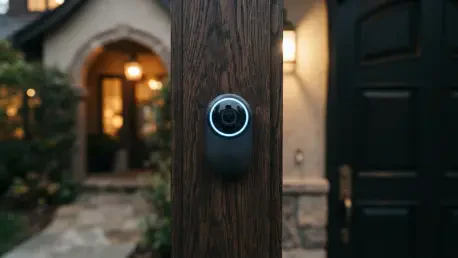
The video doorbell has successfully transitioned from an expensive technological novelty to the primary visual deterrent for the modern entrance. Affordable options now challenge industry giants by offering 2K resolution and ultra-wide viewing angles for a fraction of the traditional cost. These devices are particularly significant because they address the growing phenomenon of “subscription fatigue,” where users are increasingly weary of monthly fees required to simply view their own recorded footage. By supporting local storage through high-capacity cards, these budget-friendly alternatives ensure that data remains under the user’s control without recurring financial burdens. The technical capability of a 2K sensor allows for the clear identification of faces or license plates from a significant distance, which is often the difference between a successful police report and a cold case. Furthermore, the 160-degree ultra-wide field of view eliminates the common blind spots where packages are often hidden or where intruders might attempt to lurk. This visual coverage, combined with long-lasting battery life that spans up to half a year on a single charge, provides a high-value entry point for anyone looking to fortify their residence against the increasing trend of porch piracy.
Biometric and Encrypted Access Control
While cameras provide a record of events, the physical lock remains the most critical barrier to unauthorized entry, yet it is often the most susceptible to simple human error. Modern smart locks solve this vulnerability by ensuring doors are never left accidentally unlocked through automated locking sequences that trigger the moment a door is closed. These devices offer a sophisticated array of entry methods, including biometric fingerprint scanning, digital passcodes, and emergency physical keys, which ensures that every member of the household, from young children to the elderly, can manage access with ease. To address the pervasive privacy concerns associated with the Internet of Things, the latest budget locks prioritize on-device encryption. Rather than sending sensitive biometric data to a vulnerable cloud server, these units store and process all credentials directly on the internal hardware. This local-first approach to security architecture significantly reduces the risk of credential theft via network breaches. Additionally, the operational efficiency of these locks has improved to the point where standard batteries can provide power for an entire year of heavy use. By combining physical durability with digital intelligence, these locks transform a standard door into a secure portal that logs every entry and exit.
Network Security and Perimeter Defense
A common oversight in DIY security is the failure to protect the very network that facilitates the communication between devices. As security gadgets become increasingly reliant on wireless connectivity, the home router has transitioned from a simple internet utility into a foundational security node that must be fortified against cyber-intrusions. In 2026, the digital perimeter is just as important as the physical fence, as a compromised network can render even the most advanced cameras and locks useless. Furthermore, the defense of a property extends beyond the front door to the dark corners of the backyard and side alleys where intruders often seek cover. Effective perimeter defense requires a blend of technological vigilance and environmental manipulation. By using network encryption to protect data and high-intensity lighting to eliminate shadows, homeowners can create a hostile environment for potential criminals. This dual-layered strategy ensures that the security system remains functional and uncompromised while providing a visible warning to anyone approaching the property. The integration of these components creates a cohesive shield that protects both the physical structure of the home and the digital lives of its occupants, ensuring that the “smart” in smart home security actually translates to “safe.”
Fortifying the Digital Backbone
As security gadgets become increasingly reliant on wireless connectivity, the home router has transitioned into a foundational security node that must be protected from cyber-threats. A high-quality router utilizing the Wi-Fi 6 standard is no longer a luxury but a requirement for maintaining the integrity of multiple high-definition camera feeds and sensor arrays simultaneously. Without sufficient bandwidth and network management, a security system can suffer from lag, dropped connections, or delayed notifications—vulnerabilities that an intruder could easily exploit. Modern routers go beyond mere connectivity by integrating built-in security software and virtual private network capabilities that shield the entire domestic ecosystem from external hacking attempts. This layer of “invisible” security is vital because a compromised network could theoretically allow a sophisticated attacker to bypass digital locks or disable monitoring systems remotely. By employing real-time threat detection technologies, these routers act as a digital gatekeeper, screening every packet of data for malware or unauthorized access. This proactive defense ensures that the smart gadgets themselves do not become entry points for digital criminals, effectively creating a unified front where physical safety and network security are indistinguishably linked to provide a truly comprehensive shield for the modern residence.
Eliminating Shadows with Motion Lighting
Illumination remains one of the oldest and most effective methods of discouraging criminal activity, as it removes the anonymity provided by darkness. Modern motion-activated floodlights provide extreme brightness often exceeding 7500 lumens, ensuring that backyards, driveways, and side alleys are stripped of potential hiding spots. These units are engineered for high “protection-to-dollar” efficiency, offering versatile operational modes including dusk-to-dawn sensors and manual overrides to suit specific environmental requirements. While budget-conscious models might lack the integrated sirens found in premium hardware, their sheer intensity serves as a powerful psychological deterrent that alerts both homeowners and neighbors to any movement on the property. The psychological impact of a sudden, blinding light cannot be overstated; it signals to an intruder that they have been detected and that their window of opportunity has closed. Moreover, the multi-head design typical of these units allows for wide-angle coverage that can be physically adjusted to target specific areas of concern. This strategic lighting, when paired with visual recording devices, significantly improves the quality of footage captured during the night, ensuring that the details of an event are preserved for later review. By turning the environment itself into a hostile space for intruders, motion lighting provides a cost-effective layer of perimeter defense.
Comprehensive Monitoring and System Integration
The final stage of a budget-friendly security overhaul involves closing the gaps left by primary entrance monitoring through the use of modular sensors and systemic integration. While front door cameras and smart locks cover the most obvious routes, a truly robust security plan must account for secondary points of entry such as basement windows, sliding glass doors, and garage access points. These areas are often targeted because they are perceived as being less protected or more secluded. By implementing a web of contact sensors and motion detectors, a homeowner can ensure that no breach goes unnoticed, regardless of where it occurs. This stage of the process is about creating “defense in depth,” where each individual gadget contributes to a larger, more resilient whole. The modern DIY market emphasizes expandability, allowing users to start with a basic kit and add specialized components as their budget or needs evolve. This modularity ensures that security is a living, breathing system that adapts to the specific layout of a home. Ultimately, the goal is to achieve total situational awareness, where the homeowner is informed of the status of every door and window in real-time, providing a level of control and assurance that was once only possible with expensive, professional-grade monitoring services.
Securing Secondary Points of Entry
A robust security plan must account for more than just the primary entrance, extending surveillance to windows and side doors through modular contact sensor kits. These systems utilize simple but highly effective magnetic sensing technology to trigger a central hub alarm and send immediate smartphone notifications if a perimeter breach occurs. The primary advantage of these kits lies in their extreme modularity; a single hub can often manage dozens of sensors, allowing a resident to scale their security as their living space grows or as they identify new points of vulnerability. This modular approach ensures that even the most overlooked parts of a home—like a laundry room window or a shed door—are integrated into the broader safety net. Because these sensors are typically battery-powered and communicate via low-energy wireless protocols, they can be installed in minutes without drilling or permanent wiring. This accessibility is crucial for renters who may not have the permission to make structural alterations to their dwellings. When a sensor is tripped, the resulting high-decibel alarm serves two purposes: it startles the intruder into fleeing and provides an audible alert to residents, giving them precious time to respond. This immediate feedback loop is the hallmark of a responsive security system, turning a passive structure into an active participant in its own defense against external threats.
Strategies for Long-Term Domestic Resilience
The most effective budget security systems were those where individual components functioned together to create multiple layers of protection, a concept that solidified the DIY market as a viable alternative to professional firms. By the middle of 2026, the industry reached a point of maturity where cost was no longer a significant hurdle to achieving professional-grade safety. Homeowners and renters alike discovered that by combining a secure network foundation with physical barriers and constant visual monitoring, they could construct a complete security suite for less than $300. The rejection of subscription-based “paywalls” for essential features became a defining trend, empowering individuals to maintain domestic peace of mind through locally controlled technology. Looking forward, the next logical step for anyone seeking to enhance their safety involves the periodic auditing of network permissions and the physical maintenance of outdoor hardware to ensure peak performance during inclement weather. It was clear that the shift toward user-friendly, DIY hardware represented a permanent change in the residential security landscape. To maximize the effectiveness of these investments, individuals should consider integrating their gadgets into a unified smart home platform, allowing for automated routines where lighting activates and cameras record the moment a perimeter sensor is triggered. This level of synergy not only increased the overall security of the home but also simplified the user experience, proving that accessibility and high-level protection are not mutually exclusive. The era of the DIY digital concierge provided a sustainable path toward a safer living environment.