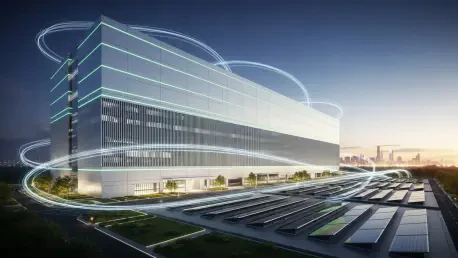

As Japan’s digital economy accelerates at an unprecedented pace, fueled by the voracious data demands of artificial intelligence and cloud computing, the need for robust, scalable infrastructure has become more critical than ever before. In a significant move to address this demand, Singapore-based data center developer DayOne and multi-asset investment firm Gaw Capital Partners have officially commenced construction on a new hyperscale data center campus in Fuchu City, Tokyo. This joint venture is set to deliver one of the city’s largest digital infrastructure projects, strategically positioned to support the nation’s technological advancement and data processing needs. The groundbreaking ceremony marks the beginning of a multi-phase development poised to significantly bolster the digital backbone of the Greater Tokyo area. This initiative not only reflects the immense market opportunity but also the strategic foresight of the partners in investing in foundational technology that will power Japan’s future innovations and economic growth.
Addressing Japan’s Digital Infrastructure Deficit
The Strategic Importance of Fuchu City
Fuchu Intelligent Park, the chosen site for this campus, is far from an arbitrary selection, as its strategic value is rooted in its status as a well-established data hub with a dense network of existing digital infrastructure, providing unparalleled connectivity both domestically and internationally. Situated near central Tokyo, it offers low-latency connections essential for financial services, cloud providers, and enterprise clients that form the core of Japan’s economy. This proximity to the nation’s primary digital nexus ensures that the new facility can seamlessly integrate into the existing ecosystem, leveraging robust power grids and fiber optic networks. By building within this proven environment, DayOne and Gaw Capital mitigate many of the logistical challenges associated with new greenfield developments, accelerating the delivery of much-needed capacity to a market experiencing significant supply constraints. The park’s established reputation provides an additional layer of assurance for hyperscale tenants who require reliability, security, and performance.
The timing of this development aligns perfectly with the explosive growth trajectory of the Japanese data center market, which has been consistently ranked as one of the world’s largest Tier I markets. Recent industry analyses have consistently pointed toward substantial growth, a forecast that is being rapidly validated by the relentless expansion of cloud computing and, more recently, the transformative impact of generative AI. These next-generation technologies demand computational power and data storage capabilities on a scale previously unimaginable, placing immense pressure on existing infrastructure. Greater Tokyo, as the epicenter of Japan’s business and technology sectors, is at the forefront of this demand. The new Fuchu campus is therefore not just a response to current needs but a forward-looking investment designed to capture the next wave of technological innovation, providing the foundational capacity required for businesses to deploy advanced AI models and scale their digital operations.
Project Scope and Phased Development
The project’s initial phase is a meticulously planned undertaking designed for rapid deployment to meet immediate market demand. Construction has begun on a nine-story building that will house ten distinct data halls, engineered to provide an initial IT capacity of 18 megawatts. This first structure is a critical component of the broader campus vision, with its core and shell scheduled to be ready by the middle of 2027. To execute this ambitious timeline, the joint venture has enlisted the expertise of leading local firms, with NEC Facilities serving as the architect and HASEKO Corporation appointed as the main contractor. This collaboration leverages deep local construction knowledge and technical proficiency, ensuring the facility is built to the highest standards of quality and regulatory compliance. The focus of this phase is to establish a strong operational footprint quickly, offering a state-of-the-art environment for early-adopter clients looking to secure capacity in Tokyo’s highly competitive market.
Upon its ultimate completion, the campus will represent a monumental addition to Tokyo’s digital landscape, solidifying its position as a premier data center hub in the Asia-Pacific region. The full development will span approximately 66,360 square meters of gross floor area and is engineered to deliver a total IT capacity of 80 megawatts. This scale places the facility among the largest in the city, measured by its power-intensive IT load, a key metric for hyperscale and cloud service providers. This long-term vision demonstrates a profound commitment from both DayOne and Gaw Capital to support Japan’s digital transformation journey for years to come. By planning a campus of this magnitude, the partners are creating a future-proof ecosystem capable of accommodating the escalating density and power requirements of next-generation hardware, ensuring that their clients have a clear and reliable path for growth as their computational needs evolve.
A Partnership Forging a Sustainable Future
Advanced Engineering and Sustainability Goals
This project transcends conventional data center design by incorporating a suite of advanced engineering solutions tailored for the high-performance computing era. The facility is being purpose-built as a cutting-edge hyperscale data center, with a primary focus on maximizing energy efficiency and operational resilience. At the core of its design are sophisticated cooling technologies capable of managing the significant thermal loads generated by high-density server racks, which are essential for running AI and machine learning workloads. Furthermore, the campus will actively utilize renewable energy sources, integrating them into its power strategy to minimize its carbon footprint. This commitment to advanced engineering is not merely a technical feature but a strategic imperative, as it directly addresses the operational cost and environmental impact concerns of major cloud providers and large enterprises, making the facility a more attractive and responsible choice for long-term tenancy.
Reinforcing its commitment to environmental stewardship, the development is strategically targeting several prominent ESG and operational certifications. This pursuit of external validation underscores a deep-seated goal to build and operate a facility that meets the highest global standards for sustainability and efficiency. Among the certifications being sought are CASBEE, Japan’s leading green building rating system, and LEED, a globally recognized benchmark for sustainable construction. In addition, the project aims to achieve ISO 50001 certification for Energy Management, which provides a framework for continuous improvement in energy performance. By embedding these rigorous standards into the project from the ground up, the partners are ensuring the data center will not only support the digital economy but will do so in a manner that is environmentally conscious and operationally excellent, setting a new standard for responsible infrastructure development.
Synergistic Expertise and Global Expansion
For DayOne, this groundbreaking in Tokyo represents a pivotal moment in its corporate trajectory, marking its inaugural project in the highly strategic Japanese market. This venture signifies a deliberate and significant expansion of its global platform, extending its reach beyond its successful SIJORI strategy, which has established its strong presence in Southeast Asia. By entering Japan, DayOne is demonstrating its ambition to become a key player in the wider Asia-Pacific data center landscape. The company brings to the partnership its specialized expertise in developing and operating high-performance data centers tailored to the exacting demands of hyperscale clients. This deep, domain-specific knowledge is critical for ensuring the Fuchu campus meets the complex technical, security, and operational requirements of the world’s leading technology companies, thereby de-risking the project and enhancing its appeal to a premier clientele.
The collaboration is powerfully enhanced by the formidable capabilities of Gaw Capital Partners, which contributes its extensive global real estate investment and management experience. This venture perfectly marries Gaw Capital’s proficiency in sourcing, developing, and managing large-scale real estate assets with DayOne’s specialized technical know-how in the data center sector. This synergy creates a uniquely robust partnership capable of navigating the complexities of the Japanese market, from land acquisition and permitting to construction and asset management. Both firms view the project as more than just a real estate development; they see it as the creation of essential infrastructure that is fundamental to the continued growth of the region’s data-driven economy. Their combined vision is to build a facility that not only meets today’s escalating data processing requirements but also anticipates and supports the future evolution of Japan’s data ecosystem.
Catalyzing a New Era of Digital Innovation
The groundbreaking at Fuchu Intelligent Park was a landmark event that set in motion the development of a critical piece of digital infrastructure for Japan. The project successfully merged global investment acumen with specialized operational expertise to address the nation’s pressing need for hyperscale data center capacity. This initiative established a new benchmark for large-scale, sustainable digital developments in the region, engineered to support the next wave of technological progress. The campus was poised not only to meet the immense demands of cloud and AI but also to become a foundational pillar enabling future innovation across countless industries, ensuring Tokyo’s continued leadership as a global technology hub.