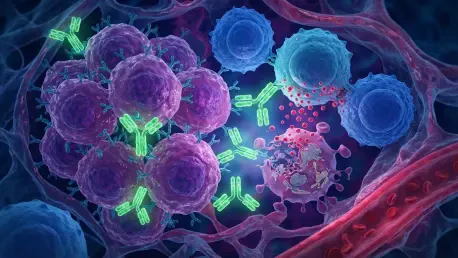

Clinical data confirming the efficacy of GD2-targeted treatments has established a strong foundation for the projected growth of the Qarziba market through 2035, reflecting a major shift in how the medical community approaches high-risk neuroblastoma. This condition was once considered exceptionally difficult to manage with conventional therapies. Qarziba, known scientifically as dinutuximab beta, serves as a specialized monoclonal antibody that has transformed the therapeutic landscape for pediatric oncology patients worldwide. By specifically targeting the GD2 antigen on the surface of neuroblastoma cells, the treatment allows the patient’s own immune system to identify and eliminate cancerous cells with significantly higher precision. As healthcare systems globally integrate these advanced biologics into standard care protocols, the market is witnessing a surge in demand driven by improved diagnostic capabilities and a commitment to precision medicine in 2026. This trajectory highlights the intersection of biotechnology and clinical necessity.
Market Foundations and Growth Drivers
Understanding the Therapeutic Impact: Historical Growth and Clinical Foundations
The current robustness of the Qarziba market stems from over a decade of concentrated effort in refining pediatric immunotherapy. In previous years, the development of specialized oncology centers provided the necessary infrastructure to administer complex biological therapies, setting the stage for wide-scale adoption across developed regions. As medical teams became more proficient in managing the unique side effects associated with monoclonal antibodies, the clinical profile of dinutuximab beta stabilized, making it a preferred choice in multimodal treatment regimens. This evolution was supported by the standardization of diagnostic tools, which allowed for the earlier identification of high-risk cases that require intensive intervention. By 2026, the global healthcare network has largely institutionalized these specialized practices, ensuring that a greater number of pediatric patients can access life-saving treatments. The historical success of regulatory approvals has further solidified investor confidence in this oncology niche.
Beyond the historical infrastructure, the intrinsic clinical value of dinutuximab beta has played a pivotal role in shaping the current market landscape. The drug’s ability to improve overall survival rates significantly has made it an indispensable component of the modern therapeutic arsenal against neuroblastoma. Historically, relapse was the primary hurdle for clinicians, but the introduction of GD2-targeted therapy provided a mechanism to sustain remission and target residual disease more effectively. Current studies indicate that the integration of this antibody into maintenance therapy has drastically altered long-term outcomes for children who previously faced a poor prognosis. This clinical success has encouraged pharmaceutical companies to expand their production capacities to meet the anticipated needs of the next decade. As practitioners gain more experience with personalized dosage and combination therapies, the efficacy of the drug continues to be documented in real-world settings, reinforcing its market position through 2035.
Primary Factors: Accelerating Market Demand and Research Funding
The most significant driver of the current market expansion is the unfortunate but steady rise in cancer diagnoses worldwide. While neuroblastoma remains a rare disease, the overall burden on pediatric healthcare systems is increasing, necessitating a more robust supply of targeted treatments like Qarziba. Statistics from global health organizations suggest that the number of new cancer cases will continue to climb through the mid-2030s, placing immense pressure on pharmaceutical supply chains and hospital procurement departments. This growing prevalence is not just a reflection of biological trends but also of enhanced screening programs that catch malignancies at a stage where intervention with monoclonal antibodies is most effective. Consequently, the demand for specialized oncology products is outstripping previous estimates, prompting a surge in industrial output. Governments and private healthcare providers are responding by allocating more resources to ensure that the necessary medications are consistently available.
Simultaneously, the market is being propelled by a significant increase in research and development funding specifically aimed at pediatric oncology. This financial influx has enabled scientists to explore new ways of enhancing the potency of GD2-targeted therapies, such as combining them with cytokines or other immune stimulants to trigger a stronger response. In 2026, these innovations are reaching a stage of maturity that allows for broader clinical application beyond initial trial phases. Moreover, efforts to streamline the regulatory approval process in emerging economies have opened new avenues for market growth in regions like Southeast Asia and Latin America. Countries that previously lacked access to advanced monoclonal antibodies are now implementing streamlined pathways for biologics, making treatments like Qarziba more accessible to a global patient population. This democratization of high-tech medicine is a key factor in the market’s projected trajectory through 2035, as healthcare equity becomes a global policy priority.
Strategic Shifts and Regional Dynamics
Emerging Trends: Precision Oncology and Relapse Prevention
A defining trend in the current oncology landscape is the move toward highly integrated, multimodal treatment strategies. Clinicians are no longer viewing immunotherapy as a standalone solution but as a critical piece of a larger puzzle that includes surgery, high-dose chemotherapy, and radiation. This holistic approach is designed to attack neuroblastoma from multiple biological angles, reducing the chances of the tumor developing resistance to any single treatment method. In 2026, the synchronization of these diverse therapies has become more sophisticated, with individualized schedules tailored to the specific genetic makeup of the patient’s cancer. This focus on precision allows for the maximization of therapeutic benefits while simultaneously mitigating the systemic toxicity often associated with intensive cancer regimens. The result is a more resilient treatment framework that supports the growing demand for Qarziba as a central element in complex pediatric oncology protocols and modern hospital standards.
Furthermore, the industry is undergoing a strategic shift from reactive treatment to proactive relapse prevention. For many years, the primary goal was simply to achieve initial remission, but the high rate of recurrence in neuroblastoma has led to a reevaluation of long-term care goals. Today, the focus is increasingly on the maintenance phase of treatment, where Qarziba is used to eliminate microscopic residual disease that might otherwise lead to a relapse. This shift is supported by advances in diagnostic technology, such as liquid biopsies and high-resolution imaging, which allow for real-time monitoring of the patient’s response to immunotherapy. These tools enable physicians to detect traces of cancer early and adjust the therapeutic plan before a full recurrence occurs. By prioritizing the long-term durability of remission, healthcare providers are ensuring a better quality of life for survivors, which in turn drives the sustained and predictable use of targeted monoclonal antibodies globally.
Geographic Leadership: Regional Projections and Analytical Innovations
Geographically, North America continues to lead the global market due to its established infrastructure and high levels of investment in biological research. The region’s ability to quickly adopt new medical technologies has made it a primary hub for Qarziba administration and clinical refinement. However, significant growth is also occurring in the Asia-Pacific region and parts of Europe, where healthcare modernization projects are expanding the reach of pediatric oncology services. In 2026, these regions are showing a marked increase in the number of specialized clinics capable of handling the complexities of immunotherapy. This regional expansion is vital for the market’s growth through 2035, as it taps into previously underserved populations. The diversification of market participants also encourages local manufacturing and distribution partnerships, which help to stabilize the supply chain and reduce costs. This globalized footprint ensures that the demand for dinutuximab beta is no longer confined to a few markets.
To navigate the increasingly complex oncology market, stakeholders are turning to advanced analytical tools that provide deeper insights into market trends and patient needs. Innovations such as market attractiveness scoring and total addressable market analysis have become standard practice for investors and healthcare administrators alike. These data-driven approaches allow for the identification of specific growth hotspots and the evaluation of technological shifts in real time. In 2026, the use of company scoring matrices helps identify which pharmaceutical players are leading in innovation and production efficiency. This high level of transparency and analytical rigor is essential for making informed decisions about resource allocation and strategic partnerships. As the market progresses toward 2035, these tools will play a crucial role in shaping the competitive landscape, ensuring that the development of pediatric cancer treatments remains both scientifically sound and economically viable for the global community.
Strategic Implementation: Actionable Insights for Oncology Systems
The strategic advancements observed in the pediatric oncology sector underscored the necessity of a coordinated global response to high-risk neuroblastoma. Stakeholders who prioritized the integration of targeted immunotherapies into standard care models achieved superior patient outcomes while stabilizing the pharmaceutical supply chain. Moving forward, the focus turned toward enhancing the affordability of biologics and expanding diagnostic infrastructure in emerging markets to ensure that therapeutic benefits were distributed equitably. Researchers concentrated on refining the synergy between dinutuximab beta and other emerging immune modulators, which opened new doors for treating refractory cases. Ultimately, the industry moved away from general treatment protocols in favor of data-driven, precision interventions that addressed the unique molecular profile of each child’s illness. These actions established a sustainable model for oncology innovation that balanced scientific progress with the practical needs of global healthcare systems through the mid-2030s.